



FSCA authorisation improves oversight and disclosure, but it does not remove market risk, counterparty risk, or the possibility of a partial or total loss of deposited capital. Therefore, the legal company behind an account is as important as the brand on the website.
South African traders should first verify the FSCA licence, the entity that issues or intermediates the CFD, and the client-money rules attached to the account. Cost and platform choice come later in the process.
What is the best regulated CFD broker in South Africa?
Markets.com ranks first in our 2026 comparison of regulated CFD brokers in South Africa because Markets South Africa (Pty) Ltd holds both FSCA licence 46860 and an ODP licence. Scope Markets and ATFX also rank highly because both have South African ODP structures and documented client-money arrangements. The best broker still depends on the legal entity, client-money protections, platform choice, trading costs, and the type of CFD account you want to open.

🏆10 Best Forex Brokers in South Africa
| Rank | Broker | Broker Review | Regulators | Minimum Deposit | Visit Broker |
|---|---|---|---|---|---|
| 🥇 |  | Read Review | ASIC, FSA, CBI, BVI, FSCA, FRSA, CySEC, ISA, JFSA | $100 | Visit Now |
| 🥈 |  | Read Review | FSCA, FCA, DFSA, FSA, CMA | $0 | Visit Now |
| 🥉 |  | Read Review | FSCA, FSC, CYSEC, DFSA, CMA, FSC, FSA | $5 | Visit Now |
| 4 |  | Read Review | ASIC, CySEC, FSA, SCB | $0 | Visit Now |
| 5 |  | Read Review | BVI FSC | $0 | Visit Now |
| 6 |  | Read Review | FSA, FSC, FSCA, ASIC, CMA | $20 | Visit Now |
| 7 |  | Read Review | Exness is a globally regulated broker, holding multiple licenses from respected financial regulators around the world. | $10 | Visit Now |
| 8 |  | Read Review | ASIC, CySEC, FSCA, FSA, FSC, CMA | $100 | Visit Now |
| 9 |  | Read Review | FSC | $10 | Visit Now |
| 10 |  | Read Review | FSA, CySEC, FSCA, FSC | $10 | Visit Now |


Are regulated CFD brokers safe in South Africa?
Regulation improves oversight, disclosure, and accountability, but it does not make CFD trading risk-free. A regulated broker can still offer leveraged products that cause substantial losses. South African traders should verify the exact legal entity, FSP number, ODP status where relevant, client-money arrangements, negative balance protection, complaint route, and account agreement before depositing funds.
10 Best Regulated CFD Brokers in South Africa
| Rank | Broker | South African regulatory position | Regulated entity or service model | Client-money arrangement | Platforms | Entry deposit |
|---|---|---|---|---|---|---|
| 1 | Markets.com | FSCA 46860; ODP | Markets South Africa (Pty) Ltd | Segregated bank accounts | Markets platform, MT4, MT5 | US$100 |
| 2 | Scope Markets | FSCA 47025; ODP 64 | Scope Markets SA (Pty) Ltd | Segregated accounts with local banks | MetaTrader | US$100 |
| 3 | ATFX | FSCA 44816; ODP | AT Global Markets SA (Pty) Ltd | Segregated TPFA account | MT5 | 100 ZAR/US$100 |
| 4 | Vantage Markets | FSCA 51268 | Vantage Markets (Pty) Ltd | Segregated accounts | MT4, MT5, Vantage app, ProTrader | US$50 on Standard STP |
| 5 | Exness | FSCA 51024 intermediary; product supplier has ODP authorisation | Exness (SC) Ltd supplies the derivative | Segregated accounts | MT5, Exness Terminal, Exness Trade | Payment-method dependent |
| 6 | AvaTrade | FSCA 45984 | Ava Capital Markets Pty | Segregated accounts | MT4, MT5, WebTrader, AvaTrade app | US$100 |
| 7 | Tickmill | FSCA 49464; Category I intermediary | Tickmill South Africa (Pty) Ltd | Entity-specific terms require confirmation | MT4, MT5 | US$100 |
| 8 | FP Markets | FSCA 50926 | FP Markets (Pty) Ltd | Segregated bank accounts | MT4, MT5, cTrader, TradingView | US$100 |
| 9 | HFM | FSCA 46632; intermediary | HF Markets SA with separate execution venue | Client funds held in segregated account with execution venue | MT4, MT5, HFM platform | Account dependent |
| 10 | Plus500 | FSCA 47546 via Plus500AU | Plus500AU Pty Ltd is product issuer | Segregated trust accounts under Australian rules | Plus500 proprietary platform | US$100 |
Regulatory structure separates the first three brokers from much of the field because each has a South African ODP entity.
Vantage Markets has a local FSCA-authorised company and segregated client accounts, while Exness has a different arrangement in which the local FSP acts as an intermediary and Exness (SC) Ltd supplies the derivative.
Always read the broker notes below before you compare account documents, platforms, and total trade cost.
What is a Regulated CFD Broker?
A regulated CFD broker is a financial services company that offers contracts for difference under the oversight of one or more recognised financial regulators. In South Africa, that often means checking the Financial Sector Conduct Authority, or FSCA, and understanding whether the company acts as an FSP intermediary, an over-the-counter derivatives provider, or part of a broader group structure.
The distinction matters. An FSP licence does not automatically mean the same company issues the CFD, holds client money, or acts as the execution venue. Traders need to match the legal entity in the account agreement with the relevant FSCA record and understand which company is responsible for the derivative product.
10 Best Regulated CFD Brokers in South Africa (2026):
- Markets.com – Best Overall for a South African ODP Structure
- Scope Markets – Best for a Local ODP and Segregated Bank Accounts
- ATFX – Best for a Direct Local ODP Structure
- Vantage Markets – Best for Platform Choice and a Lower Entry Deposit
- Exness – Best for a Two-Entity South African Structure
- AvaTrade – Best for Platform Variety
- Tickmill – Best for MT4 and MT5 with ZAR Support
- FP Markets – Best for Multi-Platform CFD Trading
- HFM – Best for MetaTrader with an Intermediary Structure
- Plus500 – Best for a Proprietary CFD Platform
How we ranked the brokers
The assessment gives 25% to FSCA status and legal entity transparency, 20% to client money arrangements, 15% to risk controls and disclosures, 15% to fee transparency, 10% to platforms, 10% to South African account convenience, and 5% to CFD market range.
Five checks have the greatest influence on the order:
- Verify the South African legal company, FSP number, and ODP status where applicable.
- Confirm where client money is held and which legal rules govern segregation.
- Review negative balance protection, stop-loss facilities, leverage controls, and risk disclosures.
- Compare spreads, commission, overnight finance, conversion charges, deposits, and withdrawal terms.
- Check platform choice, ZAR support, local payment routes, and South African client service.
Affiliate commission is not an assessment criterion. A broker with weaker legal-entity transparency cannot move higher because its spread appears cheaper on one instrument, while a low deposit does not offset a less direct regulatory structure.
10 regulated CFD brokers reviewed
Each broker below earns a place because its South African regulatory connection can be verified and its CFD service has current documentation. The order reflects the regulation-first method above and does not claim universal suitability for every trader.
1. Markets.com

- Markets.com ranks first because Markets South Africa (Pty) Ltd holds FSCA licence 46860 and an ODP licence under the Financial Markets Act.
- Client funds are segregated, negative balance protection applies, and ZAR account currency is available.
- There is some discrepency regarding the entry deposit. Some help pages indicate that the deposit minimum is US$100, while the client agreement shows at least US$200.
Features
| Feature | Markets.com |
|---|---|
| South African Entity | Markets South Africa (Pty) Ltd |
| FSCA Licence | 46860 |
| ODP Status | Authorised ODP |
| Client Money | Segregated bank accounts |
| Platforms | Markets platform, MT4 and MT5 |
| Account Currency | ZAR available |
| Open an Account | Open Account |
Pros and Cons
| Pros | Cons |
|---|---|
| South African ODP structure | Entry-deposit information is not fully consistent across documents |
| Segregated client funds | Trading conditions still vary by instrument |
| Negative balance protection | Regulation does not prevent CFD losses |
| ZAR account currency available | Account agreement should still be checked before funding |
Why does Markets.com rank first among regulated CFD brokers in South Africa?
Markets.com ranks first because the South African entity holds both an FSCA licence and ODP authorisation. That creates a more direct local regulatory structure than arrangements where a South African company acts only as an intermediary to a separate product supplier.
Are Markets.com client funds segregated?
Yes. Client funds are held in segregated bank accounts. Traders should still read the current client agreement because the exact protection framework depends on the contracted legal entity and account terms.
2. Scope Markets

- Scope Markets SA (Pty) Ltd holds FSP 47025 and ODP 64. Client funds are held in segregated accounts with local banks, a relevant feature for traders who prefer a South African provider structure.
- MetaTrader supports the trade interface.
- Deposit and spread figures should be checked inside the account area because live commercial terms can differ.
Features
| Feature | Scope Markets |
|---|---|
| South African Entity | Scope Markets SA (Pty) Ltd |
| FSP Number | 47025 |
| ODP Number | 64 |
| Client Money | Segregated accounts with local banks |
| Platform | MetaTrader |
| Entry Deposit | US$100 |
| Open an Account | Open Account |

Pros and Cons
| Pros | Cons |
|---|---|
| Local ODP authorisation | Commercial terms can change |
| Client funds held with local banks | Deposit and spread figures should be checked inside the account area |
| Direct South African provider structure | Platform range is narrower than some competitors |
| MetaTrader available | CFD market risk remains |
Why is Scope Markets highly ranked for regulation?
Scope Markets combines a South African FSP licence with ODP 64 and segregated client accounts held with local banks. That gives traders a relatively direct local regulatory and client-money structure.
Does Scope Markets hold client money locally?
Scope Markets states that client funds are held in segregated accounts with local banks. Traders should still confirm the latest account terms before depositing because banking arrangements and commercial conditions can change.
3. ATFX

- AT Global Markets SA (Pty) Ltd holds FSP 44816 and an ODP licence.
- Client funds go into a segregated TPFA account under the trade agreement, while the South African CFD service includes negative balance protection and MT5.
- ATFX ranks highly because the provider structure and fund arrangement are direct, documented, and tied to the local entity.
Features
| Feature | ATFX |
|---|---|
| South African Entity | AT Global Markets SA (Pty) Ltd |
| FSP Number | 44816 |
| ODP Status | Authorised ODP |
| Client Money | Segregated TPFA account |
| Platform | MT5 |
| Risk Protection | Negative balance protection |

Pros and Cons
| Pros | Cons |
|---|---|
| Direct South African ODP structure | MT5 is the main platform route |
| Segregated TPFA account | Platform choice is narrower than some competitors |
| Negative balance protection | Regulation does not remove leveraged CFD risk |
| Local entity tied directly to the service | Account terms should still be reviewed before funding |
Why does ATFX rank highly in this regulation-first comparison?
ATFX ranks highly because the South African legal entity, ODP authorisation, and client-money structure are clearly documented. That makes the relationship between the local provider and the CFD service easier to understand than more complicated intermediary arrangements.
How are ATFX client funds handled?
The South African trade agreement places client funds in a segregated TPFA account. Traders should still read the current agreement to understand the exact terms attached to their account.
4. Vantage Markets
- Vantage Markets (Pty) Ltd holds FSP 51268, with segregated client accounts and South African bank-transfer support.
- Platform options include MT4, MT5, the Vantage app, and ProTrader.
- The Standard STP account has a US$50 minimum deposit, but the entry figure should never drive broker selection before you have confirmed the regulation, account terms, total trade cost, and withdrawal conditions.
Features
| Feature | Vantage Markets |
|---|---|
| South African Entity | Vantage Markets (Pty) Ltd |
| FSP Number | 51268 |
| Client Money | Segregated accounts |
| Platforms | MT4, MT5, Vantage app and ProTrader |
| Local Funding | South African bank-transfer support |
| Standard STP Minimum | US$50 |

Pros and Cons
| Pros | Cons |
|---|---|
| Local FSCA-authorised company | No South African ODP status shown in the comparison |
| Segregated client accounts | Low minimum deposit should not be treated as the main selection factor |
| Broad platform choice | Account terms still require careful review |
| South African bank-transfer support | Total cost varies by account and instrument |
Why is Vantage Markets attractive after regulatory checks are complete?
Vantage combines a South African FSCA-authorised company with segregated accounts, local bank-transfer support and several trading platforms. That makes it useful for traders who want more platform flexibility once the legal structure has been checked.
What is the Vantage Standard STP minimum deposit?
The Standard STP account has a US$50 minimum deposit. Traders should not choose the broker on that figure alone, because regulation, account terms, withdrawal rules and total CFD trading costs are more important.
5. Exness

- Exness has an important two-entity structure. Exness ZA (Pty) Ltd, FSP 51024, acts as an intermediary, while Exness (SC) Ltd supplies the derivatives and has FSCA ODP authorisation.
- Segregated accounts and negative balance protection are features of South African client protections.
- MT5, Exness Terminal, and Exness Trade offer traders a choice between platforms, but you must understand the offshore product supplier before depositing funds.
Features
| Feature | Exness |
|---|---|
| South African Entity | Exness ZA (Pty) Ltd |
| FSP Number | 51024 |
| Product Supplier | Exness (SC) Ltd |
| ODP Position | Exness (SC) Ltd has FSCA ODP authorisation |
| Platforms | MT5, Exness Terminal and Exness Trade |
| Protections | Segregated accounts and negative balance protection |
| Open an Account | Open Account |
Pros and Cons
| Pros | Cons |
|---|---|
| FSCA-authorised local intermediary | Two-entity structure requires careful reading |
| Product supplier has ODP authorisation | Derivative is supplied by an offshore company |
| Negative balance protection | Traders need to identify which entity governs each part of the service |
| Several platform choices | Payment-method-dependent deposit conditions |
Why is Exness structured differently from the top three brokers?
Exness uses a two-entity arrangement. Exness ZA acts as the local intermediary, while Exness (SC) Ltd supplies the derivative and has ODP authorisation. That is different from a structure where the South African ODP itself directly provides the CFD service.
Which Exness company actually supplies the CFD?
Exness (SC) Ltd supplies the derivative, while Exness ZA (Pty) Ltd acts as the South African intermediary. Traders should understand both companies before funding the account.
6. AvaTrade

- Ava Capital Markets Pty holds FSCA licence 45984. Segregated accounts, negative balance protection, MT4, MT5, WebTrader, and the AvaTrade app provide a broad account package.
- The deposit screen should still be checked before you transfer funds in ZAR because payment options can differ by account.
Features
| Feature | AvaTrade |
|---|---|
| South African Entity | Ava Capital Markets Pty |
| FSCA Licence | 45984 |
| Client Money | Segregated accounts |
| Risk Protection | Negative balance protection |
| Platforms | MT4, MT5, WebTrader and AvaTrade app |
| Entry Deposit | US$100 |
Open an Account | Open Account |

Pros and Cons
| Pros | Cons |
|---|---|
| FSCA-regulated South African entity | No local ODP position shown in this comparison |
| Segregated accounts | Payment options can differ by account |
| Negative balance protection | ZAR funding route should be checked before transfer |
| Strong platform variety | Regulation does not remove trading risk |
Why is AvaTrade useful for traders who want platform choice?
AvaTrade offers MT4, MT5, WebTrader and its own mobile app, giving traders several ways to access the same broader account environment after regulatory checks are complete.
Should South African AvaTrade traders check the deposit screen before funding?
Yes. Payment options can differ according to the account, so the current deposit screen should be checked before transferring rand or another currency.
7. Tickmill

- Tickmill South Africa (Pty) Ltd holds FSP 49464 with Category I permissions for intermediary services in derivative instruments.
- Classic and Raw accounts support MT4, MT5, and ZAR as a base currency, with a deposit threshold of 100 base currency units.
- The local intermediary role makes it essential to check the exact contracted entity and client fund terms before registration.
Features
| Feature | Tickmill |
|---|---|
| South African Entity | Tickmill South Africa (Pty) Ltd |
| FSP Number | 49464 |
| Service Role | Category I intermediary |
| Platforms | MT4 and MT5 |
| Base Currency | ZAR supported |
| Deposit Threshold | 100 base currency units |
Open an Account | Open Account |

Pros and Cons
| Pros | Cons |
|---|---|
| FSCA-authorised local intermediary | Entity-specific client-money terms require confirmation |
| ZAR base currency available | Local company acts as an intermediary |
| MT4 and MT5 support | Traders need to identify the contracted product entity |
| Classic and Raw account choice | Regulatory structure is less direct than a local ODP model |
Why is Tickmill's intermediary role important?
Tickmill South Africa has Category I permissions for intermediary services in derivative instruments. That means traders should check the account agreement to identify the contracted entity and understand where client funds sit.
Does Tickmill support ZAR accounts?
Yes. Classic and Raw accounts support ZAR as a base currency, with a deposit threshold of 100 base currency units.
8. FP Markets

- FP Markets (Pty) Ltd holds FSP 50926, and South African regulatory material provides for segregated client bank accounts.
- Standard and Raw accounts require US$100 or equivalent. MT4, MT5, cTrader, and TradingView offer broad platform choice, while Raw spreads begin from 0.0 pips plus commission.
- You should still verify which group entity contracts the account before depositing funds.
Features
| Feature | FP Markets |
|---|---|
| South African Entity | FP Markets (Pty) Ltd |
| FSP Number | 50926 |
| Client Money | Segregated bank accounts |
| Platforms | MT4, MT5, cTrader and TradingView |
| Entry Deposit | US$100 or equivalent |
| Raw Pricing | From 0.0 pips plus commission |
Open an Account |
Pros and Cons
| Pros | Cons |
|---|---|
| Broad platform selection | Group entity contracting the account should be verified |
| Segregated client bank accounts | Raw pricing includes commission |
| cTrader and TradingView available | US$100 minimum applies to Standard and Raw accounts |
| South African FSP | Legal structure still requires account-level checking |
Why is FP Markets suitable for traders who want multiple platforms?
FP Markets supports MT4, MT5, cTrader and TradingView, which gives traders more platform choice than many regulated competitors. The legal entity behind the account should still be verified before funding.
How are FP Markets client funds handled?
South African regulatory material provides for segregated client bank accounts. Traders should still read the current account agreement to confirm which group company contracts their account.
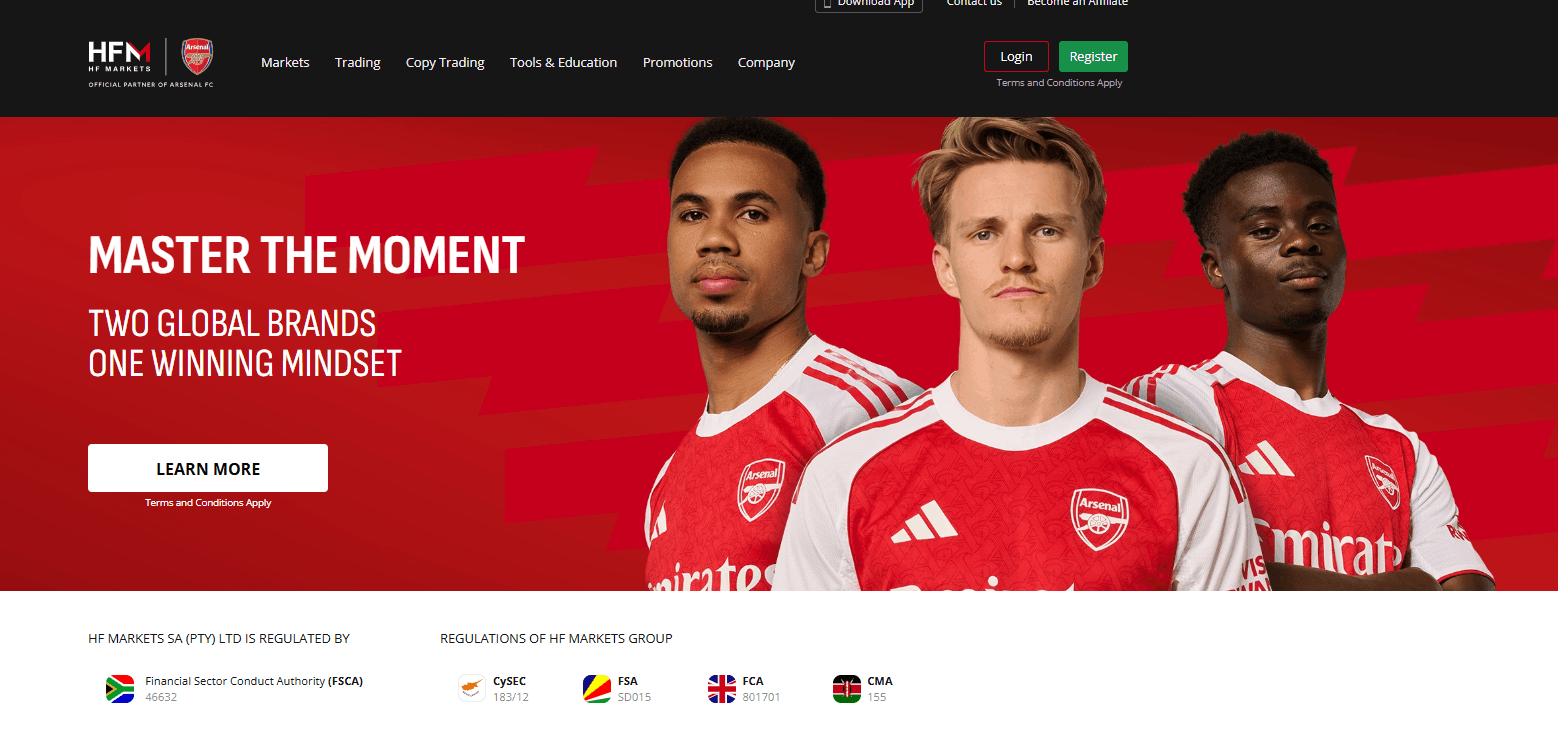
9. HFM

- HF Markets SA (Pty) Ltd holds FSP 46632 and provides intermediary services. Its account agreement indicates that the South African company does not hold client funds; client money is held in a segregated account with the execution venue
- . MT4, MT5, and the HFM platform are available.
- The legal split between local service and execution venue is the key priority point.
Features
| Feature | HFM |
|---|---|
| South African Entity | HF Markets SA (Pty) Ltd |
| FSP Number | 46632 |
| Service Role | Intermediary |
| Client Money | Held in segregated account with execution venue |
| Platforms | MT4, MT5 and HFM platform |
| Entry Deposit | Account dependent |
| Open an Account | Open Account |
Pros and Cons
| Pros | Cons |
|---|---|
| FSCA-authorised South African intermediary | HF Markets SA does not hold client funds directly |
| Client money is held in a segregated account | Execution venue is a separate part of the legal structure |
| MT4, MT5 and HFM platform available | Traders need to understand the split between local service and execution |
| Multiple platform options | Deposit requirements are account dependent |
Why is HFM's legal structure important for South African traders?
HF Markets SA provides intermediary services but does not hold client funds itself. The execution venue holds client money in a segregated account, so traders need to understand which legal entity performs each role.
Does HF Markets SA hold client funds?
No. Its account agreement indicates that the South African company does not hold client funds. Client money is held in a segregated account with the execution venue.
10. Plus500

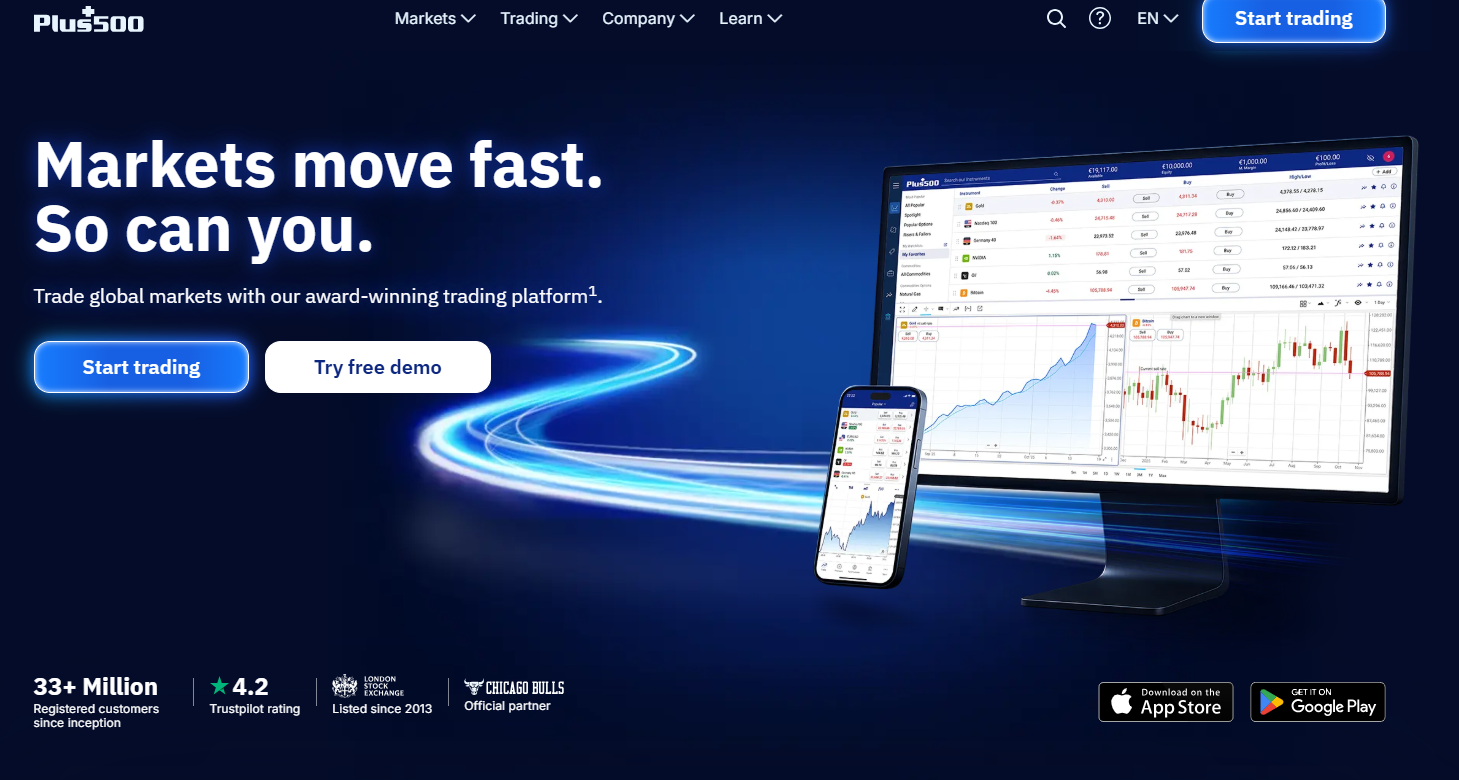
- Plus500AU Pty Ltd is the CFD product issuer for South African clients and holds FSCA FSP 47546 alongside its Australian licence.
- Client money is placed in segregated trust accounts under Australian rules and is not applied to hedge transactions.
- The proprietary platform is suitable for traders who prefer one interface, but the Australian issuer structure warrants careful review before deposit.
Features
| Feature | Plus500 |
|---|---|
| Product Issuer | Plus500AU Pty Ltd |
| FSCA Licence | 47546 |
| Client Money | Segregated trust accounts under Australian rules |
| Platform | Plus500 proprietary platform |
| Entry Deposit | US$100 |
| Issuer Structure | Australian product issuer serving South African clients |
| Open an Account | Open Account |
Pros and Cons
| Pros | Cons |
|---|---|
| Product issuer is clearly identified | Issuer is Australian rather than a South African ODP |
| Segregated trust accounts | Australian legal structure requires careful review |
| Simple proprietary platform | Only one main trading platform |
| FSCA FSP 47546 | Regulation does not protect against CFD market losses |
Why is Plus500 different from the local ODP brokers?
Plus500AU Pty Ltd acts as the CFD product issuer for South African clients and holds FSCA FSP 47546, but the client-money framework is tied to the Australian issuer rather than a South African ODP structure.
How does Plus500 handle client money?
Client money is placed in segregated trust accounts under Australian rules and is not applied to hedge transactions. Traders should read the current account agreement before depositing.
What FSCA regulation means for CFD traders
FSCA regulation establishes oversight of authorised financial service firms, while ODP authorisation deals specifically with OTC derivative providers under the Financial Markets Act framework. An FSP licence and an ODP licence are not interchangeable labels.
A local intermediary can connect a client to a separate product supplier, which changes where contractual responsibility and client money protections are located.
| Structure | Typical role | Client-money position | What to verify |
|---|---|---|---|
| ODP | OTC derivative provider | Provider protection rules can apply to collateral | Exact entity, ODP authority, bank arrangement |
| FSP intermediary | Advice or intermediary service | Funds can rest with a product supplier or execution venue | Supplier, jurisdiction, account agreement |
FSCA Conduct Standard 2 of 2018 sets protection requirements for client or counterparty collateral received or held by an ODP, with duties of care and controls over such collateral. Regulation does not protect a CFD trade against loss.
The account agreement, product supplier, fund location, and complaint route should match the legal entity shown at registration.
How to choose a regulated CFD broker
You can easily assess your shortlist when the legal relationship is checked before spreads or promotional terms. Follow the sequence below before you deposit money:
- Search the FSCA register by legal company name, then match the FSP number and ODP status.
- Confirm which company contracts the account, and which company acts as CFD product supplier or execution venue.
- Read the client money policy, negative balance terms, leverage controls, risk disclosure, and complaints process.
- Compare spreads, commission, overnight finance, currency conversion, deposit routes, withdrawal rules, and platform features.
- Test the platform on demo, check support responsiveness, then fund cautiously if the account structure fits your requirements.
A trader who prioritises a local ODP structure could rank Markets.com, Scope Markets, or ATFX above an offshore-linked account, while another trader could place platform choice higher after regulatory checks are complete.
Conclusion
Markets.com, Scope Markets, and ATFX lead this regulation-first comparison because each has a South African ODP structure plus documented client money controls.
Vantage and Exness follow with credible regulatory credentials but different legal arrangements, while other brokers offer alternative combinations of platforms, deposits, and account structures.
Regulation should be the first filter, not the final decision. Verify the FSCA record, read the current account agreement, compare total trade cost, and confirm where client money is held before you open or fund a CFD account.
Review the detailed SAShares broker pages for your shortlist before you choose an account.
You might also like:
- Best CFD Brokers
- Best Forex Brokers in South Africa
- Best FSCA-Regulated Forex Brokers
- Best Trading Platforms in South Africa
- CFD Trading
Frequently asked questions
Is CFD trading legal in South Africa?
CFD trading is legal in South Africa. Providers and intermediaries that serve South African clients can fall under FSCA authorisation based on the role each legal entity performs. You should always verify the broker behind the account, not rely on a brand logo or licence badge.
How can I verify an FSCA-regulated CFD broker?
Search the FSCA entity register with the broker’s legal company name, then compare the FSP number, licence categories, and ODP status where relevant with the account agreement. A brand name match is insufficient if the contracted company differs from the local regulated entity.
Does FSCA regulation guarantee my money is safe?
FSCA regulation does not guarantee a CFD deposit or trade against loss. Regulatory oversight can impose conduct, disclosure, capital, and client asset protection obligations, while market losses and counterparty exposure still apply. Client money protection also depends on the legal entity, account terms, and location of the funds.
What is the difference between an FSP and an ODP?
An FSP is authorised to provide specified financial services under the South African financial services framework. An ODP has authorisation tied to OTC derivatives under the Financial Markets Act framework. A broker group can involve both roles, sometimes through separate companies. The contracted entity should be checked before depositing.
What does FSCA regulation actually protect?
FSCA regulation creates rules around authorised financial services, conduct, disclosure and accountability. Depending on the legal role, it can also affect how client money or collateral is handled. It does not guarantee profit, prevent CFD losses or eliminate counterparty risk. Traders still need to understand leverage, account terms and the exact company behind the service.
Why is ODP authorisation important for CFD traders?
ODP authorisation relates specifically to over-the-counter derivative providers. Because CFDs are OTC derivatives, the ODP role helps identify which company is authorised to provide the derivative itself. This is different from an FSP intermediary that may connect the client to another product supplier.
Are segregated client accounts completely risk-free?
No. Segregation is an important client-money protection because it separates client funds from ordinary company operating money, but it does not guarantee that a trader cannot lose money. Market losses, counterparty exposure, legal-entity risk, and operational issues can still apply.
Should I choose the CFD broker with the lowest minimum deposit?
No. A low minimum deposit can make an account easier to access, but it says very little about the quality of the regulatory structure, client-money arrangements or trading conditions. Legal entity transparency, regulation, total cost and withdrawal terms should come before the minimum deposit.
How do I know which company actually holds my CFD account?
Check the account-opening documents, client agreement and regulatory disclosure rather than relying only on the broker brand. The legal company named in those documents should match the relevant FSCA record and should clearly explain whether it acts as the product supplier, ODP, intermediary or execution venue.
Can an FSCA-regulated broker still use an offshore product supplier?
Yes. Some South African FSPs act as intermediaries between the client and another company that supplies or executes the CFD. That is why the presence of an FSCA licence alone does not fully explain the account structure. Traders need to identify every relevant entity before depositing.
Is negative balance protection important when trading CFDs?
Negative balance protection can limit the risk of the account falling below zero under the applicable terms, but it does not stop normal trading losses. A trader can still lose the entire amount deposited into the account, so position sizing and leverage control remain important.
Which regulated CFD broker is best for South African traders?
Markets.com ranks first in this regulation-first comparison because its South African entity holds both FSCA and ODP authorisation. Scope Markets and ATFX also rank highly because of their direct South African ODP structures. The best individual choice still depends on the legal entity, client-money arrangement, platform, costs, and account requirements.
You Might Also Like




Recommended brokers