


Most forex traders do not lose money because they picked the “wrong indicator”.
Losses usually come from a combination of excessive leverage, poor position sizing, weak or untested strategies, inconsistent execution, overtrading, emotional decisions, and trading costs.
And retail-loss rates are genuinely high.
IG South Africa currently states that 71% of retail investor accounts lose money when trading CFDs with the provider. In Australia, ASIC reported that 68% of retail CFD investors lost money during the 2024 financial year, with total losses exceeding A$458 million including A$73 million in fees.
That does not mean exactly 68%, 71%, or 90% of all forex traders everywhere lose.
Those are provider- or jurisdiction-specific CFD statistics. However, they clearly show how difficult leveraged retail trading can be.
Reasons why Forex Traders lose money
- According to research in South Africa, the consensus in the Forex market is that 70% to 80% of all beginner Forex traders lose money and end up quitting. These 11 reasons that most Forex traders lose money were compiled by our researchers to keep you from becoming a statistic. Most Forex traders fail. This is a fact. As stated, the consensus on the conservative side is that 70% to 80% of all Forex traders lose money, and this number can go as high as 90%!

🏆10 Best Forex Brokers in South Africa
| Rank | Broker | Broker Review | Regulators | Minimum Deposit | Visit Broker |
|---|---|---|---|---|---|
| 🥇 |  | Read Review | ASIC, FSA, CBI, BVI, FSCA, FRSA, CySEC, ISA, JFSA | $100 | Visit Now |
| 🥈 |  | Read Review | FSCA, FCA, DFSA, FSA, CMA | $0 | Visit Now |
| 🥉 |  | Read Review | CySEC, IFSC, DFSA, FCA | $5 | Visit Now |
| 4 |  | Read Review | ASIC, CySEC, FSA, SCB | $0 | Visit Now |
| 5 |  | Read Review | BVI FSC | $0 | Visit Now |
| 6 |  | Read Review | FSA, FSC, FSCA, ASIC, CMA | $20 | Visit Now |
| 7 |  | Read Review | CBCS, FSA, FSCA, CMA | $10 | Visit Now |
| 8 |  | Read Review | ASIC, CySEC, FSCA, FSA, FSC, CMA | $100 | Visit Now |
| 9 |  | Read Review | CySEC, MWALI, FSCA | $25 | Visit Now |
| 10 |  | Read Review | FSA, CySEC, FSCA, FSC | $10 | Visit Now |

Why do Forex traders lose money with insufficient capital?
Traders often start with too little capital, hoping for quick profits. Small funds combined with high leverage can lead to rapid losses. Adequate starting capital and careful risk management are essential to survive in Forex trading.
Top 11 Reasons why Forex Traders lose money
- Insufficient Start-Up Capital
- Poor Risk Management
- Not Accepting Responsibility for Losses and Mistakes
- Overtrading
- Risking Too Much on Individual Trades
- Poor Trade Management or No Trade Management
- Not Having a Defined Trading Strategy
- Unrealistic Expectations
- Trading Addiction and Compulsive Trading
- Getting Psyched Out by the Market
- Lack of Forex Trading Education
1. Insufficient start-up capital
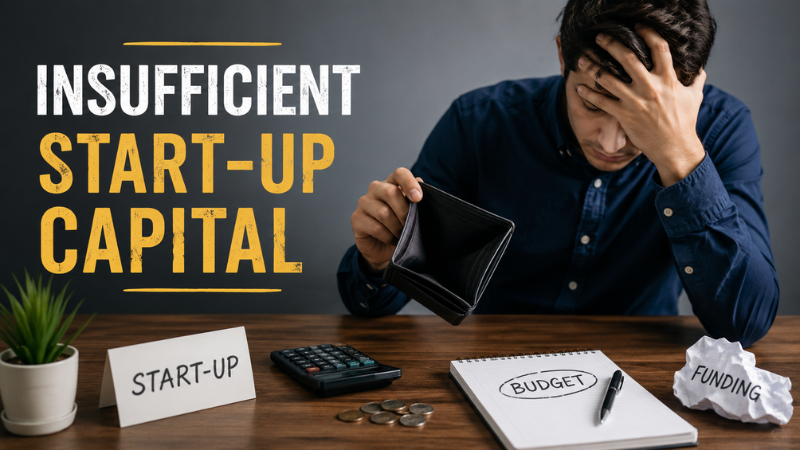
A small trading account is not the problem. Unrealistic expectations are.
There is nothing wrong with starting forex trading with a small amount of money.
A smaller account can still teach you how orders work, how spreads affect trades, how position sizing feels in practice, and how different live trading is from a demo account.
The trouble starts when the income target doesn't match the account size.
Say you start with R5,000 and expect to make R2,000 every month.
That's a 40% monthly return before you even account for losing trades, spreads, commissions or other costs.
Trying to force that kind of return out of a small account can push traders into:
- using too much leverage
- opening positions that are too large
- overtrading
- chasing volatile markets
- refusing to accept smaller gains
- risking money they actually need elsewhere
Leverage makes this worse because a relatively small market move can create a much bigger loss when the position is oversized.
Does a forex trader need a large account?
No. What matters more is whether your expectations fit the size of the account.
A R2,000 or R5,000 account should not be expected to produce a full-time income straight away.
With a smaller account, the sensible adjustment is usually smaller financial expectations, not bigger trades.
2. Poor Risk Management
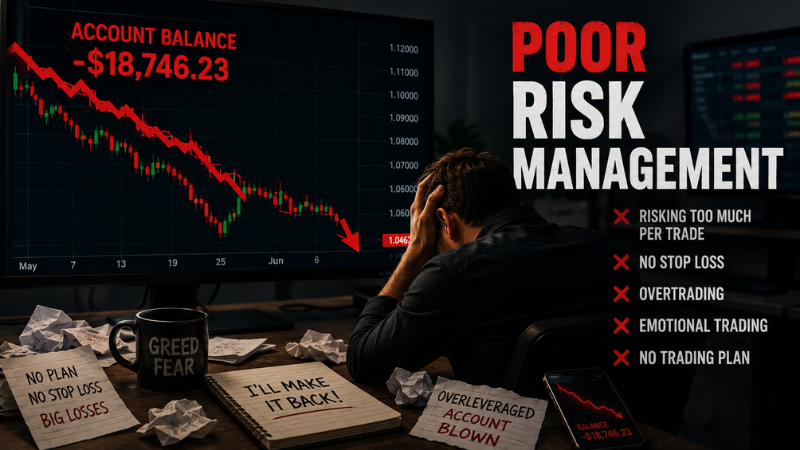
Poor risk management is often what turns a normal losing trade into a serious account problem.
You can't control what EUR/USD, GBP/USD, or USD/ZAR does after you enter.
You can control the size of the position.
You can also control:
- how much of the account is at risk
- where the trade idea is clearly wrong
- whether a stop loss is in place
- how many similar or correlated positions are open
- how much total risk the account is carrying at once
That matters more than the broker's headline leverage.
The FCA limits leverage for UK retail CFD clients to between 30:1 and 2:1, depending on the market, partly because higher leverage can increase losses very quickly.
So if a broker offers 1:500 or 1:1000, that doesn't mean you should actually use anything close to it.
Simple risk example
Say you have a R20,000 account.
You decide that the most you're prepared to lose on one setup is R200.
That R200 should come first.
Work out where the trade is invalid, measure the stop distance, and then calculate the position size that keeps the loss near R200 if the stop is hit.
The order should be:
Choose acceptable loss → set a logical stop → calculate position size
Not:
Pick a big position → force the stop to fit
Risk management starts before you click buy or sell.
3. Not accepting responsibility for losses and mistakes
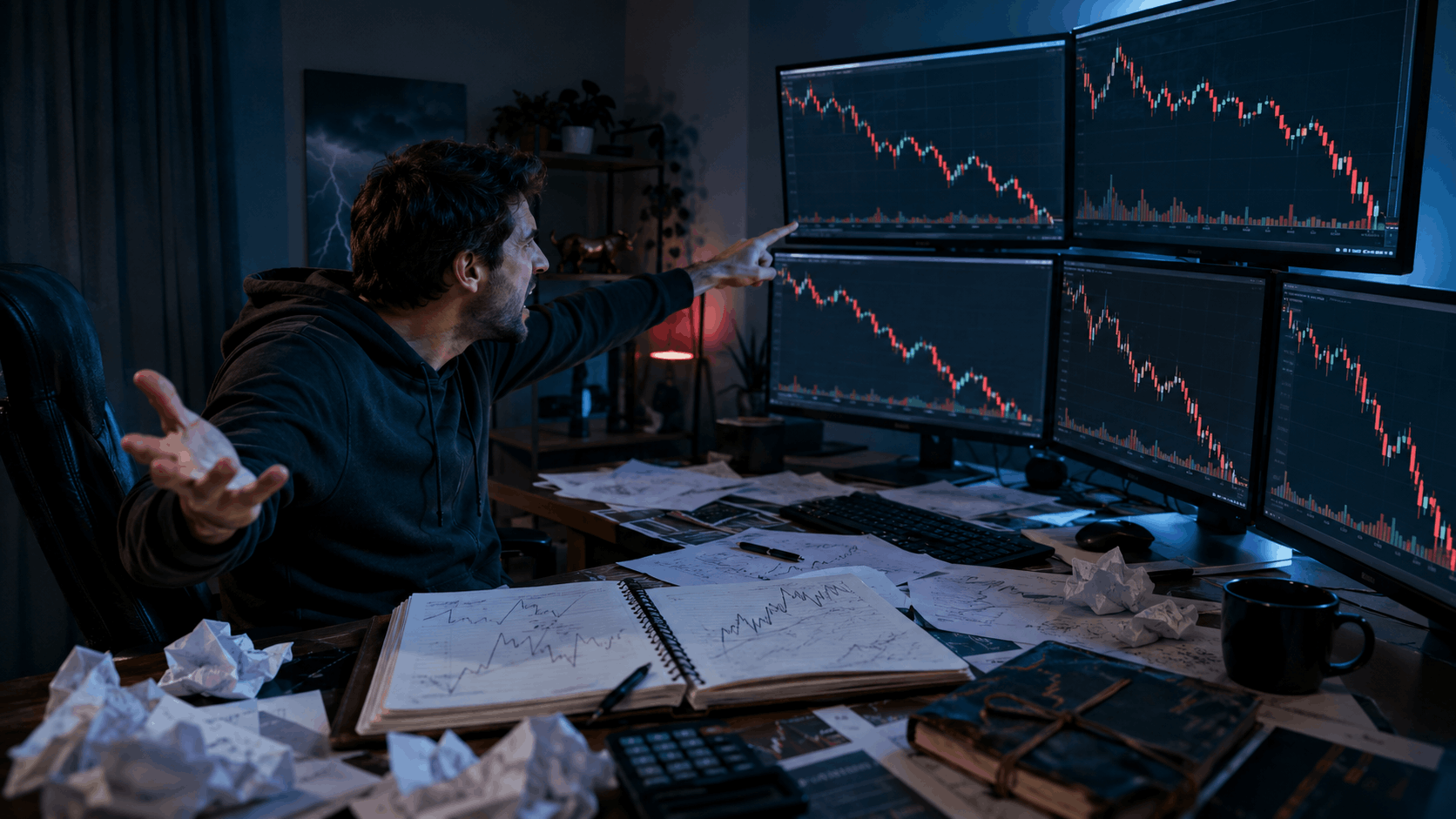
Taking responsibility doesn't mean blaming yourself for every losing trade.
Sometimes the market just does something you couldn't control.
Prices gap. Slippage happens. News hits unexpectedly. Platforms can fail. Brokers can have genuine execution or service problems.
But after you've ruled those things out, there is still one useful question to ask:
What part of this trade was actually under my control?
Look at things like:
- Was the setup valid?
- Was the position too large?
- Did I enter because of FOMO?
- Did I ignore a major economic release?
- Did I move the stop?
- Did I break my own rules?
- Did I keep trading after hitting my loss limit?
- Or was this simply a normal losing trade?
That review matters because the same mistakes tend to show up again if you never identify them.
A trading journal helps with this. It lets you separate what the market did from what you did.
Losing trade vs trading mistake
They are not the same thing.
A trade can lose even when:
- the setup was valid
- the risk was controlled
- the strategy was followed
- the position was managed properly
That's just a normal trading loss.
A process mistake is different.
Entering without a setup, doubling your position after a loss, or removing a stop are mistakes even if the trade somehow ends up profitable.
The aim isn't to eliminate every losing trade.
It's to stop repeating avoidable mistakes.
4. Over-trading
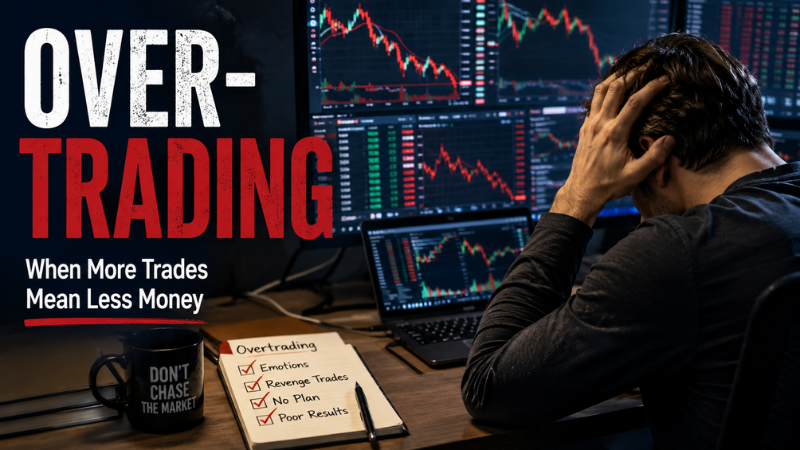
- Over-trading is one of the most common things in Forex trading, preventing you from making money.
- Forex traders who spontaneously jump in and out of the market and who are indecisive in their trading will not only lose trades, but they will rack up a lot more fees via spreads and/or commissions. commissions.
- A Forex trader does not have to make a lot of trades to be successful; you just need to make the correct trades.
- This is why a Forex trading strategy is crucial, as being able to recognize the right conditions in order to make a trade. And this applies to day trading as well.
5. Risking Too Much on Individual Trades
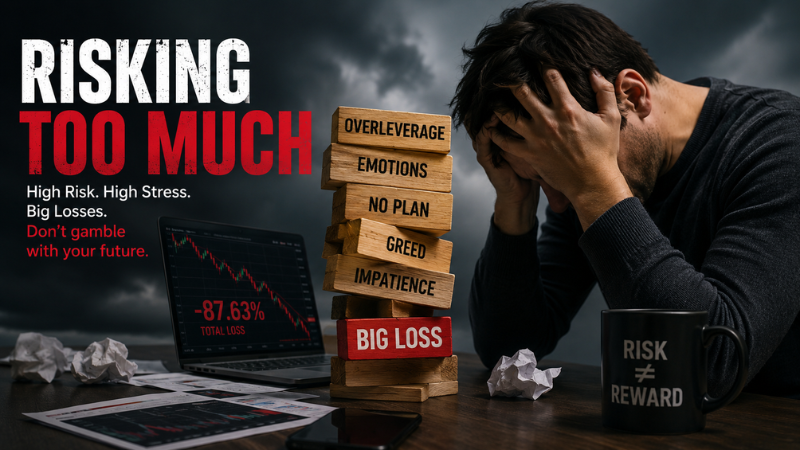
Risk management is the overall framework.
Risking too much on an individual trade is the specific mistake of making one position large enough to cause serious damage.
Every strategy experiences losing streaks.
If one ordinary losing trade removes 10%, 20% or more of the account, a short run of losses can become extremely difficult to recover from.
Consider five consecutive losses.
If each loss removes 10% of the remaining balance, the account falls by roughly 41%.
Recovering from that drawdown requires a gain of almost 70% on the remaining capital just to return to the starting point.
This is why large losses become progressively harder to recover from.
How much should you risk?
There is no percentage that automatically makes every forex trade safe.
Different strategies, account sizes, and traders have different tolerances.
The important rule is:
Decide the maximum acceptable loss before entering the trade.
Then calculate the position accordingly.
Do not increase risk because:
- the previous trade lost
- you are “certain” about the setup
- an influencer called it a guaranteed trade
- you need to hit a weekly target
- the broker offers high leverage
Confidence does not change the underlying uncertainty of the market.
6. Poor Forex trade management / no trade management
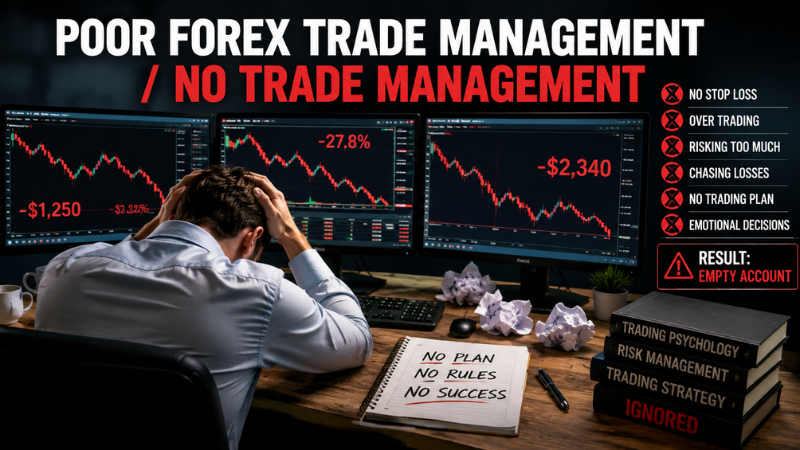
- This is not about following a trading plan and knowing when to enter the Forex trade. After you enter the trade, the hard part starts.
- Shockingly, most Forex traders have no Forex trade management plan, either out of ignorance or because they think they need to do it alone.
- But it is hubris to take this stance, and you will be hurting your Forex career if you think that you will just react the right way even when there is a lot of pressure.
- It is only logical that when you have something especially important on the line, like money, people act differently, more emotionally.
- By having a clear trade management plan, which includes when to open a trade, when to close it, your minimum risk-to-reward ratio, the percentage you are willing to risk of your account value, and so much more.
- When you are tempted to go on instinct or react emotionally, you will be disciplined to follow the plan.
7. Not Having a Defined Trading Strategy
Without a clear strategy, forex trading can quickly turn into a string of unrelated decisions.
One trade is based on an oversold RSI.
The next one comes from a moving-average crossover.
Then it's a Telegram signal.
Then a breakout.
Then something seen on social media.
Then a central-bank headline.
At that point, there is no consistent process to measure. If the trades lose, you don't really know what failed because every decision came from a different method.
A forex strategy should spell out at least:
- which market you trade
- which timeframe you use
- the market conditions you're looking for
- what triggers an entry
- what tells you the setup is wrong
- where the stop goes
- how profits are taken
- how position size is calculated
IG's current trading education also recommends having a clear trading plan that covers your goals, strategy, risk management, and review of previous trades.
One strategy will not work in every market
A trend strategy can struggle when price is stuck in a tight range.
A range strategy can get caught when a real breakout starts.
A scalping strategy can stop making sense when spreads widen enough to eat into each trade.
And a news strategy behaves very differently from a four-hour swing setup.
So there are really two questions to answer before trading:
- What is my strategy?
- When should I use it?
Knowing the setup is only half the job. You also need to know the market conditions it was built for.
| ✅Pros | ❌Cons |
| Pros (of having a strategy) Cons (of not having a strategy) Gives traders a structured plan for entries and exits. | Leads to random decisions based on emotions. |
| mproves consistency and reduces unnecessary risks. | Increases chances of rapid losses and blown accounts. |
| Helps traders master risk & money management. | Makes traders chase patterns or signals that aren’t real. |
| Builds confidence and discipline in trading. | Causes confusion, impulsive trades, and strategy hopping. |
8. Unrealistic Expectations

- Forex is not a get-rich-quick scheme. The only way to be successful and have longevity in the Forex market is to develop patience and consistency.
- Forex traders should not be looking to make a lot of money in a couple of big trades. This will certainly lead to big losses over time.
- Knowing how to make smart, smaller trades every day over time is the best option.
- You also have to resign yourself to the fact that losses WILL happen. No one wins all the time. Not even the best Forex traders always win their trades.
- What they do, however, is accept losses and cut them as quickly as possible to minimize risk and loss and move ahead.
- Forex trading is a marathon, not a sprint, and your overall performance over the long term is much more important than what happens on one single day.
- Just make sure to minimize your market exposure per trade, so that you can have the capital to trade another day.
9. Trading Addiction
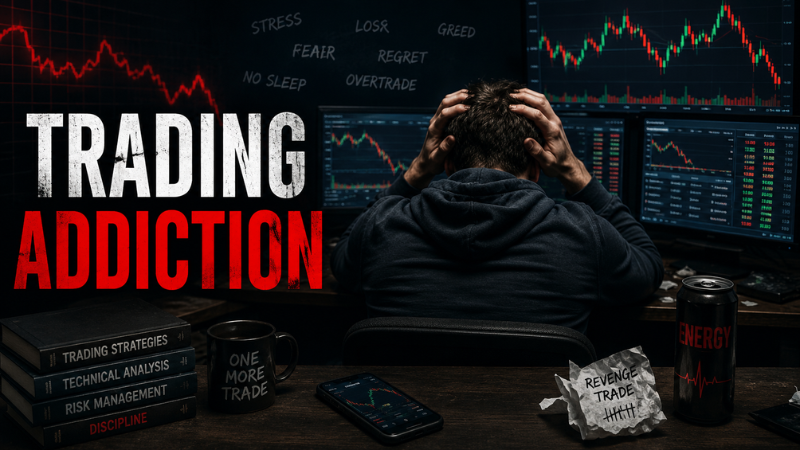
- Yes, you can get addicted to Forex trading and day trading, much like you can get addicted to anything else.
- Forex day trading particularly brings with it a lot of excitement and a rush of adrenaline, as well as big highs when you win a trade, and lows when you lose.
- This emotional roller coaster can be seriously addictive. This Forex trading addiction can cause you to lose money as you start to chase the price and get caught up in the excitement and emotion.
- Once again, this is why traders need to enter the market with a clear exit strategy if things are not going their way.
- Chasing the price, which is opening and closing trades with no plan, is the opposite of this approach and is not trading. It is gambling.
- When you recognize you are losing control or getting too emotionally attached to your Forex trades, it is better to exit trading for the day and keep your account balance intact.
Getting Psyched Out!
This topic covers quite a few different subtopics, but they all deal with the same thing. You let the market and your trading get in your head and mess with your trading plan.
Indecisive Trading: Do not second-guess yourself and jump from trade to trade erratically. Pick a direction according to your trading strategy and stick with it. If not, you can find your trading capital dwindling quickly.
10. Refusing to Be Wrong

- Some trades will just not go your way. It happens. We want to be right, and we get upset if we are not, but do not let that psyche you out.
- Being wrong sometimes is just part of trading. As a Forex trader, you just have to accept that you are wrong sometimes and move on.
- Get used to it because admitting you are wrong, cutting and minimizing losses, and moving on is a lot easier to take than insisting you are right and ending up with nothing left in your trading account.
11. Lack of Education
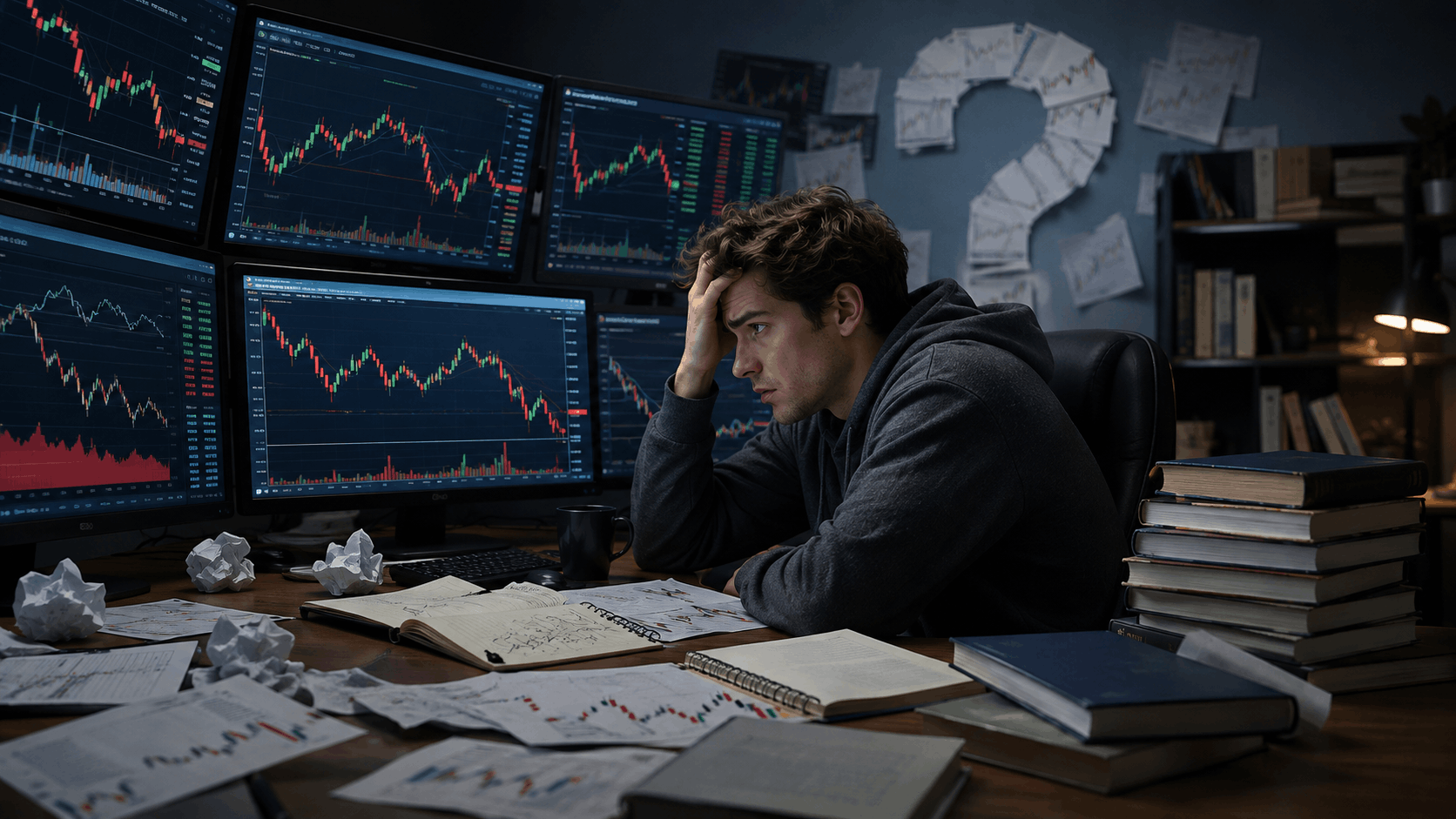
- Forex trading is, most definitely, one of the most complex subjects; in fact, most traders go into the market without being fully informed about it.
- To aggravate the situation, most people have no idea of such terms as leverage, pips, and spreads, which leads to expensive mistakes.
How to Avoid This
- Take a good forex trading course.
- Practice live trading on a demo account.
Poor Risk Management
Risk, as an important criterion for long-term trading success, can be abused by traders who risk too much on a single trade, which results in very high losses. How to Avoid This: Set risk per trade, such as 1-2% of the capital. Use stop-loss orders to protect investments.
Conclusion
These are not the only reasons that Forex traders fail and lose money, but they are certainly the main ones and the ones that are the most common. Becoming a real student of the Forex market, doing your research, developing a solid trading plan, managing your capital as well as developing great trading attributes like patience, will all ensure that you will have a long and successful trading career.
You might also like:
- Biggest and Top 10 Forex Brokers in the World
- Best Currency Pairs to Trade for Beginners
- Best Forex No Deposit Bonus Brokers
- Best High Leverage Forex Brokers
- Most Volatile Forex Pairs
Frequently Asked Questions
How does high leverage cause losses in Forex?
High leverage amplifies both profits and losses. Beginners often overuse leverage, risking more than they can afford. Without proper risk management and position sizing, high leverage can quickly deplete a trading account.
Can emotional trading lead to Forex losses?
Yes. Emotional decisions, such as chasing losses or trading impulsively, can override strategy. Discipline is crucial. Traders who control emotions and follow strict plans minimize mistakes and protect their capital in volatile markets.
Why is the lack of a trading strategy risky?
Trading without a clear strategy increases the chances of random losses. Successful traders use tested methods, risk management rules, and clear entry/exit plans to reduce mistakes and maintain long-term profitability.
How does overtrading affect Forex accounts?
Overtrading, taking too many trades, or trading large positions impulsively, increases exposure to losses. Limiting trades to well-analyzed opportunities helps protect capital and avoid burnout, common among beginner traders.
Why do beginners ignore stop losses?
Skipping stop-loss orders exposes traders to unlimited losses when the market moves against them. Stop losses are essential risk management tools to prevent catastrophic account drawdowns.
How does insufficient Forex education contribute to losses?
Lack of understanding about market dynamics, technical analysis, and risk management often causes mistakes. Educated traders use knowledge to make informed decisions, reducing the likelihood of losing money.
Can unrealistic profit expectations cause losses?
Yes. Expecting consistent huge returns pushes traders to take unnecessary risks. Realistic goals combined with patience and proper money management increase chances of steady, long-term profitability.
Why does poor money management lead to losses?
Failing to manage trade size, leverage, and capital allocation increases risk. Proper risk management, like risking only 1–2% of capital per trade, ensures losses don’t wipe out an account.
How does trading without a demo account increase risk?
Skipping practice on demo accounts prevents beginners from learning strategies safely. Using demo accounts allows traders to develop skills, test strategies, and understand market behavior before risking real money.
Why do most Forex traders lose money?
Most Forex traders lose money because they lack a solid trading plan, use excessive leverage, fail to manage risk, and let emotions drive their decisions. Common mistakes include overtrading, moving stop-loss orders, chasing losses, and entering trades without proper analysis.
You Might Also Like




Recommended brokers