


This Celo review has revealed that Celo, also known as CELO, that it's entire ecosystem centered around smartphone technology, with applications as well as payment solutions being developed for mobile users.
| Aspect | Details |
| 🪙 Name | Celo (CELO) |
| 📅 Launch Year | 2020 (mainnet launch) |
| 🔗 Blockchain Origin | Originally its own Layer‑1; migrated to Ethereum Layer‑2 (OP Stack) |
| ⚙️ Consensus Mechanism | Proof‑of‑Stake (PoS) validator‑based governance |
| 🧮 Mining Algorithm | N/A (PoS; no mining algorithm like PoW) |
| 🖥️ Mining Type | Not applicable (staking & validation instead of mining) |
| 💎 Maximum Supply | 1,000,000,000 CELO |
| ⏱️ Block Time | ~1 second (fast finality on L2) |
| 💸 Transaction Fees | Very low (sub‑cent, multi‑token gas payment) |
| 🚀 Transaction Speed | ~1 sec block finality; up to ~1.4k TPS reported |
| 🔐 Privacy Features | Decentralized identity & phone‑number mapping; privacy‑preserving identity proofs (Self Protocol) |
| 🌍 Use Case | Global payments, DeFi, stablecoins (cUSD/cEUR) & financial inclusion |
| 👥 Target Users | Mobile users, emerging markets, DeFi participants |
| 📉 Market Position | Established mobile‑first blockchain with active ecosystem (ranked among notable EVM chains) |
| 🔄 Exchange Availability | Widely listed on major exchanges (CELO) |
| 🧠 Key Advantage | Mobile accessibility & ultra‑low fees for real‑world transactions |
| ⚠️ Risk Level | Medium‑high (crypto market volatility & evolving L2 ecosystem) |
Live Price

🏆10 Best Forex Brokers in South Africa
| Rank | Broker | Broker Review | Regulators | Minimum Deposit | Visit Broker |
|---|---|---|---|---|---|
| 🥇 |  | Read Review | ASIC, FSA, CBI, BVI, FSCA, FRSA, CySEC, ISA, JFSA | $100 | Visit Now |
| 🥈 |  | Read Review | FSCA, FCA, DFSA, FSA, CMA | $0 | Visit Now |
| 🥉 |  | Read Review | FSCA, FSC, CYSEC, DFSA, CMA, FSC, FSA | $5 | Visit Now |
| 4 |  | Read Review | ASIC, CySEC, FSA, SCB | $0 | Visit Now |
| 5 |  | Read Review | BVI FSC | $0 | Visit Now |
| 6 |  | Read Review | FSA, FSC, FSCA, ASIC, CMA | $20 | Visit Now |
| 7 |  | Read Review | Exness is a globally regulated broker, holding multiple licenses from respected financial regulators around the world. | $10 | Visit Now |
| 8 |  | Read Review | ASIC, CySEC, FSCA, FSA, FSC, CMA | $100 | Visit Now |
| 9 |  | Read Review | FSC | $10 | Visit Now |
| 10 |  | Read Review | FSA, CySEC, FSCA, FSC | $10 | Visit Now |


What is Celo?
Celo is a modern, innovative platform which encourages the adoption of digital money along with its use. It is an open-source blockchain protocol that enables the use of smart contracts to develop decentralised applications (DApps) which will use payment solutions as well as Celo assets.
Key Features and Takeaways of Celo
Celo is a popular cryptocurrency project that has some of the following key features and takeaways:
- Accessible: Celo brings crypto to mobile-first users and emerging markets.
- Practical: Low fees and stablecoins enable real-world payments and DeFi participation.
- Secure and Fast: PoS validators ensure network security with fast finality.
- Inclusive: Decentralized identity and mobile usability promote adoption in underserved regions.
- Interoperable: Works with Ethereum tools and smart contracts for developers.
- Celo stands out as a mobile-friendly, efficient, and inclusive blockchain that bridges DeFi and everyday payments while maintaining fast, low-cost, and scalable transactions.
Celo Mining
- Celo does not use traditional mining like Bitcoin or other Proof-of-Work blockchains. Instead, it operates on a Proof-of-Stake (PoS) system, where token holders can participate as validators or delegators by staking their CELO.
- Validators secure the network, propose blocks, and confirm transactions, earning rewards in return, while delegators can stake through validators to earn a share of the rewards without running a node themselves.
- This approach makes Celo energy-efficient, fast, and accessible to a wider audience, while also maintaining network security through slashing mechanisms that penalize malicious behavior.
- Overall, Celo’s PoS model combines sustainability, inclusivity, and financial incentives for active participants.
| 🔢 Aspect | 📌 Details |
| 🪙 Token | CELO |
| ⚙️ Mining Type | Not mined – uses Proof-of-Stake (PoS) instead |
| 🧮 Mining Algorithm | N/A – validators stake CELO instead of mining |
| 🖥️ Validator Role | Secure network, propose & confirm blocks, earn rewards |
| 💰 Rewards | CELO rewards for staking & participating in consensus |
| ⏱️ Block Time | 1 second per block |
| 💸 Transaction Fees | Very low; validators earn a portion of network fees |
| 🔐 Security Mechanism | PoS with validator slashing for malicious activity |
| 🌍 Accessibility | Anyone can stake CELO via validators or delegators |
| ⚠️ Risk Level | Medium – staking rewards vs. price volatility; slashing risk for validators |
Pros and Cons
| ✅ Pros | ❌ Cons |
| Celo app is reliable, and it is designed to give users the best possible experience | Celo is not compatible with Ethereum, which means that there is no interoperability between the two blockchains |
| The Celo app makes deposits and withdrawals quick and hassle-free | Celo cannot achieve mass adoption without interoperability with Ethereum as it is a large, significant blockchain |
| The Celo platform is designed to deliver fast and easier processing | Celo faces many issues with scalability |
| Celo is fully decentralised, removing all intermediaries | Celo does not have high liquidity, which means that transaction speed is not optimal |
| The blockchain technology used by Celo enables it to remain transparent and accessible by all while ensuring protection and security | There is a limited number of assets available and small annexes |
| Celo has quality adaption to smartphone technology and innovations | The focus is on developing countries and not established, larger, more developed economies |
Should you buy Celo?
Celo offers mobile-first crypto payments, fast transactions, low fees, and staking rewards. It’s ideal for long-term investors interested in DeFi and emerging markets, but price volatility and adoption risks remain.
How to buy Celo (CELO)
Step 1: Choose a Cryptocurrency Exchange
- CELO is available on major exchanges like Binance, Coinbase, Kraken, and KuCoin. Check fees, security, and whether the exchange supports your local currency.
Step 2: Create and Verify Your Account
- Sign up on your chosen exchange, complete identity verification (KYC), and enable two-factor authentication (2FA) for security.
Step 3: Deposit Funds
- Deposit fiat currency (USD, EUR, ZAR, etc.) via bank transfer, credit/debit card, or deposit other crypto like BTC or ETH if you already hold it.
Step 4: Buy CELO
- Navigate to the CELO trading pair (e.g., CELO/USD, CELO/BTC), enter the amount you want to buy, and execute the trade.
Step 5: Secure Your CELO
- For long-term holding, transfer CELO to a personal wallet (hardware wallet like Ledger, or mobile wallet like Celo Wallet) instead of leaving it on the exchange.
Step 6: Consider Staking
- You can stake CELO via the official Celo Wallet or supported validators to earn rewards, while helping secure the network.
Celo Builders – Funding & Support
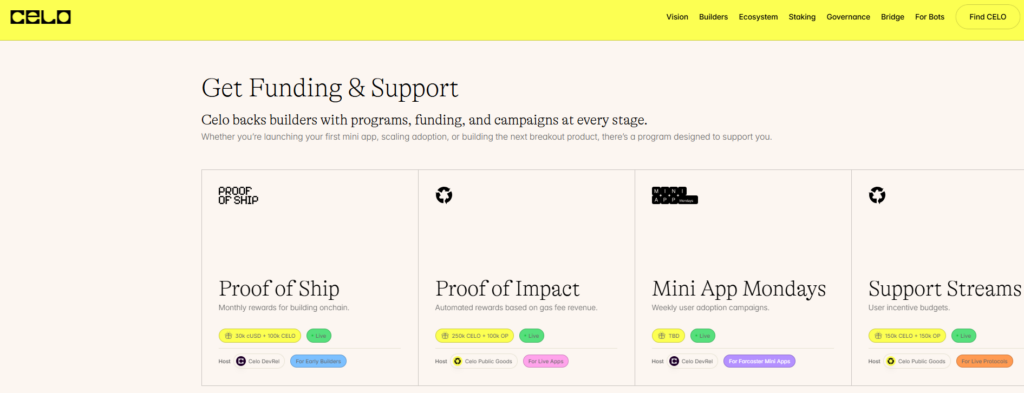
- Celo actively backs builders at every stage — from first app ideas to scaling products that reach millions.
- Its ecosystem provides programs, grants, rewards, and accelerator opportunities designed to help developers build, launch, grow, and sustain successful onchain applications and tools.
What’s Available for Builders
| 🗂️ Category | 📌 Support Type | 🛠️ Description |
| 💡 Early Rewards | Proof of Ship | Monthly rewards for onchain progress and project development. |
| 📈 Usage‑Based Rewards | Proof of Impact | Earn CELO/OP incentives based on real user activity and gas fees your app generates. |
| 📢 Adoption Campaigns | Mini App Mondays & Support Streams | Incentive budgets and user‑growth campaigns for live apps. |
| 🤝 Growth Funding | Prezenti Grants | Milestone‑based grant funding (e.g., $25K–$50K) for high‑growth projects. |
| 💼 Strategic Investment | Celo Builder Fund | Targeted capital (~$25K per project) for live, traction‑ready applications. |
| 📊 Ecosystem Grants | Ecosystem‑Led Funding | Multiple programs supporting builders at different stages — e.g., Support Streams, Commons Builder Income, and liquidity incentives. |
| 🚀 Accelerators | Celo Camp & Incubators | Deep mentorship, curriculum, technical & business support, and networking through accelerator programs. |
Celo Documentation Overview
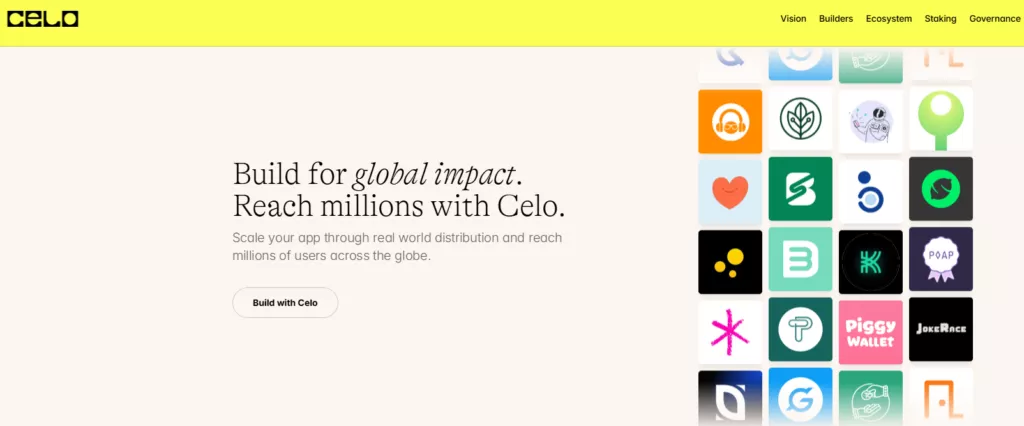
- The Celo Docs provide developers and builders with everything needed to understand, build, and grow on the Celo blockchain.
- It includes guides, SDKs, tutorials, testnets, funding programs, and ecosystem resources for mobile-first dApps and DeFi projects.
| 🔢 Aspect | 📌 Details |
| 🪙 Blockchain | Celo – mobile-first, EVM-compatible Layer-1 & Layer-2 |
| 📘 Purpose | Learn, build, and grow projects on Celo |
| 🧰 Tools & Resources | SDKs, tutorials, testnets, blockchain explorers |
| 💡 Use Cases | Mobile apps, DeFi, stablecoins (cUSD/cEUR), financial inclusion |
| 🤝 Builder Support | Grants, accelerators, rewards, mentorship, community programs |
| ⚙️ Development Guides | Smart contract deployment, mini apps, bridges, wallets |
| 🧠 Target Users | Developers, builders, entrepreneurs, ecosystem contributors |
| 🌍 Access | docs.celo.org |
Discover What You Can Build on Celo
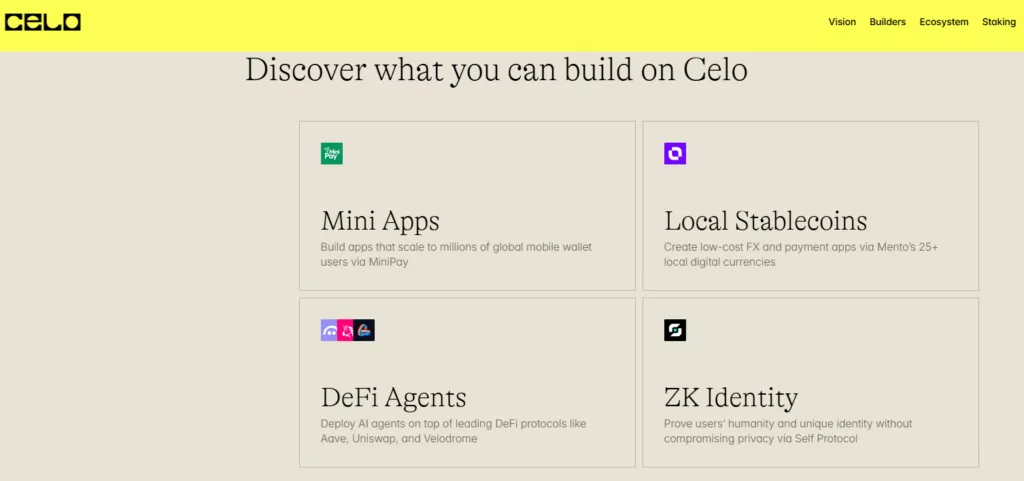
- Celo enables developers to create mobile-first, scalable applications for a global audience.
- Build Mini Apps with MiniPay, develop local stablecoin payment and FX apps via Mento, deploy AI-powered DeFi agents, and implement privacy-preserving identity verification using Self Protocol.
How Celo Works
- Celo is designed as a mobile-first blockchain ecosystem, meaning its infrastructure is optimized for smartphone users rather than traditional desktop-based crypto environments.
- This approach is particularly important for increasing adoption in regions where mobile devices are the primary gateway to the internet.
- At its core, Celo uses a Proof-of-Stake (PoS) consensus mechanism combined with lightweight cryptographic processes to enable fast, low-cost transactions.
- Unlike many blockchains that require powerful hardware, Celo allows users to interact with the network using standard mobile devices.
Key Operational Components
Validators and Consensus- Validators are responsible for securing the network by validating transactions and proposing new blocks. They stake CELO tokens and are rewarded for honest participation.
Delegators
- Users who do not run validator nodes can still participate by delegating their CELO to validators and earning a portion of staking rewards.
Light Clients
- Celo supports lightweight nodes that can run on smartphones, enabling users to verify transactions without downloading the entire blockchain.
Celo Stablecoins Explained
- One of Celo’s strongest features is its native stablecoin system, designed to make crypto usable for everyday transactions.
Key Stablecoins in the Ecosystem
- cUSD (Celo Dollar) – Pegged to the US Dollar
- cEUR (Celo Euro) – Pegged to the Euro
These stablecoins are backed by a reserve system, which includes a basket of crypto assets.
Why Stablecoins Matter
- Reduce price volatility
- Enable real-world payments
- Support remittances and cross-border transfers
- Power DeFi applications
Celo’s stablecoins make it possible to use blockchain technology as a practical payment solution, rather than just a speculative asset.
Mobile-First Innovation
- Celo differentiates itself through its focus on mobile accessibility.
Phone Number-Based Identity
- Celo allows users to link wallet addresses to phone numbers, simplifying crypto transactions.
Benefits:
- Easier onboarding for new users
- Familiar experience similar to mobile banking
- Reduced complexity compared to traditional wallet addresses
Lightweight Wallet Infrastructure
Celo wallets are designed to:- Operate efficiently on low-end smartphones
- Use minimal data
- Provide fast transaction confirmations
This makes Celo particularly valuable in emerging markets.
Celo Ecosystem Overview
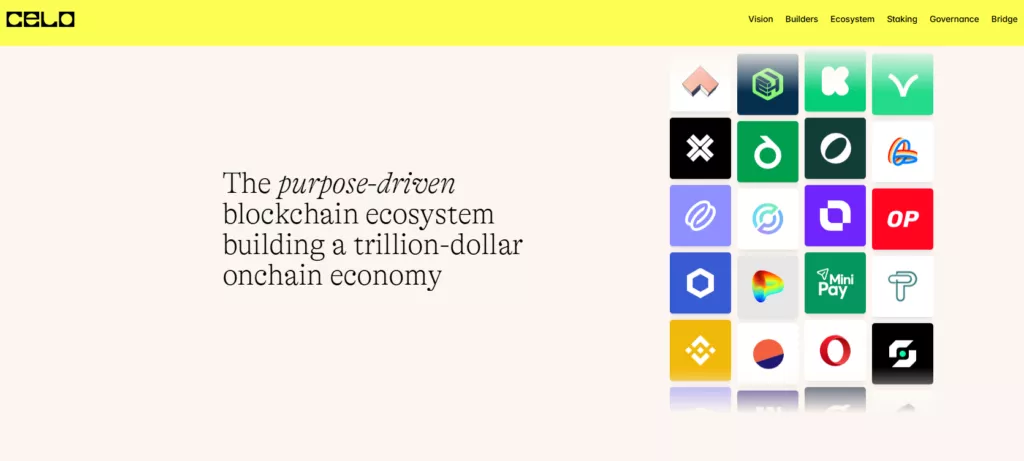
Celo has developed a growing ecosystem of applications, tools, and services.
Core Components
Celo PlatformThe blockchain infrastructure supports transactions and smart contracts. Mento Protocol A system that powers stablecoins and maintains price stability. Valora Wallet A mobile wallet designed for easy payments and financial access. MiniPay & Mini Apps Lightweight applications for payments, DeFi, and services.
| Topic | Answer for South Africa |
|---|---|
| Forex market open | Around 11:00 pm SAST Sunday during US daylight saving, or 12:00 am SAST Monday during US standard time. |
| Forex market close | Around 11:00 pm or 12:00 am SAST on Friday night, depending on the season and broker. |
| Best trading session | London session and London-New York overlap. |
| Best time for part-time traders | Afternoon to early evening SAST, when London and New York overlap. |
| Worst beginner time | The first hour after Sunday open and late Friday before the weekend close. |
| Main risk at market open | Wide spreads, gaps, low liquidity, and sudden reversals. |
Real-World Use Cases of Celo
Celo is built for practical adoption, not just speculation.
Mobile Payments
Users can send money globally using just a phone number, making transactions simple and fast.
Cross-Border Remittances
Celo enables low-cost international transfers, reducing reliance on expensive traditional remittance services.
Financial Inclusion
Celo provides access to financial services for unbanked populations, especially in developing regions.
DeFi Applications
Users can participate in:
- Lending and borrowing
- Yield farming
- Stablecoin savings
Merchant Payments
Businesses can accept stablecoins, enabling crypto payments with minimal volatility.
Tokenomics of CELO
Understanding CELO’s tokenomics is essential for evaluating its long-term potential.
Key Functions of CELO Token
- Governance voting
- Staking and network security
- Transaction fees
- Stability mechanism support
Supply Dynamics
CELO does not have a fixed supply like Bitcoin but follows a controlled emission model. Key Elements:
- Inflationary rewards for validators
- Reserve backing for stablecoins
- Governance-controlled monetary policy
Governance and Decentralisation
- Celo is governed through a community-driven system.
Governance Features
- Proposal submissions
- Voting by CELO holders
- Protocol upgrades
- Monetary policy adjustments
This ensures that the network evolves based on community consensus rather than central control.
Advantages of Celo
Celo offers several key strengths:
- Mobile-first design
- Low transaction fees
- Fast transaction speeds
- Strong focus on financial inclusion
- Built-in stablecoin system
- Energy-efficient Proof-of-Stake
Disadvantages of Celo
Despite its advantages, there are challenges:- Competition from other blockchains
- Adoption still growing
- Market volatility
- Dependence on ecosystem growth
- Regulatory uncertainty
Celo vs Other Blockchains
Understanding how Celo compares helps position its value.
Celo vs Ethereum
- Celo: Mobile-first, low fees
- Ethereum: More mature ecosystem, higher fees
Celo vs Solana
- Celo: Focus on inclusion and payments
- Solana: Focus on high-speed DeFi and NFTs
Celo vs Stellar
- Celo: Smart contracts + DeFi
- Stellar: Payment-focused, less DeFi
Security of the Celo Network
Celo prioritises security through:
- Proof-of-Stake consensus
- Validator incentives
- Slashing penalties
- Smart contract audits
However, risks still include:
- Smart contract bugs
- Network attacks
- Market risks
Developer Ecosystem and Growth
Celo actively supports developers through:
- Grants and funding programs
- Developer tools and SDKs
- Testnets and documentation
- Community support
This encourages innovation and ecosystem expansion.
Who Should Invest in Celo?
Celo is suitable for:
Ideal Investors
- Long-term crypto investors
- Users interested in DeFi
- Those supporting financial inclusion
Not Ideal For
- Short-term traders seeking quick gains
- Risk-averse investors
- Users unfamiliar with crypto
Tips for Investing in CELO
- Diversify your portfolio
- Consider staking for passive income
- Monitor ecosystem growth
- Stay updated with governance proposals
- Use secure wallets
Long-Term Potential of Celo
Celo’s future depends on:Growth Drivers
- Adoption in emerging markets
- Expansion of mobile payments
- DeFi ecosystem growth
- Stablecoin usage
Challenges
- Competition from major blockchains
- Regulatory pressures
- Market conditions
Market Position of Celo
Celo is positioned as a niche but powerful blockchain focused on:
- Financial inclusion
- Mobile payments
- Real-world adoption
Its unique approach differentiates it from many other crypto projects.
Is Celo a Good Investment?
Celo offers strong potential due to:
- Real-world use cases
- Mobile-first design
- Growing ecosystem
However, it remains:
- Volatile
- Adoption-dependent
- Competitive
Future Developments to Watch
Key areas to monitor include:- Expansion of stablecoins
- Growth of Mini Apps
- Increased adoption in emerging markets
- Partnerships and integrations
- Developer activity
Expert Insight on Celo
Celo is one of the few blockchain projects truly focused on real-world usability, particularly in regions underserved by traditional financial systems. Its emphasis on:
- Mobile accessibility
- Stablecoins
- Financial inclusion
positions it as a strong candidate for mass adoption, especially outside traditional crypto markets.
Expanded Use Cases of Celo
To strengthen your page further, here’s an additional section:
| Period | Approximate Forex Open in SAST | What South Africans Should Know |
|---|---|---|
| Northern Hemisphere Daylight Saving | Sunday around 11:00 pm SAST | This usually applies during much of March to November, depending on the exact year and country. |
| Northern Hemisphere Standard Time | Monday around 12:00 am SAST | This usually applies during much of November to March. |
| Broker Server Variation | May differ by a few minutes | Some brokers delay pricing at the weekly open because liquidity is thin. |
Celo vs Traditional Financial Systems
- Celo is not just competing with other blockchains—it is also positioned as an alternative to traditional financial infrastructure.
Key Differences
Accessibility- Traditional banking requires documentation, physical presence, and approval processes. Celo only requires a smartphone and internet access.
Speed
- Bank transfers, especially international ones, can take days. Celo transactions are completed within seconds.
Cost
- Traditional remittance services often charge high fees. Celo offers significantly lower transaction costs.
Control
- Users maintain full ownership of their funds on Celo, unlike banks that act as custodians.
Celo’s Role in Emerging Markets
Celo’s mobile-first approach makes it especially relevant in Africa, Latin America, and Southeast Asia, where:
- Smartphone usage is high
- Banking access is limited
- Remittance demand is strong
Why This Matters
- In many regions, millions of people:
- Do not have access to bank accounts
- Rely on informal financial systems
- Pay high fees for money transfers
Celo addresses these issues by offering:
- Instant digital payments
- Low-cost remittances
- Access to DeFi tools
This positions Celo as a financial inclusion solution, not just a cryptocurrency.
Environmental Impact of Celo
- Celo is designed to be an eco-friendly blockchain.
Sustainability Features
- Proof-of-Stake consensus (low energy usage)
- Carbon-negative initiatives
- Partnerships with climate-focused organisations
Why It Matters
Environmental concerns are becoming increasingly important in crypto adoption. Celo’s sustainable approach:
- Appeals to ESG-conscious investors
- Reduces energy consumption compared to PoW systems
- Supports long-term viability
Celo Stablecoin Mechanism (Advanced)
- Celo’s stablecoins are maintained through a crypto-backed reserve system.
How Stability is Maintained
- CELO and other assets are held in reserve
- Algorithms adjust supply dynamically
- Arbitrage opportunities help maintain the peg
Key Advantage Unlike fiat-backed stablecoins, Celo’s system is:
- Decentralised
- Transparent
- Resistant to central control
Risks of Using Celo
- While Celo offers strong benefits, users must understand the risks.
Key Risks
Adoption RiskCelo’s success depends on widespread adoption, especially in emerging markets. Competition Risk Other blockchains like Ethereum, Solana, and Stellar offer similar features. Regulatory Risk Changes in crypto regulations could impact usage and growth. Smart Contract Risk Bugs or vulnerabilities could affect funds or applications. Market Volatility The CELO token price can fluctuate significantly.
| Forex Session | Typical SAST Time | Main Currencies Active | Best For |
|---|---|---|---|
| Sydney Session | Around 11:00 pm or 12:00 am to morning SAST | AUD, NZD, JPY | Traders watching AUD pairs, NZD pairs, or early-week gaps |
| Tokyo Session | Early morning to late morning SAST | JPY, AUD, NZD | USD/JPY, AUD/JPY, EUR/JPY, and range-style trading |
| London Session | Morning to early evening SAST | EUR, GBP, CHF, USD | Major pairs, gold, indices, and stronger intraday moves |
| New York Session | Afternoon to late night SAST | USD, CAD, EUR, GBP | USD news, USD/ZAR, EUR/USD, GBP/USD, and gold volatility |
Advantages of Celo
Celo’s strengths extend beyond basic features:- Mobile-first infrastructure
- Built-in stablecoin ecosystem
- Strong focus on real-world use cases
- Developer-friendly environment
- Energy-efficient network
- Inclusive financial model
Disadvantages of Celo
Some limitations include:
- Still developing ecosystem
- Limited awareness compared to major blockchains
- Dependency on user adoption
- Competition from Layer-2 solutions
- Volatility of the CELO token
Celo Ecosystem Growth and Partnerships
Celo has partnered with various organisations to expand adoption. Ecosystem Growth Areas
- Payment platforms
- DeFi protocols
- Wallet providers
- NGOs and financial inclusion projects
Impact of Partnerships
These collaborations help:- Increase adoption
- Improve usability
- Expand real-world use cases
Developer Opportunities on Celo
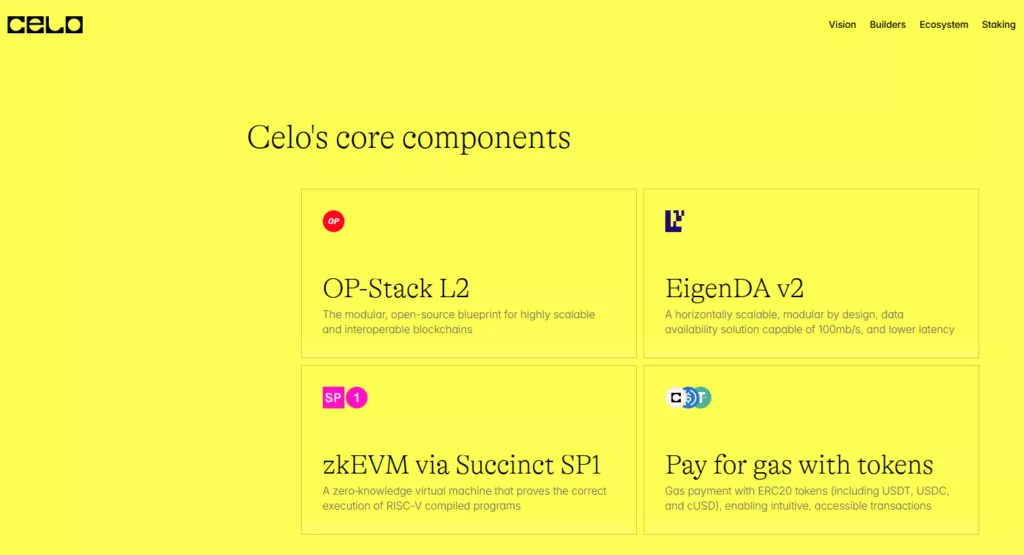
- Celo provides a strong environment for developers.
What Developers Can Build
- Payment applications
- DeFi platforms
- NFT marketplaces
- Identity solutions
- Mobile-first dApps
Developer Benefits
- Grants and funding
- Open-source tools
- Ethereum compatibility
- Strong community support
Celo Wallet Ecosystem
- Celo supports various wallets designed for ease of use.
Types of Wallets
Mobile Wallets- Valora (official wallet)
- Designed for payments and transfers
Hardware Wallets
- Ledger support
- Secure long-term storage
Web Wallets
- Developer-focused tools
- DeFi interaction
Celo Use Cases
Everyday Payments
Users can send and receive money instantly using mobile devices.
International Transfers
Celo reduces costs for cross-border payments.
Digital Banking
Provides access to financial services without banks.
Gaming & NFTs
Supports blockchain-based gaming and digital assets.
AI & Automation
Developers can build automated financial tools.
Investment Perspective on Celo
Celo is often viewed as a long-term, adoption-driven investment.
Bull Case
- Strong real-world utility
- Growing ecosystem
- Focus on emerging markets
- Sustainable blockchain
Bear Case
- Adoption uncertainty
- Strong competition
- Market volatility
Who Should Consider Celo?
Suitable For:
- Long-term investors
- DeFi users
- Developers
- Users in emerging markets
Not Suitable For:
- Short-term traders
- Risk-averse investors
- Beginners without crypto knowledge
Long-Term Outlook for Celo
Celo’s future depends on its ability to:
- Scale adoption globally
- Expand its ecosystem
- Maintain stablecoin reliability
- Compete with major blockchains
If successful, it could become a leading platform for mobile-based finance.
Final Thoughts on Celo (CELO)
Celo (CELO) is a mobile-first, proof-of-stake blockchain designed for financial inclusion, fast transactions, and low-cost payments. With native stablecoins, developer-friendly tools, and support for Mini Apps, DeFi agents, and privacy-preserving identity, it empowers global users and developers alike. Its energy-efficient PoS model, scalable ecosystem, and diverse funding programs make Celo a promising platform for real-world blockchain adoption, though investors and builders should consider market volatility, adoption challenges, and competition. Overall, Celo combines accessibility, speed, and innovation, positioning it as a unique player in mobile crypto and decentralized finance.
You might also like:
Theta Fuel (TFUEL) ReviewGKFX Prime ReviewUniswap (UNI) Review
Frequently Asked Questions
What is Celo (CELO)?
Celo is a mobile-first, proof-of-stake blockchain platform designed for global payments and financial inclusion. It supports stablecoins like cUSD and cEUR, decentralized applications, and smart contracts while prioritizing low fees, fast transactions, and accessibility for smartphone users.
How does Celo differ from other blockchains?
Celo focuses on mobile accessibility, financial inclusion, and low transaction costs. Unlike traditional blockchains, it integrates phone-number-based identities, lightweight wallets, and PoS consensus, enabling easy adoption in emerging markets while maintaining Ethereum compatibility for DeFi developers.
What is the CELO token used for?
CELO is the native token of the Celo network. It is used for governance, staking, transaction fees, and incentivizing developers. Holders can vote on protocol upgrades and participate as validators or delegators to secure the network.
How does Celo’s Proof-of-Stake work?
Celo uses PoS, where validators stake CELO to propose and confirm blocks. Delegators can stake through validators to earn rewards without running a node. PoS reduces energy consumption and ensures network security through slashing for malicious activity.
What are Celo stablecoins?
Celo supports stablecoins like cUSD and cEUR, which are pegged to fiat currencies. These enable fast, low-cost payments, DeFi activities, and remittances, reducing volatility risk while maintaining blockchain benefits such as transparency and decentralization.
Where can I buy Celo (CELO)?
CELO is listed on major exchanges like Binance, Coinbase, Kraken, and KuCoin. Users can purchase it with fiat currency or other cryptocurrencies. It’s recommended to secure holdings in a personal wallet rather than leaving tokens on exchanges.
How can I stake CELO?
Staking CELO involves locking tokens with validators via the official Celo Wallet or third-party delegators. Validators propose blocks, and stakers earn rewards proportional to their stake. Staking helps secure the network while generating passive income.
What are Celo’s main use cases?
Celo enables mobile payments, decentralized finance, global remittances, and financial inclusion. Developers can build DeFi apps, NFTs, and mini-apps, while users can send money quickly, access digital banking, and participate in a mobile-first blockchain ecosystem.
What are the risks of investing in CELO?
CELO, like all cryptocurrencies, carries market volatility risk. Adoption, competition, and regulatory changes can affect value. Staking involves potential slashing, and network growth depends on real-world adoption. Investors should assess risk tolerance and diversify holdings.
How does Celo support developers and builders?
Celo offers grants, funding programs, accelerator support, and reward campaigns for developers at every stage. From launching mini-apps to scaling projects, builders gain technical guidance, mentorship, and financial incentives to grow their applications in the ecosystem.
Is Celo a good investment for the long term?
Celo can be considered a long-term investment due to its focus on financial inclusion, mobile payments, and real-world adoption. However, like all cryptocurrencies, it carries volatility and adoption risks, so investors should diversify and evaluate market conditions before committing capital.
What makes Celo mobile-friendly?
Celo is designed for smartphones, allowing users to send crypto using phone numbers instead of complex wallet addresses. Its lightweight infrastructure ensures fast, low-cost transactions even on low-end devices, making it highly accessible for users in emerging markets with limited resources.
Can Celo be used for everyday payments?
Yes, Celo is specifically built for everyday transactions. Its stablecoins, like cUSD, enable users to pay for goods and services with minimal price volatility, while low fees and fast transaction speeds make it practical for daily use in real-world payment scenarios.
Does Celo support smart contracts and dApps?
Celo supports smart contracts and is compatible with Ethereum tools, allowing developers to build decentralized applications (dApps). This enables a wide range of use cases, including DeFi platforms, payment systems, NFT projects, and mobile-first blockchain applications.
How secure is the Celo network?
Celo uses a Proof-of-Stake consensus mechanism with validators securing the network. It includes slashing penalties for malicious behaviour and undergoes smart contract audits. While generally secure, users should still follow best practices like using trusted wallets and safeguarding private keys.
You Might Also Like






Recommended brokers