



This Binance Coin review has revealed that Binance Coin, also known as BNB, is a cryptocurrency that runs on the Ethereum blockchain with the ERC 20 standard and a limited supply of a maximum 200 million BNB tokens.
Live Price

🏆10 Best Forex Brokers in South Africa
| Rank | Broker | Broker Review | Regulators | Minimum Deposit | Visit Broker |
|---|---|---|---|---|---|
| 🥇 |  | Read Review | ASIC, FSA, CBI, BVI, FSCA, FRSA, CySEC, ISA, JFSA | $100 | Visit Now |
| 🥈 |  | Read Review | FSCA, FCA, DFSA, FSA, CMA | $0 | Visit Now |
| 🥉 |  | Read Review | FSCA, FSC, CYSEC, DFSA, CMA, FSC, FSA | $5 | Visit Now |
| 4 |  | Read Review | ASIC, CySEC, FSA, SCB | $0 | Visit Now |
| 5 |  | Read Review | BVI FSC | $0 | Visit Now |
| 6 |  | Read Review | FSA, FSC, FSCA, ASIC, CMA | $20 | Visit Now |
| 7 |  | Read Review | Exness is a globally regulated broker, holding multiple licenses from respected financial regulators around the world. | $10 | Visit Now |
| 8 |  | Read Review | ASIC, CySEC, FSCA, FSA, FSC, CMA | $100 | Visit Now |
| 9 |  | Read Review | FSC | $10 | Visit Now |
| 10 |  | Read Review | FSA, CySEC, FSCA, FSC | $10 | Visit Now |


What is Binance Coin?
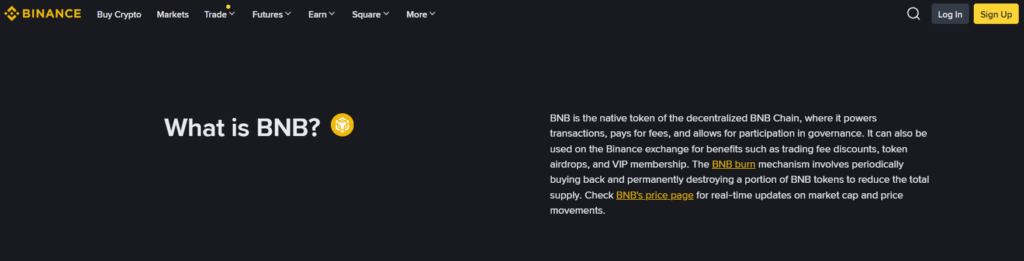
Binance Coin is issued by the Binance cryptocurrency exchange and trades with the “BNB'' symbol. BNB runs on the Ethereum blockchain with the ERC 20 standard and a limited supply of a maximum of 200 million BNB tokens. BNB is expected to fuel Binance operations and the corresponding ecosystem of the exchange.
Key Features and Takeaways of Binance Coin
The key features, as well as takeaways of BNB, are as follows:
- Binance Coin is one of the top 30 cryptocurrencies in the world by market capitalization, which is more than 1.3 trillion ZAR.
- Binance is an exchange that matches buyers and sellers and has significant liquidity, which means that orders are executed fast and at the best possible prices.
- BNB is an ERC 20 token that was built on the Ethereum network, and it can be used to pay fees while trading on the Binance exchange.
- When paid in BNB, Binance fees are discounted 50% during the first year of membership, with fee discounts decreasing with subsequent years of membership.
- BNB can be used to invest in certain start-ups and ICOs that are listed by the Binance Launchpad program.
- BNB has garnered support from a variety of partnerships, which have helped spread its usage.
- The Binance platform also has a repurchase plan, under which 20% of profits will be used to buy back BNB tokens.
- To date, Binance Coin has seen 7 burns in which the 200 million supply has been reduced by 5.8%, or 11.7 million BNB.
Binance Coin Mining
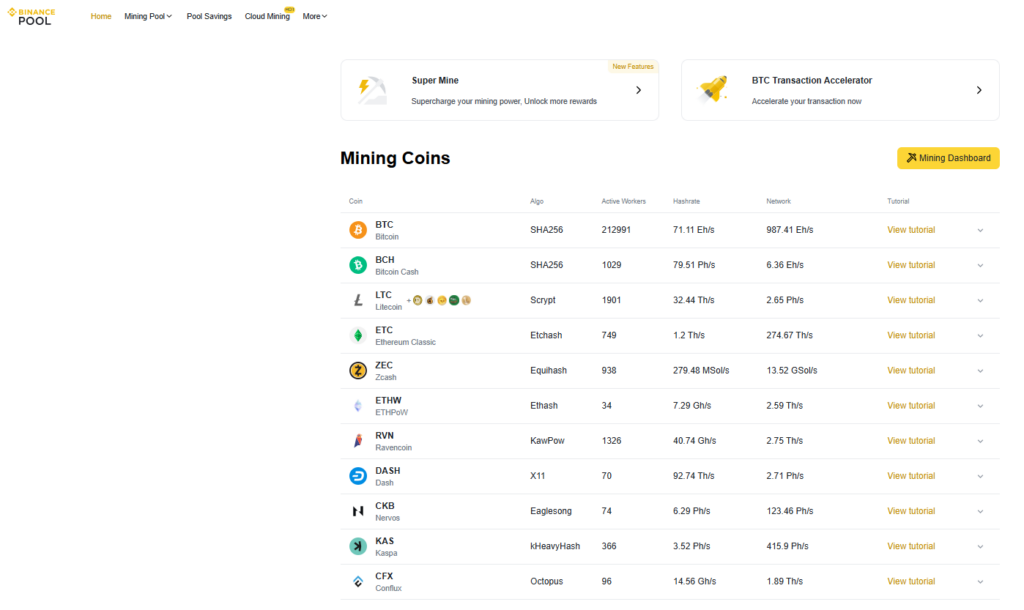
Binance Coin started its life off as an ERC20 token and was then launched on the Binance Chain. Binance Coin (BNB) cannot be mined as a result of the Byzantine Fault Tolerance (BFT) consensus mechanism that the Binance blockchain uses. Only cryptocurrencies that make use of a Proof-of-Work (PoW) mechanism, such as Bitcoin, can be mined. However, users can participate in the Binance Coin network by becoming a validator, which is like the mining process. BFT is a mechanism that aims to sort out issues experienced by blockchains that make use of PoW. Binance built its blockchain on this technology, and it is the process used when transactions are verified. BFT is well-known for being faster and more economically conscious than PoW, and for this reason, it forms the backbone of a variety of other cryptocurrencies, such as BNB and Cosmos. One of the main reasons why users start mining cryptocurrencies is so that they can earn a form of passive income. Another reason is that mining is a way to secure the network. With the Binance chain, this is done when users opt to become validators; however, not everyone can participate now. Only a few trusted members of the Binance community are currently validators; however, Binance is exploring ways to expand this in the future to increase the idea of decentralization in the chain. Once this is done, the decentralized governance procedure will be introduced by Binance and executed, allowing other qualified organizations and/or individuals to become validators.
Pros and Cons
| ✔️ Pros | ❌ Cons |
|---|---|
| BNB is one of the best utility tokens in the industry | Discounts decrease over time |
| BNB makes use of a unique burndown policy | Regulations can affect the holding and trading of BNB |
| BNB acts as a discount coupon on the Binance exchange platform | BNB is limited to the Binance exchange |
| Binance is popular and reputable | Binance is a main target for cyber attacks |
| Binance offers fast transactions as well as low transaction fees | There are no smart contracts supported by BNB |
Should you buy Binance Coin?
Yes. However, a lot of investors may be dissuaded by the supply, in addition to the fact that there are coin burns, which further reduce the supply. Apart from this, there are three key benefits that investment in BNB will bring:
- Incentive for Binance users.
- A stake in Binance Chain, which is Binance’s blockchain technology.
- A store of value.
The incentive for Binance Users
As with any other currency, BNB’s value increases as more people hold it, and as a result of this, Binance offers the following incentives:
- Reduced trading fees when users opt to pay their fees with BNB on Binance.
- Affiliate rewards for users who hold 500 BNB or more, which is 40% versus the normal 20% commission on the referral program.
- Access to the Launchpad Lottery, which allows users to invest in new cryptocurrency projects vetted by Binance.
- Potential for future rewards.
Stake in Binance Chain
BNB started as a rewards system for users of the exchange trading platform; however, it has morphed to power a new, and much-needed, blockchain.
Store of Value
The price of any currency will be determined by the supply and demand for it, and theoretically, prices rise when either demand rises or supply falls. To understand BNB as a store of value, it is necessary to evaluate its demand, supply, and market capitalization as follows:
- Increasing utility or demand – since the technology that Binance uses includes incentives for BNB holders, the value of Binance will rise along with that of BNB.
- BNB Coin Burns or supply – In using 20% of profits every quarter to “burn” BNB, Binance will inevitably reduce the supply of BNB from 200 million to 100 million. Supply of BNB increased during July 2019 and 2026 when 32 million BNB was distributed to the team (16 million in each year), and there is a final 16 million BNB that will be distributed to the Binance team in July this year. However, after that, supply will exclusively decrease.
- Market capitalization measures the total value of a company or a currency, and at the time of writing, BNB’s market cap is more than 1.3 trillion ZAR, showing steady increases.
Other factors that make BNB worth the investment are the price over time. This is an element that must be considered, as past behaviour can indicate future behaviour in the crypto market.
- At launch in 2017, Binance coin started trading at R1.42/BNB.
- In the 2017 bull market, the price rose, reaching a high of R351.65/BNB during January 2018.
- It fell during the 2018 bear market, hitting a low of R59.62/BNB in December 2018.
- From 2018, BNB’s price has seen substantial increases to where it currently lies at R8 850.69/BNB at the time of writing.
There are numerous investment opportunities in the cryptocurrency space. Therefore, it is imperative for investors to examine their options alongside what they wish to achieve before deciding. Binance Coin is the native crypto of a significant crypto exchange, and there are numerous advantages of investing; however, buying and selling BNB come with certain risks in addition to traditional trading risks. Those who are comfortable with the unique design of the Binance blockchain, in addition to how risk-reward ratios work, can consider this cryptocurrency as an investment opportunity.
How to buy Binance Coin (BNB)
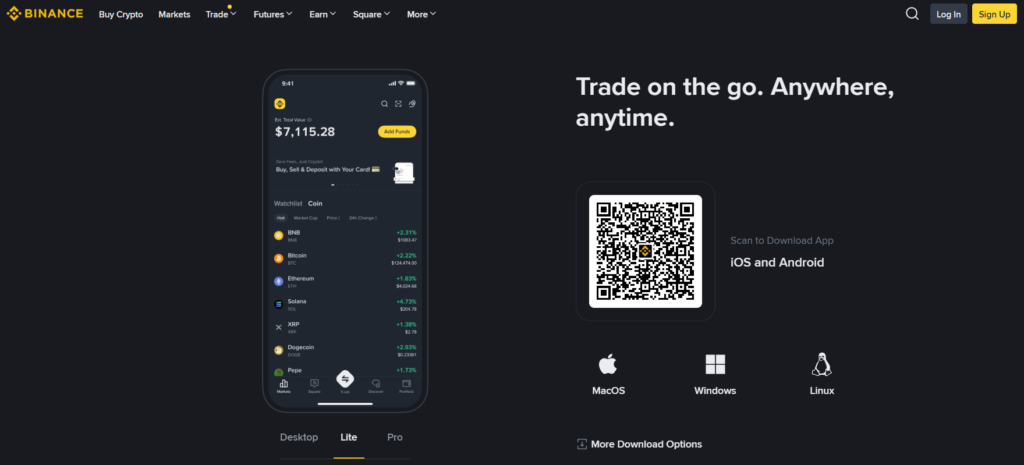
Step 1 – Open an account on Binance
- Navigate to the official Binance website and select “Register Now”.
- You will be redirected to a “Create a Free Account” page where you can either register with your email address or your mobile number.
- You can enter your email address and user-selected password or select the “Mobile” option at the top of the form.
- Select your country code and enter your mobile number along with your user-selected password.
- Once you have completed the necessary fields, you can read and accept the Terms of Service before selecting “Create an Account”.
- You may have to complete a Security Verification that will confirm that you are not a robot.
- Next, there is an account verification. During this, a 6-digit verification code is sent to the email address or mobile number that you provided.
- The code is only valid for 30 minutes and must be entered in the blocks provided on this page.
- Once the verification is completed, a welcome page will load, and you will be given the options through which you can either trade or purchase cryptocurrency.
- If you are new to crypto, you can visit the “Learn More” Section at the bottom of the page.
Step 2 – Secure account with two-factor verification
- On the trader’s dashboard, select the option to secure your account with two-factor verification.
- Even though phone verification is a secure option, the most preferred and secure method is to make use of the Google Authenticator.
- Once downloaded and installed, either scan the QR code or type in the one-time, unique code provided to add your Binance account credentials to Google Authenticator.
- Once completed, write down the backup key provided to recover your account on Google Authenticator in case you lose or misplace it.
- In the final step, enter the 6-digit code that you will receive on your registered email address, along with the Google verification code.
Step 3 – Deposit funds
Binance allows for the purchase of cryptocurrencies via fiat deposits as well as cryptos. Deposits can be accessed from the following locations:
- The “Welcome to Binance” banner.
- Hover over “Buy Crypto” at the top of the web page and select your preferred method.
- Selecting “Deposit” on the “balance details” section on your trader's dashboard.
Once you have selected the option to “Deposit”, you can select whether you wish to deposit cryptocurrencies from another wallet or whether you want to make a fiat deposit. For Crypto deposits, follow these steps:
- Select your coin between Bitcoin, Ethereum, TetherUS, BNB, or EOS.
- Select the network to be used between BEP2, BEP20 (BSC), ERC20, or TRC20, and accept the conditions for using the network.
- Copy the address or scan the address QR code from the wallet where you are depositing and follow further prompts. Kindly note that each network has its own set of network confirmations between 1 and 15 confirmations before the deposit will be done.
For deposits in Fiat currencies, follow these steps:
- Select the deposit currency from the dropdown list. To gain access to more currencies, it is necessary to verify your identity and face.
- Select the payment method to be used, depending on the currency chosen.
- Enter the deposit amount and any other details. Kindly note that the transaction fee will be displayed along with the balance after this is subtracted.
- Continue with the deposit.
Step 4 – Start Trading
Once you have completed your deposit, you can navigate to the “Markets” section at the top of the page to view the available cryptocurrencies. From here, you can buy, sell, and trade currencies at competitive prices.
Binance Coin Ecosystem (BNB Chain)
Over time, Binance Coin has grown far beyond its original purpose as a simple utility token. Today, BNB powers an entire blockchain ecosystem known as the BNB Chain, which includes multiple layers designed to support different use cases. The most widely used part of this ecosystem is the BNB Smart Chain (BSC). This blockchain supports smart contracts and decentralized applications (dApps), making it similar in functionality to Ethereum. Developers can build platforms for decentralized finance (DeFi), NFT marketplaces, gaming applications, and more. One of the main reasons for the rapid growth of BNB Chain is its efficiency. Transactions are typically processed within seconds and cost significantly less than on many competing networks. This makes it especially appealing to users who want to avoid high gas fees. Another important part of the ecosystem is the Binance Launchpad. This platform allows new cryptocurrency projects to raise funding, and BNB holders often get early access to these opportunities. This adds another layer of value to holding BNB beyond simple trading. In addition, Binance offers services such as staking, savings, and liquidity farming through its platform. These features allow users to earn passive income using their BNB holdings, further strengthening its role within the broader crypto ecosystem.
Binance Coin Tokenomics
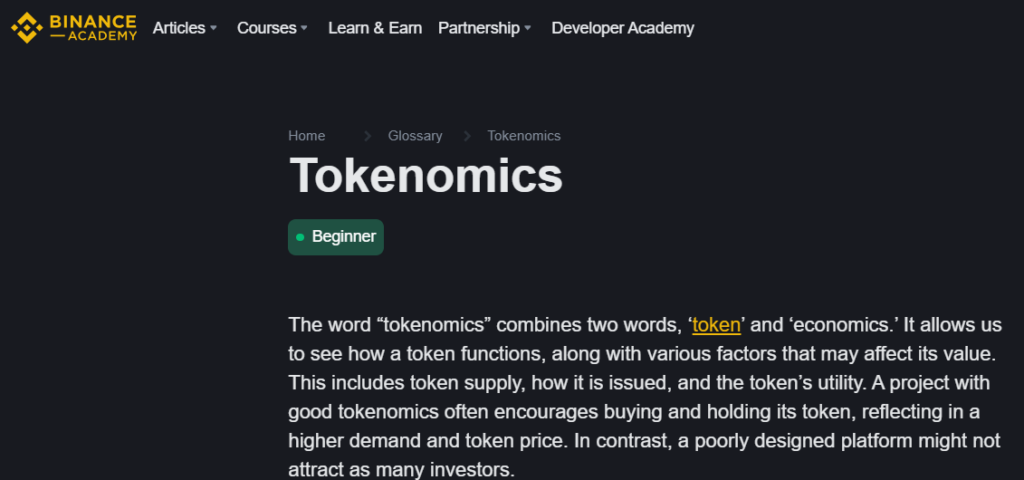
A major factor that influences the value of Binance Coin is its tokenomics — specifically how supply is managed over time. BNB originally had a total supply of 200 million tokens. However, Binance introduced a deflationary model through regular “coin burns.” These burns permanently remove BNB from circulation, reducing the total supply over time. The goal is to eventually reduce the total supply to 100 million BNB. This process is funded using a portion of Binance’s profits, meaning that as the exchange grows, more tokens are burned. There are two main types of burns:
- Quarterly burns based on Binance’s revenue
- Auto-burns that adjust depending on price and network activity
This system creates scarcity, which can support price growth if demand remains strong. It also aligns Binance’s success with the value of BNB, making it a unique model compared to many other cryptocurrencies. Another important aspect is utility. BNB is constantly being used for trading fees, DeFi applications, and transactions. This continuous usage, combined with decreasing supply, creates a strong long-term value proposition.
Binance Coin vs Other Cryptocurrencies
When comparing Binance Coin to other cryptocurrencies, it becomes clear that BNB occupies a unique position in the market. Bitcoin is primarily viewed as a store of value, while Ethereum is known for its smart contract capabilities. Binance Coin, on the other hand, is designed as a utility token that supports an entire ecosystem. One of BNB’s main advantages is speed and cost. Transactions on the BNB Chain are faster and cheaper than on many other networks. This makes it particularly attractive for users involved in DeFi and frequent trading. However, there are trade-offs. BNB is often considered more centralized than Bitcoin or Ethereum because of Binance’s influence over the network. This can be a concern for investors who prioritize decentralization. Despite this, BNB remains one of the most widely used cryptocurrencies due to its practical applications and strong backing from the Binance platform.
Real-World Use Cases of Binance Coin
Binance Coin has evolved into a versatile cryptocurrency with a wide range of real-world applications. The most common use is paying trading fees on Binance. Users who choose to pay fees with BNB receive discounts, making it an attractive option for active traders. BNB is also widely used in decentralized finance. Users can stake their tokens, provide liquidity, and earn rewards. This opens up opportunities for passive income. In addition, BNB plays a significant role in NFT platforms and blockchain gaming. Users can buy, sell, and trade digital assets using BNB. There are also growing use cases in payments. Some platforms allow users to pay for goods and services using BNB, including travel bookings and online purchases. These expanding use cases contribute to the overall demand for BNB and support its long-term growth potential.
Risks and Challenges of Binance Coin
While Binance Coin offers many advantages, it is important to consider the risks involved. Regulation is one of the biggest concerns. Binance operates globally, and changes in regulations can impact its services and, by extension, the value of BNB. Centralization is another factor. Since Binance plays a major role in the network, it introduces a level of dependency that is not present in fully decentralized cryptocurrencies. Security is also a consideration. Although Binance has strong security measures, it remains a high-profile target for cyber attacks. Market volatility is another risk. Like all cryptocurrencies, BNB’s price can fluctuate significantly in short periods. Lastly, competition from other blockchain platforms continues to grow. Networks like Ethereum and Solana are constantly evolving, which could challenge BNB’s position.
Future Outlook of Binance Coin
The future of Binance Coin largely depends on the continued growth of the Binance ecosystem. As Binance expands its services in areas such as DeFi, NFTs, and payments, the demand for BNB is likely to increase. The ongoing token burns also support long-term value by reducing supply. Adoption will play a key role. More users, developers, and businesses using BNB can drive further growth. Regulation remains a wildcard. Positive regulatory developments could boost confidence, while stricter rules could create challenges. Overall, Binance Coin remains one of the most important utility tokens in the cryptocurrency market, with strong potential for continued growth.
Is Binance Coin Suitable for Beginners?
For beginners, Binance Coin can be a practical entry point into the cryptocurrency market. Its integration within the Binance platform makes it easy to use for trading, payments, and earning rewards. The low transaction fees also make it accessible for smaller investors. Binance provides educational resources that help users understand how the platform and BNB work. This makes it easier for new users to get started. However, beginners should still approach with caution. Cryptocurrency markets are volatile, and it is important to invest responsibly. Starting with small amounts and gradually increasing exposure is often the best approach for new investors.
Binance Coin Advantages in the Market
BinanceCoin stands out in the crypto market due to several key advantages. Firstly, it has strong backing from one of the largest cryptocurrency exchanges in the world. This provides liquidity and consistent demand. Secondly, its low transaction fees and fast processing times make it highly practical for everyday use. Thirdly, its deflationary model supports long-term value growth by reducing supply over time. Lastly, its wide range of use cases ensures that it remains relevant as the cryptocurrency market evolves.
Final Say on Binance Coin (BNB)
Binance Coin has established itself as one of the most important utility tokens in the cryptocurrency market, backed by the massive global presence of Binance. What started as a simple fee-discount token has evolved into the core asset powering an entire blockchain ecosystem. BNB stands out due to its low transaction fees, fast processing speeds, and wide range of real-world use cases. From trading discounts to DeFi, NFTs, and staking, the token continues to expand its role beyond just an exchange utility. The deflationary model, driven by regular coin burns, also adds long-term value potential by reducing supply over time.
You might also like:
PocketOption ReviewQTUM ReviewTRON (TRX) Review
Frequently Asked Questions
When was Binance Coin first launched?
Binance Coin was launched in 2017 during the early stages of the Binance exchange. It was introduced through an Initial Coin Offering (ICO) in July 2017 to raise funds for building the platform and expanding its global cryptocurrency trading ecosystem.
Who founded Binance Coin?
Binance Coin was created by the team behind Binance, which was founded by Changpeng Zhao. He is a well-known developer in the crypto space, previously involved in high-frequency trading systems and blockchain infrastructure, before launching Binance and its native token, BNB.
What is “ICO”?
An Initial Coin Offering, or ICO, is a fundraising method used by cryptocurrency projects. Unlike traditional stock offerings, investors do not receive ownership in a company but instead receive tokens that may gain value or utility within a specific blockchain ecosystem.
When was Binance Coin’s ICO, and how much did it raise?
Binance Coin’s ICO took place in July 2017, where a total of 100 million BNB tokens were sold to investors. The ICO successfully raised approximately $15 million, which was used to develop and launch the Binance cryptocurrency exchange platform.
Is Binance Coin legit?
Yes, Binance Coin is considered a legitimate cryptocurrency as it is the native token of the Binance exchange, one of the largest and most widely used crypto trading platforms globally, with millions of users and a well-established operational track record.
What is Binance Coin’s total supply?
Binance Coin initially had a fixed supply of 200 million tokens. However, due to its deflationary burn mechanism, this supply is gradually decreasing over time, with the long-term goal of reducing the total circulating supply to 100 million BNB.
What is the purpose of Binance Coin?
Binance Coin was created to power the Binance ecosystem. It is used for trading fee discounts, transaction fees, participation in token sales, staking, DeFi applications, and various services within the Binance platform and the broader BNB Chain network.
On which blockchain is Binance Coin based?
Binance Coin originally launched as an ERC-20 token on the Ethereum blockchain. It later migrated to its own blockchain, known as Binance Chain and BNB Smart Chain, which now supports faster transactions and a wider range of decentralized applications.
Does Binance Coin work with smart contracts?
Binance Chain itself does not support smart contracts due to its design focus on speed and efficiency. However, the BNB Smart Chain (BSC), a parallel blockchain, does support smart contracts and enables decentralized applications similar to Ethereum.
Does Binance Coin have the potential to become more valuable?
Binance Coin has strong growth potential due to its decreasing supply, expanding use cases, and integration within a large ecosystem. As demand increases through trading, DeFi, and applications, its value may rise, although market risks and volatility always remain factors.
You Might Also Like






Recommended brokers