QTUM is not a new project that was originally designed to be an “Ethereum Killer,” and it is an interesting project that was created as a fork of Bitcoin Core.
| Feature | Details |
|---|---|
| Company Type | Bitcoin Mining |
| Market Cap Range | $10+ Billion |
| Hash Rate Capacity | 100+ Exahash/s |
| Regulation | NASDAQ Listed |
| Revenue Model | Bitcoin Mining Rewards |
| Energy Efficiency | Optimized Operations |
| Bitcoin Holdings | Significant Reserve |
| Expansion Strategy | Aggressive Growth |
QTUM Live Price

🏆10 Best Forex Brokers in South Africa
| Rank | Broker | Broker Review | Regulators | Minimum Deposit | Visit Broker |
|---|---|---|---|---|---|
| 🥇 |  | Read Review | ASIC, FSA, CBI, BVI, FSCA, FRSA, CySEC, ISA, JFSA | $100 | Visit Now |
| 🥈 |  | Read Review | FSCA, FCA, DFSA, FSA, CMA | $0 | Visit Now |
| 🥉 |  | Read Review | FSCA, FSC, CYSEC, DFSA, CMA, FSC, FSA | $5 | Visit Now |
| 4 |  | Read Review | ASIC, CySEC, FSA, SCB | $0 | Visit Now |
| 5 |  | Read Review | BVI FSC | $0 | Visit Now |
| 6 |  | Read Review | FSA, FSC, FSCA, ASIC, CMA | $20 | Visit Now |
| 7 |  | Read Review | Exness is a globally regulated broker, holding multiple licenses from respected financial regulators around the world. | $10 | Visit Now |
| 8 |  | Read Review | ASIC, CySEC, FSCA, FSA, FSC, CMA | $100 | Visit Now |
| 9 |  | Read Review | FSC | $10 | Visit Now |
| 10 |  | Read Review | FSA, CySEC, FSCA, FSC | $10 | Visit Now |


What is QTUM?
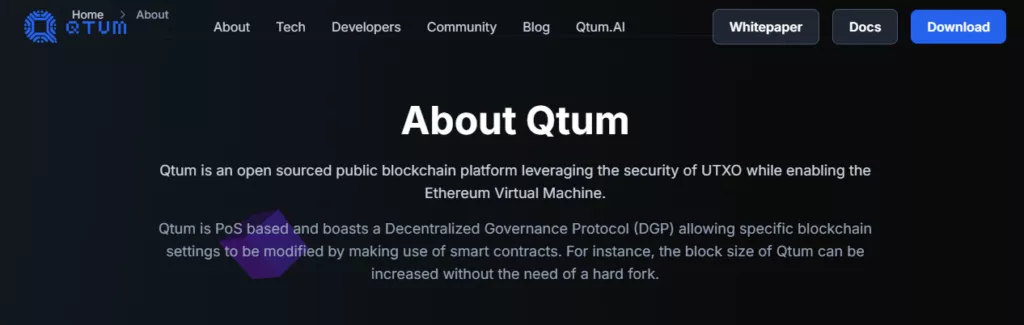
QTUM is a hybrid blockchain platform that combines the security of Bitcoin with the smart contract functionality of Ethereum. It was designed to bridge the gap between these two major technologies, creating a more flexible and enterprise-ready blockchain ecosystem. Launched in 2017, QTUM uses a unique architecture that integrates:
- Bitcoin’s UTXO model (for security and reliability)
- Ethereum Virtual Machine (EVM) (for smart contracts and DApps)
- Account Abstraction Layer (AAL) (to make both systems work together seamlessly)
Key Features and Takeaways of QTUM
- QTUM stands out in the blockchain space due to its hybrid architecture, efficiency, and enterprise-focused design.
Below are the most important features and insights that define the project:
Hybrid Blockchain Architecture
QTUM combines two proven technologies:
- Bitcoin’s UTXO model → ensures strong security and transaction integrity
- Ethereum Virtual Machine (EVM) → enables smart contracts and decentralized applications
This hybrid design allows QTUM to deliver both security and flexibility, which few blockchains achieve effectively.
Account Abstraction Layer (AAL)
One of QTUM’s most important innovations.
- Translates Bitcoin’s UTXO model into Ethereum’s account-based system
- Enables seamless interaction between the two architectures
- Makes smart contracts compatible with Bitcoin-level security
This layer is what makes QTUM technically unique.
Proof of Stake (PoS) Consensus
QTUM uses Proof of Stake instead of mining. Key benefits:
- Energy efficient
- Lower hardware requirements
- Faster and more scalable than PoW
Users earn rewards by staking QTUM tokens, not mining them.
Smart Contracts and DApps
Through EVM compatibility, QTUM allows:
- Creation of decentralized applications (DApps)
- Token development
- Automation of business processes
This makes QTUM highly suitable for developers and enterprises.
Mobile-Friendly Blockchain
QTUM was built with mobile usability in mind.
- Uses Simple Payment Verification (SPV)
- No need to download the full blockchain
- Enables lightweight wallets
This significantly improves accessibility for everyday users.
Oracles and Off-Chain Data Integration
QTUM supports oracles that allow smart contracts to interact with real-world data. Use cases include:
- Financial data feeds
- Supply chain tracking
- Automated contract execution
This expands QTUM’s real-world functionality.
Enterprise-Focused Infrastructure
QTUM is designed for business adoption.
- Tools for supply chain management
- Scalable infrastructure (e.g., Unita & SCAR)
- High transaction throughput
This positions QTUM as a practical blockchain solution, not just a theoretical one.
Strong Security Foundation
Because QTUM is built on Bitcoin Core:
- High resistance to attacks
- Protection against double-spending
- Proven and stable infrastructure
Token Utility
The QTUM token is used for:
- Paying transaction fees
- Staking and earning rewards
- Powering smart contracts
- Participating in governance
QTUM Mining
- QTUM cannot be mined in the traditional sense because it operates on a Proof of Stake (PoS) consensus mechanism rather than Proof of Work.
- Instead of using energy-intensive hardware to mine new coins, QTUM relies on staking, which is significantly more efficient and accessible.
- In a PoS system like QTUM, users participate in securing the network by locking (staking) their QTUM tokens within the protocol.
- These staked tokens are then used to validate transactions and create new blocks on the blockchain.
How QTUM Staking Works
- Users lock their QTUM tokens in a wallet
- The network selects validators based on stake size and other factors
- Selected validators confirm transactions and produce blocks
- Validators earn staking rewards for their participation
The more QTUM a user stakes, the higher their probability of being chosen to validate the next block. This creates a fair and incentive-driven system.
Why Staking Secures the Network
The “stake” acts as a financial incentive and security mechanism:
- Validators must act honestly to earn rewards
- Malicious behavior can result in penalties or loss of rewards
- This discourages attacks and protects the network
Unlike mining, staking does not require expensive hardware or high electricity consumption, making QTUM far more environmentally friendly.
Staking vs Mining
| Feature | Details |
|---|---|
| Company Type | Bitcoin Mining |
| Market Cap Range | $5+ Billion |
| Hash Rate Capacity | 80+ Exahash/s |
| Regulation | NASDAQ Listed |
| Revenue Model | Mining Operations |
| Facility Locations | Multiple US States |
| Bitcoin Production | High Volume |
| Scaling Focus | Capacity Expansion |
Cold Staking (Offline Staking)
- QTUM introduced Cold Staking at block 680,000, allowing users to stake their tokens without keeping their wallets online.
- This feature significantly improves both security and convenience, especially for long-term holders.
How Cold Staking Works
- Users delegate their QTUM to a Super Staker node
- Tokens remain in the user’s wallet (not transferred)
- The Super Staker validates blocks on their behalf
- Rewards are distributed to the token holder
What Is a Super Staker?
A Super Staker is a node that performs staking on behalf of others. Important points:
- Cannot spend or transfer delegated funds
- Only uses delegated tokens for validation
- Earns a portion of staking rewards
Benefits of Cold Staking
- Enhanced Security – Funds stay in cold wallets (offline)
- Convenience – No need to run a full node 24/7
- Passive Income – Earn rewards without technical setup
- Peace of Mind – Reduced risk of hacks
Why Cold Staking Matters
Cold Staking lowers the barrier to entry and makes QTUM more attractive to:
- Beginner investors
- Long-term holders
- Security-conscious users
It combines the security of cold storage with the earning potential of staking, which is a major advantage in the crypto space.
Pros and Cons
| ✔️Pros | ❌Cons |
|---|---|
| The platform is decentralised with strong software to ensure that databases are stored more efficiently | QTUM is still a young blockchain and there may not be a lot of businesses that accept the token |
| QTUM’s blockchain is safe and secure, backed by the Bitcoin blockchain | |
| QTUM has a lot of innovative features that combines the best from both Bitcoin and Ethereum, something that other projects have not done successfully | |
| QTUM has major partnerships | |
| QTUM has a dedicated, experienced team behind it | |
| There is a lot of potential for future growth and upcoming innovations to expand and ensure widespread adoption |
Should you buy QTUM?
- Apart from bringing together the technology of two major cryptocurrency giants, namely Bitcoin and Ethereum, QTUM has introduced a variety of new features to the crypto space that have investors flocking to start investing in this project.
- Apart from the solutions that QTUM brings and the innovations, it is also backed by a dedicated, experienced team and top investors such as Roger Ver and Xu Star, two prominent figures in the cryptocurrency industry.
- In addition to this, QTUM also has partnerships with major companies in the blockchain space as well as within the traditional business sectors.
- These partnerships have developed over time, and there are more being announced as time passes, giving QTUM the backing and credibility that investors love to see in a company.
- QTUM has the security of Blockchain while having access to smart contracts and decentralised applications (DApps) from Ethereum, and apart from this, it has its own unique features, making it valuable to enterprise users.
How to buy QTUM (QTUM)
Step 1 – Open an account on Binance
- Navigate to the official Binance website and select “Register Now”. You will be redirected to a “Create a Free Account” page where you can either register with your email address or your mobile number.
- You can enter your email address and user-selected password or select the “Mobile” option at the top of the form. Select your country code and enter your mobile number along with your user-selected password.
- Once you have completed the necessary fields, you can read and accept the Terms of Service before selecting “Create an Account”.
- You may have to complete a Security Verification that will confirm that you are not a robot. Next, there is an account verification. During this, a 6-digit verification code is sent to the email address or mobile number that you provided. The code is only valid for 30 minutes and must be entered in the blocks provided on this page.
- Once the verification is completed, a welcome page will load, and you will be given the options through which you can either trade or purchase cryptocurrency. If you are new to crypto, you can visit the “Learn More” Section at the bottom of the page.
Step 2 – Secure account with two-factor verification
- On the trader’s dashboard, select the option to secure your account with two-factor verification. Even though phone verification is a secure option, the most preferred and secured method is to make use of the Google Authenticator.
- Once downloaded and installed, either scan the QR code or type in the one-time, unique code provided to add your Binance account credentials to Google Authenticator.
- Once completed, write down the backup key provided to recover your account on Google Authenticator in case you lose or misplace it. In the final step, enter the 6-digit code that you will receive on your registered email address, along with the Google verification code.
Step 3 – Deposit funds
- Binance allows for the purchase of cryptocurrencies via fiat deposits as well as cryptocurrencies. Deposits can be accessed from the following locations:
- The “Welcome to Binance” banner.
- Hover over “Buy Crypto” at the top of the web page and select your preferred method.
- Selecting “Deposit” on the “balance details” section on your trader's dashboard.
- Once you have selected the option to “Deposit”, you can select whether you wish to deposit cryptocurrencies from another wallet or whether you want to make a fiat deposit.
- For Crypto deposits, follow these steps:
- Select your coin between Bitcoin, Ethereum, TetherUS, BNB, or EOS.
- Select the network to be used between BEP2, BEP20 (BSC), ERC20, or TRC20, and accept the conditions for using the network.
- Copy the address or scan the address QR code from the wallet where you are depositing and follow further prompts. Kindly note that each network has its own set of network confirmations between 1 up to 15 confirmations before the deposit will be done.
For deposits in Fiat currencies, follow these steps:
- Select the deposit currency from the dropdown list. To gain access to more currencies, it is necessary to verify your identity and face.
- Select the payment method to be used, depending on the currency chosen.
- Enter the deposit amount and any other details. Kindly note that the transaction fee will be displayed along with the balance after this is subtracted.
- Continue with the deposit.
Step 4 – Start Trading
- Once you have completed your deposit, you can navigate to the “Markets” section at the top of the page to view the available cryptocurrencies.
- From here, you can buy, sell, and trade currencies at competitive prices.
QTUM vs Other Cryptocurrencies
- QTUM operates in a highly competitive blockchain landscape where it is often compared to major platforms like Ethereum and Bitcoin.
- However, its hybrid design gives it a unique position that blends the strengths of both ecosystems.
QTUM vs Ethereum
Ethereum is the leading smart contract platform, but QTUM offers some advantages:
- QTUM uses Proof of Stake, while Ethereum transitioned later
- QTUM integrates Bitcoin’s UTXO model for enhanced security
- Lower transaction costs in many cases
However, Ethereum still dominates in:
- Developer adoption
- Ecosystem size
- DeFi applications
- QTUM vs Bitcoin
Bitcoin is the most secure blockchain, but it lacks flexibility. QTUM improves on Bitcoin by:
- Adding smart contracts
- Enabling DApps
- Using energy-efficient staking
However, Bitcoin remains stronger in:
- Brand recognition Institutional adoption
- Quick Comparison Table
- Feature QTUM Ethereum Bitcoin
- Consensus PoS PoS PoW
- Smart Contracts Yes Yes No
- Energy Use Low Low High
- Flexibility High Very High Low
How QTUM Stands Out in the Crypto Market
- QTUM’s biggest strength is its balanced approach.
Instead of focusing only on decentralization or scalability, QTUM attempts to combine:
- Security (Bitcoin)
- Flexibility (Ethereum)
- Efficiency (PoS)
This makes it particularly attractive for:
- Businesses
- Developers
- Long-term investors
Its ability to operate efficiently on mobile devices also gives it an edge in emerging markets.
Real-World Use Cases of QTUM
- QTUM is not just theoretical—it has real-world applications across multiple industries.
Supply Chain Management
QTUM enables transparent tracking of goods:
- Real-time monitoring
- Reduced fraud
- Automated verification
- Financial Services (DeFi)
QTUM supports decentralized finance applications:
- Lending and borrowing
- Smart contract-based payments
- Tokenized assets
- Mobile Applications
QTUM’s lightweight infrastructure allows:
- Mobile wallet integration
- Easy transaction verification
- Increased accessibility
- Enterprise Solutions
Businesses can use QTUM for:
- Smart contract automation
- Data management
- Process optimization
QTUM Price History and Market Performance
QTUM has experienced significant price fluctuations since its launch, reflecting broader crypto market trends. Key Milestones:
- 2017: Launch and ICO success
- 2018: Reached all-time highs during the crypto boom
- 2019–2022: Market correction and stabilization
- 2023–2026: Gradual recovery and development focus
What Influences QTUM Price?
Several factors affect QTUM’s value:
- Market sentiment
- Bitcoin price movements
- Adoption rate
- Technological updates
- Investor Insight
QTUM is often considered a mid-cap altcoin, meaning:
- Higher growth potential than large caps
- Higher risk than established assets
Is QTUM a Good Investment in 2026?
QTUM can be a strong addition to a diversified crypto portfolio, but it is not without risks.
Reasons to Invest
- Strong technical foundation
- Energy-efficient staking
- Enterprise-focused use cases
- Undervalued compared to competitors
- Risks to Consider
- Competition from newer blockchains
- Slower adoption rate
- Market volatility
Who Should Invest?
QTUM is suitable for:- Long-term investors
- Crypto enthusiasts
- Risk-tolerant individuals
QTUM Wallets – Where to Store QTUM
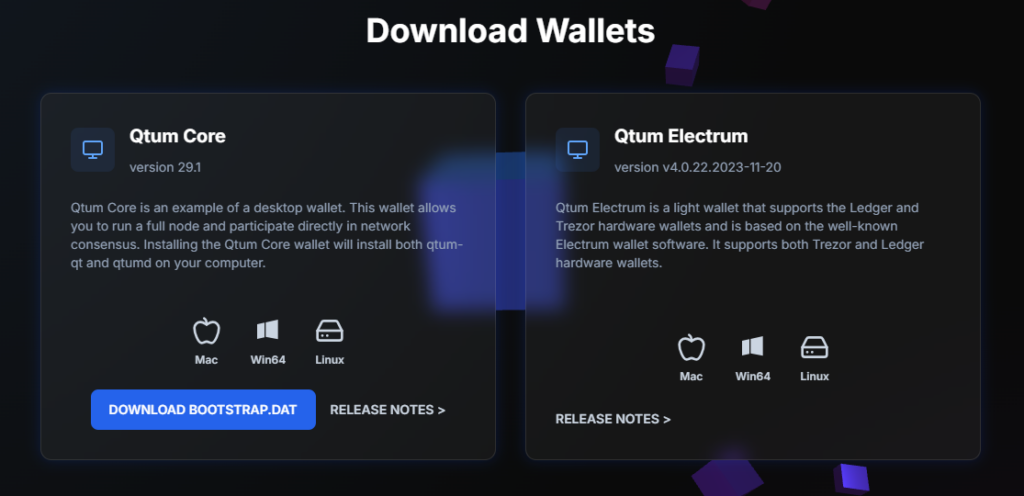
Choosing the right wallet is essential for security.
- Hot Wallets (Online)
- Easy access
- Convenient for trading
Examples:
- Trust Wallet
- MetaMask (via compatibility)
- Cold Wallets (Offline)
- Highest security
- Ideal for long-term holding
Examples:
- Ledger
- Trezor
- Best Option
For most users:
- Use a combination of hot + cold wallets
QTUM Staking Rewards and ROI
Staking QTUM allows users to earn passive income.
How Rewards Work
Rewards depend on the amount staked
- Network participation
- Validator performance
- Estimated Returns
- Factor Impact
- Stake Amount High
- Network Size Medium
- Uptime High
- Why Staking Is Attractive
- Passive income
- Low energy usage
- Long-term growth potential
Competition
QTUM competes with:
- Ethereum
- Solana
- Cardano
- Adoption
QTUM’s success depends on:
- Developer activity
- Enterprise adoption
- Market Volatility
Crypto prices can change rapidly, affecting returns.
QTUM Future Outlook
QTUM’s future depends on several key factors:
- Adoption by enterprises
- Continued development
- Market trends
- Growth Drivers
- Hybrid blockchain advantage
- Staking adoption
- Mobile accessibility
- Long-Term Potential
QTUM has the potential to remain relevant due to its:
- Strong fundamentals
- Unique architecture
- Enterprise focus
Is QTUM a Good Investment for South Africans?
- QTUM can be a moderate-risk investment for South Africans, offering staking rewards and long-term potential, but it faces strong competition and price volatility.
- It is best suited for diversified portfolios, not as a primary crypto holding.
Why QTUM Can Be a Good Investment
1. Passive Income Through StakingSouth Africans can earn passive income by staking QTUM, which is more practical than mining—especially with high electricity costs (Eskom factor). 2. Energy Efficiency (Important in SA) QTUM uses Proof of Stake, meaning:
- No expensive mining rigs
- No high electricity bills
This makes it more suitable for local conditions compared to Bitcoin mining. 3. Growth Potential Some forecasts suggest QTUM could grow over time, depending on adoption and development, with projections ranging widely depending on market conditions 4. Undervalued Opportunity QTUM is often considered a mid-cap altcoin, meaning:
- Higher upside potential
- Less market attention than Ethereum
Final Say About QTUM
QTUM stands out as a technically innovative blockchain project that successfully merges the strengths of Bitcoin and Ethereum into a single, efficient ecosystem. Its hybrid architecture, powered by the Account Abstraction Layer, allows it to deliver strong security, smart contract functionality, and improved scalability—a combination that few platforms achieve effectively.
You might also like:
OMG Network (OMG) ReviewAxie Infinity Review0x Review
Frequently Asked Questions
When was QTUM first launched?
QTUM was founded in 2016 by a team of blockchain developers and officially launched its mainnet in September 2017. Since then, it has evolved into a hybrid blockchain platform combining Bitcoin’s security with Ethereum’s smart contract functionality.
Who founded QTUM?
QTUM was founded by Patrick Dai, a blockchain developer and entrepreneur with experience in both Bitcoin and Ethereum ecosystems. He led the project with a vision to create a scalable, secure, and business-friendly blockchain platform.
What is “ICO”?
An Initial Coin Offering (ICO) is a fundraising method used by blockchain projects where investors purchase tokens in exchange for capital. Unlike IPOs, ICO investors typically do not receive ownership or equity in the company behind the project.
When was QTUM’s ICO, and how much did it raise?
QTUM’s ICO took place in March 2017 and successfully raised approximately 210 million ZAR. The funds were used to develop the platform, expand the ecosystem, and support ongoing innovation within the QTUM blockchain network.
Is QTUM legit?
Yes, QTUM is considered a legitimate cryptocurrency project with a strong development team, established history, and active ecosystem. It has maintained a presence in the crypto market since 2017 and continues to develop enterprise-focused blockchain solutions.
What is QTUM’s total supply?
QTUM has a total supply of approximately 100,561,452 coins. Unlike mineable cryptocurrencies, all tokens were created at genesis, and distribution occurs through staking rewards rather than mining, ensuring a controlled and predictable supply structure.
What is the purpose of QTUM?
QTUM aims to combine Bitcoin’s security with Ethereum’s smart contract capabilities to create a scalable, efficient blockchain platform. It focuses on enterprise adoption, decentralized applications, and real-world use cases through its hybrid architecture and innovative technologies.
On which blockchain is QTUM based?
QTUM operates on its own independent blockchain but integrates Bitcoin’s UTXO model and Ethereum’s Virtual Machine. This hybrid design allows QTUM to act as a bridge between the two ecosystems while maintaining its own secure and scalable network.
Does QTUM work with smart contracts?
Yes, QTUM fully supports smart contracts through its integration with the Ethereum Virtual Machine (EVM). This enables developers to build decentralized applications, create tokens, and automate processes while benefiting from QTUM’s secure and efficient infrastructure.
Does QTUM have the potential to become more valuable?
QTUM has strong potential for future growth due to its hybrid technology, enterprise focus, and ongoing development. However, its value depends on market conditions, adoption rate, and competition within the blockchain space, making it a moderate-risk investment.
What makes QTUM different from other cryptocurrencies?
QTUM stands out by combining Bitcoin’s UTXO security model with Ethereum’s smart contract functionality. Its unique Account Abstraction Layer allows these systems to work together, while Proof of Stake ensures energy efficiency, making QTUM both flexible and scalable.
Can QTUM be used for decentralized finance (DeFi)?
Yes, QTUM supports decentralized finance applications through its compatibility with the Ethereum Virtual Machine. Developers can build DeFi platforms such as lending protocols, decentralized exchanges, and tokenized assets, enabling users to access financial services without intermediaries.
Is QTUM suitable for beginners in crypto?
QTUM can be suitable for beginners due to its staking model, which is easier than mining. However, understanding its hybrid structure may require some learning. Its mobile-friendly wallets and passive income potential make it accessible to new users.
How secure is the QTUM blockchain?
QTUM is highly secure because it incorporates Bitcoin’s UTXO model, which is known for its reliability and resistance to double-spending. Combined with Proof of Stake validation, this creates a strong and efficient security framework for transactions and smart contracts.
What are the main risks of investing in QTUM?
The main risks include strong competition from other smart contract platforms, market volatility, and slower adoption compared to leading blockchains. Like all cryptocurrencies, QTUM’s value can fluctuate significantly, making it important for investors to manage risk carefully.
How can you earn passive income with QTUM?
You can earn passive income with QTUM by staking your tokens on the network. By locking QTUM in a wallet or delegating to a Super Staker, users help validate transactions and receive regular staking rewards without needing expensive hardware or mining equipment.
You Might Also Like




Recommended brokers