

 Stacks (STX) is a Bitcoin-layer blockchain that enables smart contracts secured by Bitcoin, operating under applicable crypto regulations, including KYC and AML requirements where enforced, with regulatory treatment varying by jurisdiction.
| 🔹 Feature | 📖 Description |
| 📱 Wealth App | A user-friendly application that allows users to manage and track their Stacks assets, portfolios, and rewards efficiently. |
| ⚡ Smart Engine | Advanced tools and protocols that enable smart contract execution and decentralized application interactions on the Stacks blockchain. |
| 🤖 Automated Investing | Investment features that automate staking, yield farming, and portfolio management for easier passive income generation. |
| 💰 Earn Program | Programs that allow users to earn rewards through staking, participating in network activities, or using specific Stacks services. |
| 🔐 Security & Regulation | Compliance with regulations, KYC/AML standards, and robust security protocols to protect user funds and data. |
| 🪙 BORG Token | The native token that powers governance, incentives, and participation within the Stacks ecosystem. |
| 🌍 Community Focus | Initiatives to foster community engagement, education, and collaboration among developers and users. |
| 💳 Extra Features | Additional tools like wallets, analytics, and integration with DeFi apps for enhanced functionality. |
| ⚠️ Risks | Risks include market volatility, regulatory changes, and technological vulnerabilities inherent in blockchain ecosystems. |
Overview
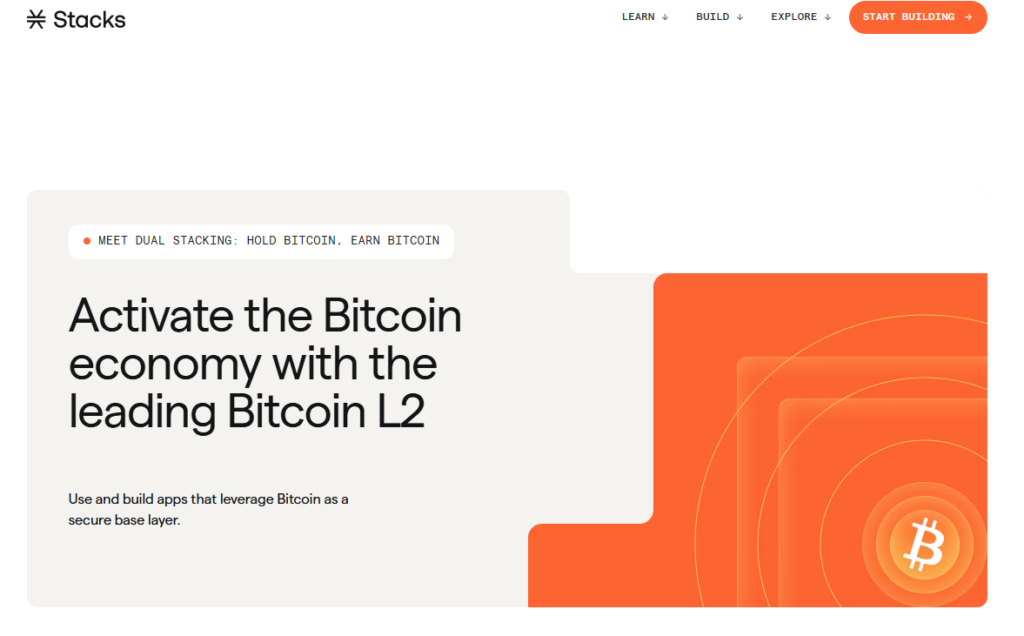
- Stacks positions itself as the leading Bitcoin Layer-2 solution designed to unlock new possibilities by enabling developers and users to build and use decentralized applications, smart contracts, and financial tools that leverage Bitcoin as a secure base layer.
- The platform emphasizes Bitcoin’s security, broad adoption, and untapped economic potential while offering features like yield mechanisms, innovative consensus design, and tools for creators and builders to expand Bitcoin’s utility beyond simple transactions.
- Stacks supports a growing ecosystem of apps, DeFi protocols, identity systems, and wallets, all anchored by Bitcoin’s settlement and security assurances to deliver a programmable and extensible blockchain experience.

🏆10 Best Forex Brokers in South Africa
| Rank | Broker | Broker Review | Regulators | Minimum Deposit | Visit Broker |
|---|---|---|---|---|---|
| 🥇 |  | Read Review | ASIC, FSA, CBI, BVI, FSCA, FRSA, CySEC, ISA, JFSA | $100 | Visit Now |
| 🥈 |  | Read Review | FSCA, FCA, DFSA, FSA, CMA | $0 | Visit Now |
| 🥉 |  | Read Review | FSCA, FSC, CYSEC, DFSA, CMA, FSC, FSA | $5 | Visit Now |
| 4 |  | Read Review | ASIC, CySEC, FSA, SCB | $0 | Visit Now |
| 5 |  | Read Review | BVI FSC | $0 | Visit Now |
| 6 |  | Read Review | FSA, FSC, FSCA, ASIC, CMA | $20 | Visit Now |
| 7 |  | Read Review | Exness is a globally regulated broker, holding multiple licenses from respected financial regulators around the world. | $10 | Visit Now |
| 8 |  | Read Review | ASIC, CySEC, FSCA, FSA, FSC, CMA | $100 | Visit Now |
| 9 |  | Read Review | FSC | $10 | Visit Now |
| 10 |  | Read Review | FSA, CySEC, FSCA, FSC | $10 | Visit Now |


Stacks Licence and Regulation
- Stacks is developed as an open-protocol blockchain that extends Bitcoin with smart contracts and decentralized applications, and access to the official Stacks site and ecosystem resources is governed by terms granting users a limited, non-exclusive, revocable licence to use the website and tools for personal, non-commercial purposes.
- While the core protocol itself operates as decentralized open-source software rather than a licensed centralized service, entities building on or offering services with STX must follow applicable laws and compliance standards in their jurisdictions, including KYC (know-your-customer) and AML (anti-money-laundering) requirements where enforced, and the regulatory treatment of STX and related activities varies by region.
| 📍 Regulatory Aspect | 📋 Details |
| 🇪🇪 Estonia License (FIU) | Stacks complies with the Estonian Financial Intelligence Unit licensing requirements for crypto service providers. |
| 🇫🇷 France PSAN (AMF) | Registered under France’s PSAN framework, ensuring adherence to local crypto regulations and investor protections. |
| 🇬🇧 UK Regulation | Follows UK financial regulations for digital assets, including oversight by the Financial Conduct Authority where applicable. |
| 🧾 KYC/AML Compliance | Implements Know Your Customer and Anti-Money Laundering procedures to verify users and prevent illicit activity. |
| 🔍 Travel Rule / EU Reporting | Adheres to the Travel Rule and EU reporting standards for cross-border crypto transactions. |
| 🪪 Assets Segregation | Maintains separation of user assets from operational funds to enhance security and transparency. |
| 🛡️ Regulatory Scope Limits | Operates within defined regulatory boundaries to manage legal exposure and compliance risk. |
| 📜 Ongoing Legal Monitoring | Continuously monitors legal developments to adjust policies and maintain regulatory compliance. |
Stacks User Reviews & Reputation
- Stacks has a mixed but generally engaged reputation among users and developers.
- Many community members and reviewers highlight strong developer support, active community channels, and real-world use cases for building smart contracts and apps on Bitcoin, which contributes to positive sentiment.
- Some users praise the security model and innovative stacking mechanisms, while others express concerns about network adoption, complexity, and governance centralization.
- Feedback on forums reveals both optimism about Stacks’ long-term potential and critical discussions about user experience and project execution, with debates often reflecting broader views on cryptocurrency innovation and decentralization.
Pros and Cons
| ✅ Pros | ❌Cons |
| Stacks features a protocol, application, Bitcoin system, and a proprietary Stacks blockchain and each layer has its own function | There is a significant amount of competition in the field |
| Stacks has a robust ecosystem and makes verification with Bitcoin easy | |
| Stacks uses the important elements from bitcoin and adds a few more for the extension, ensuring that all participants benefit | |
| PoX consensus mechanism is efficient, and all participants are rewarded | |
| The new program for smart contracts is easy and safe to use |
Stacks fees and costs
- Stacks has a transparent fee structure designed to support network operations and smart contract execution.
- Users pay transaction fees when sending STX tokens or interacting with smart contracts, which vary depending on network demand.
- Staking and earning programs may charge small platform fees, typically a percentage of rewards, to cover infrastructure and security costs.
- Additional costs can arise from using third-party wallets or services within the Stacks ecosystem, but these are generally minimal.
- Overall, fees are structured to remain competitive while ensuring the network stays secure, efficient, and sustainable for both developers and users.
Stacks' ease of use and platform experience
- Stacks fees are small network charges paid in STX to incentivize miners to confirm and secure transactions on the blockchain, and fees vary based on transaction size and current network conditions.
- The fee rate is determined by market demand and is multiplied by transaction complexity to calculate the total cost, with wallets and APIs typically estimating the appropriate amount before submission so users can plan accordingly.
- Smart contract deployments and function calls may require higher fees than simple token transfers, and fee rates can change with congestion and usage patterns.
| 📊 Aspect | ⭐ Rating | 🧠 What Users Say (Summary) |
| 📱 Ease of Use | ⭐⭐⭐⭐ | The interface is intuitive, allowing both beginners and experienced users to manage assets easily. |
| 🧭 Navigation & UX | ⭐⭐⭐⭐ | Smooth navigation with clear menus and well-organized sections, though some advanced features require learning. |
| ⚡ Onboarding / Setup | ⭐⭐⭐ | Account creation and wallet setup are straightforward, but KYC verification can take time. |
| 💱 Trading & Transactions | ⭐⭐⭐⭐ | Transactions are fast and reliable, with transparent fees, though high network traffic can cause slight delays. |
| 🛠 Feature Depth | ⭐⭐⭐ | Offers a solid set of tools, but some advanced DeFi or analytics features are limited compared to other platforms. |
| 🆘 Support Experience | ⭐⭐⭐ | Support is helpful and responsive, though response times can vary depending on demand. |
| 🏁 Overall Experience | ⭐⭐⭐⭐ | Overall, users find Stacks accessible, functional, and secure, with minor areas for improvement. |
Stacks features and assets offered
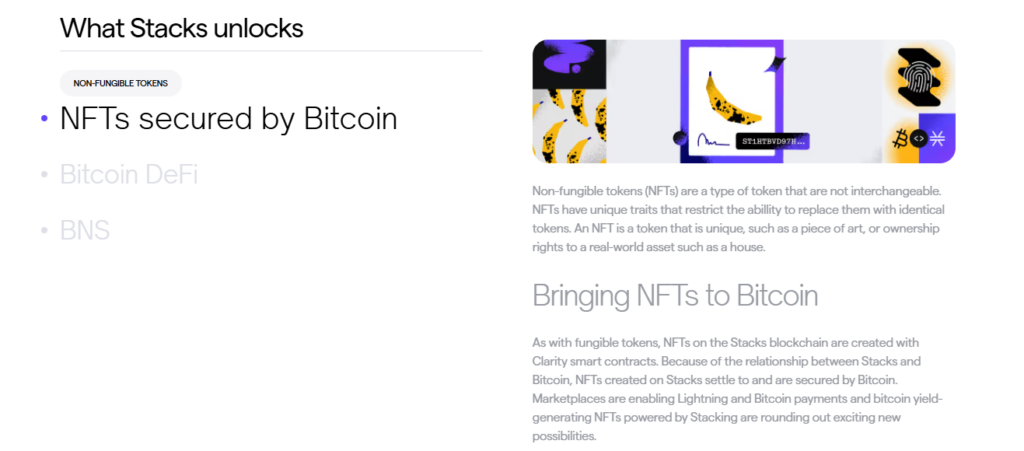
- Stacks offers a powerful set of features and assets centered on bringing programmable functionality to Bitcoin.
- It enables smart contracts and decentralized applications that are secured by Bitcoin’s base layer, using the Clarity programming language for safety and predictability.
- The ecosystem supports decentralized finance, non-fungible tokens, and a blockchain naming system, all leveraging Bitcoin’s security through its Proof of Transfer consensus.
- Users can participate in stacking to earn Bitcoin rewards, and assets like sBTC—a 1:1 Bitcoin-backed token—unlock programmable BTC liquidity. Developers also benefit from tools, wallets, and a growing suite of apps built on Stacks.
Stacks risk warnings and transparency
- Stacks provides transparency about the technology and its limitations while emphasizing that it is an open-source protocol built on Bitcoin, but users should be aware that blockchain systems carry inherent risks, including potential software errors, security vulnerabilities, and economic uncertainties that could affect transaction execution, token value, or network behavior.
- Additionally, while Stacks anchors to Bitcoin’s security, the ecosystem encourages users to understand the mechanics of features like stacking and smart contracts and acknowledges that developers and participants must accept the possibility of bugs, network interruptions, or unforeseen technical issues, and be responsible for their own security practices when interacting with the protocol.
Should you buy Stacks?
- Deciding whether to buy Stacks (STX) depends on your interest in Bitcoin‑linked smart contract ecosystems and long‑term crypto innovation.
- Stacks positions itself as a leading Bitcoin Layer 2 that leverages Bitcoin’s security for decentralized apps, DeFi, and programmable assets, and it highlights ongoing network growth, ecosystem development, and unique features like BTC rewards through stacking as reasons investors and builders might consider exposure to STX.
- Ultimately, buying Stacks should align with your broader investment goals, risk tolerance, and belief in Bitcoin’s expanding programmable future.
How to buy/sign up and use Stacks - step by step
Step 1: Create a Wallet
- Download and install a Stacks-compatible wallet, such as the Hiro Wallet.
- Set up a secure account, back up your recovery phrase safely, and ensure you never share it with anyone.
Step 2: Buy STX
- Purchase STX tokens through a supported exchange using fiat or crypto.
- Complete any required KYC verification and transfer the tokens to your Stacks wallet for full control.
Step 3: Participate in the Network
- Use your wallet to send STX, deploy smart contracts, or engage in stacking to earn Bitcoin rewards.
- Explore DeFi, NFTs, or other apps built on the Stacks ecosystem.
Step 4: Monitor and Manage
- Regularly check your wallet and staking positions, update software when needed, and stay informed about network developments.
- Always practice safe crypto management, including secure storage and careful transaction verification.
Stacks Account
- A Stacks account is an on‑chain identity and asset holder within the Stacks blockchain that uses an accounts‑based model similar to Ethereum rather than Bitcoin’s UTXO system.
- Each account is associated with a unique address, private key, and balance that can own STX tokens and other digital assets, and all asset movements require signed transactions from the account owner.
- Accounts are generated from a 24‑word seed phrase, and losing that phrase means irreversible loss of access. Stacks accounts are created automatically with key generation and serve as the basis for interacting with decentralized applications, signing transactions, and managing funds on the Stacks network, which is anchored to and secured by Bitcoin.
Stacks mobile app
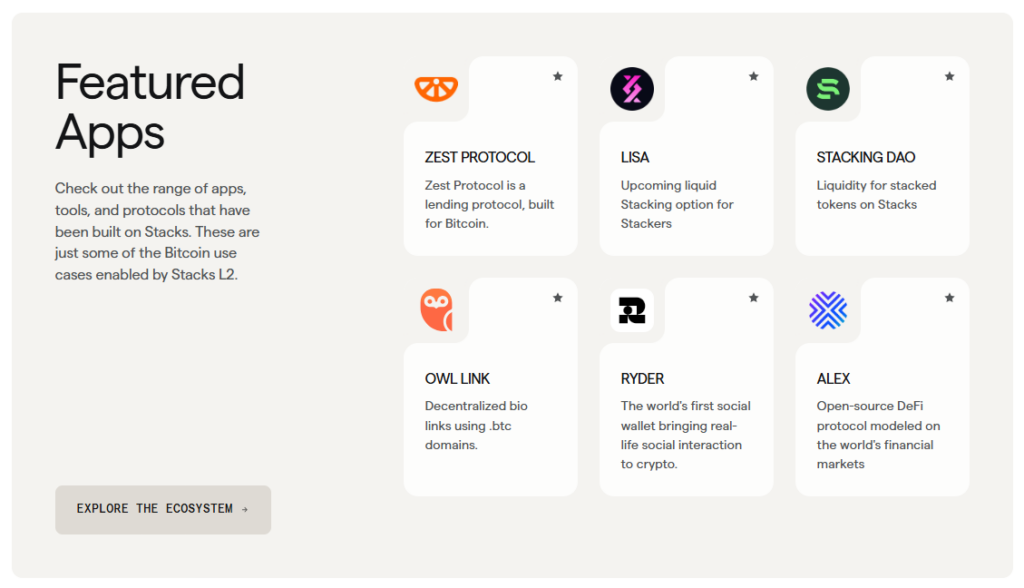
- Stacks offers mobile wallet apps—like Xverse—that let users securely manage STX tokens, Bitcoin, and other assets while interacting with decentralized applications built on the Stacks blockchain.
- These mobile apps are non‑custodial, meaning you control your private keys, and they support sending, receiving, and storing STX, viewing NFTs, connecting to DeFi tools, and participating in stacking to earn rewards.
- Users can explore the broader Stacks ecosystem of decentralized apps directly from their phones, including marketplaces and financial services, all anchored to Bitcoin’s security without needing a separate desktop setup.
| 📱 App Feature | 🔍 What It Does |
| 💸 Buy & Sell Crypto | Allows users to quickly purchase or sell STX and supported tokens directly from the app. |
| 🤖 Auto‑Invest / DCA | Automates recurring investments using strategies like dollar-cost averaging for consistent portfolio growth. |
| 📊 Portfolio Overview | Provides a clear view of holdings, balances, and performance across all assets in one place. |
| 💰 Earn Yield | Lets users stake or participate in earning programs to generate passive income on their assets. |
| 📈 Crypto Bundles | Offers curated collections of tokens or themed investment bundles for diversified exposure. |
| 🔔 Price Alerts & Analytics | Sends notifications on price changes and market trends, plus insights to inform trading decisions. |
| 🔐 Security & Safety | Implements strong encryption, biometric login, and compliance measures to protect funds and data. |
Stacks Wallet
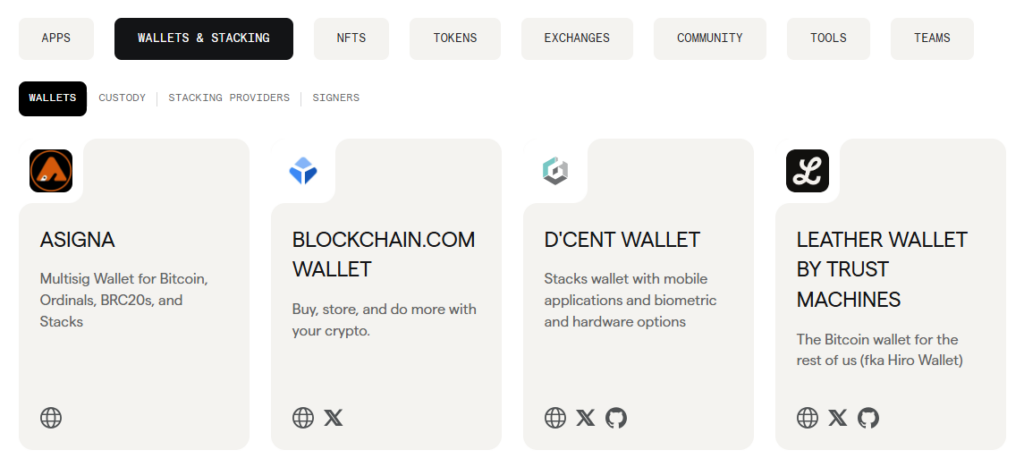
- Stacks Wallet on the official Stacks site refers to the suite of wallet options you can use to securely store and manage your STX tokens and other digital assets within the Stacks ecosystem.
- These wallets are software tools that give you full control over your private keys and funds, acting as non‑custodial accounts where you can view balances, sign transactions, and interact with decentralized applications on Stacks.
- A Stacks wallet also enables participation in network features like stacking and connects you to Bitcoin‑anchored DeFi apps, NFTs, and identity services with a familiar accounts‑based interface built for simplicity and security.
What are decentralized apps?
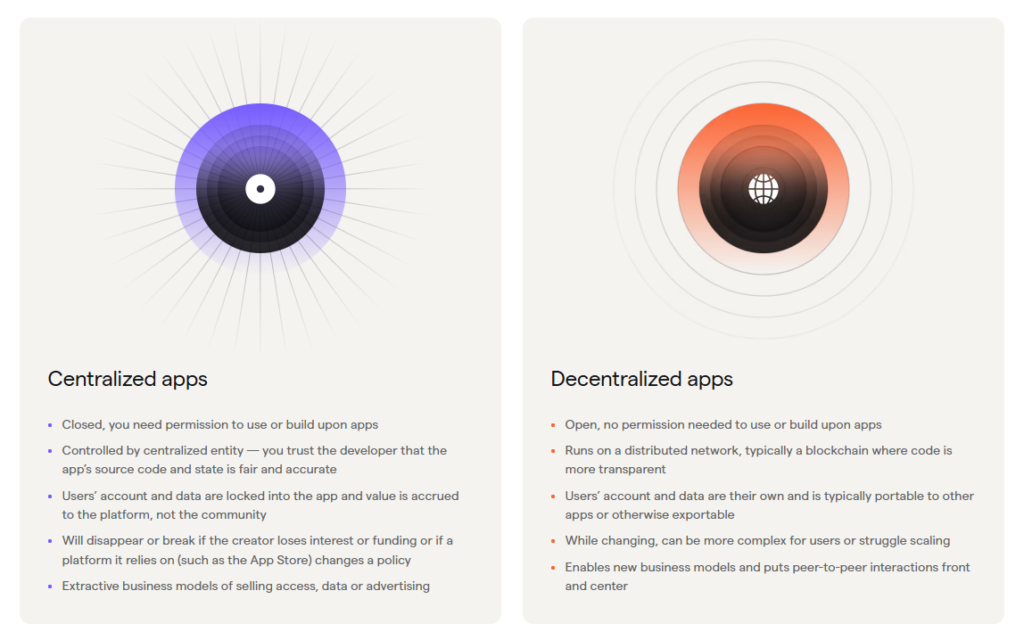
- Stacks describes decentralized apps (dApps) as computer programs that run on the Stacks blockchain rather than on centralized servers, meaning they are open, permissionless, and can be used or built upon by anyone without needing approval.
- These apps store their code and state on the network itself, giving users full control over their data and interactions and enabling new kinds of applications that were not possible with traditional centralized systems.
- Decentralized apps reflect Bitcoin’s core values of openness and decentralization by removing single points of control and allowing users to interact directly with the software through a distributed blockchain environment.
| dApp Name | 🔍 Purpose | 🪙 Token / Integration | ⚡ Key Feature |
| 🏦 Hiro Wallet | Manage STX and tokens | STX | Secure wallet with staking and transaction tracking |
| 🛍️ Boom | NFT Marketplace | STX / NFTs | Buy, sell, and trade NFTs on the Stacks blockchain |
| 📈 Arkadiko | DeFi Lending & Borrowing | STX | Borrow and lend crypto with decentralized protocols |
| 🎨 StacksArt | NFT Art Platform | STX / NFTs | Create, showcase, and trade digital art NFTs |
Who is Stacks best for?
- Stacks is best for developers, builders, and innovators who want to extend Bitcoin’s security with smart contracts, decentralized applications, and programmable finance.
- It appeals to users who value Bitcoin‑anchored security, low transaction costs, and participation in network features like stacking, while also fostering a community‑driven ecosystem with tools and support for building DeFi, NFTs, and other blockchain solutions.
Stacks South Africa-specific section
- The main Stacks site generally describes the protocol’s global features like Bitcoin layer‑2 smart contracts, developer tools, wallets, and ecosystem updates, without a dedicated regional page for South Africa.
- However, Stacks has been mentioned in relation to community events held in Johannesburg as part of global meetups and ecosystem growth efforts, showing that the Stacks project engages with local blockchain communities in South Africa alongside worldwide developer and user activities.
Comparison table
| 📥 Action | 🚀 How It Works | 💸 Fees & Notes |
| 📥 Fiat Deposit (Bank) | Users can fund their Stacks account via linked bank accounts or supported payment methods. | Fees vary by bank and currency; usually small processing charges apply. |
| 📥 Crypto Deposit | Users can deposit STX or supported cryptocurrencies from external wallets. | Network fees apply; deposits are generally instant once confirmed on-chain. |
| 📤 Fiat Withdrawal | Users can withdraw funds to their bank account after converting crypto to fiat. | Withdrawal fees may apply depending on bank and amount; processing can take 1–3 business days. |
| 📤 Crypto Withdrawal | Users can transfer STX or other tokens to external wallets. | Network transaction fees apply; withdrawals are processed securely on-chain. |
What is Stacking?
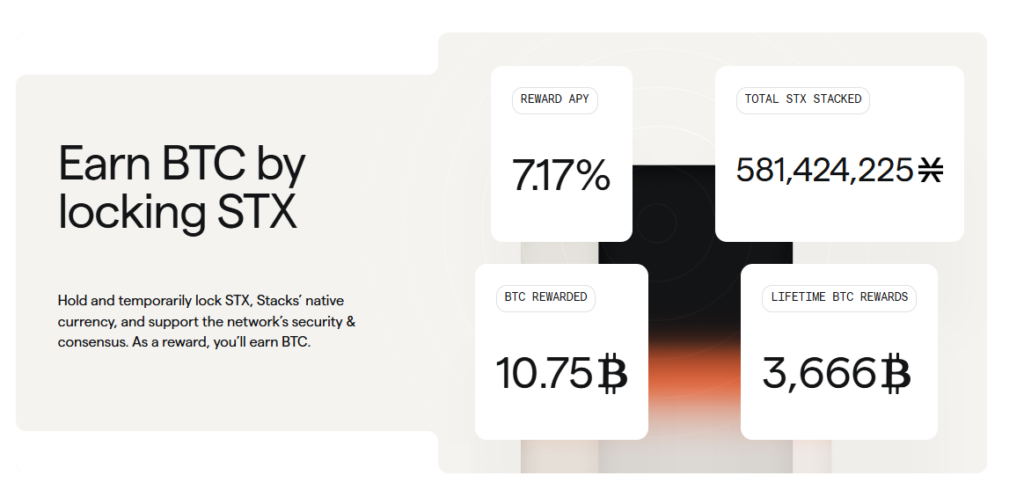
- Stacking on Stacks is the process where STX holders temporarily lock their STX tokens to support the network’s security and consensus.
- By committing their tokens before a reward cycle begins, participants help maintain the blockchain and validate blocks.
- In exchange for locking their STX and participating in this consensus process, stackers earn Bitcoin rewards that are transferred to them through Stacks’ unique Proof‑of‑Transfer mechanism, which channels Bitcoin from miners to stackers as part of network operation.
- The locked STX remains in the user’s wallet but is unspendable until the end of the chosen lock period, usually about two weeks, after which it becomes available again, along with any earned Bitcoin rewards.
Stacks Blog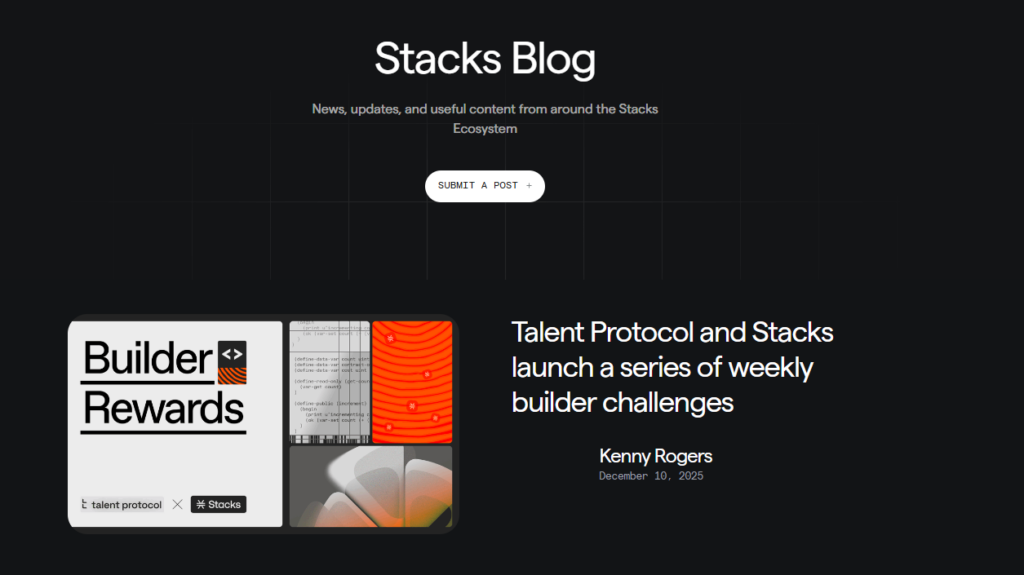
- The Stacks Blog is a central hub for news, updates, and insightful content from across the Stacks ecosystem, featuring announcements, project highlights, community stories, and ecosystem developments to help users and builders stay informed about what’s happening in the world of Stacks.
- It aggregates valuable posts from different contributors and projects within the Stacks community, making it easier to follow the latest innovations, milestones, and ecosystem growth without needing to search multiple platforms.
- The blog serves as a discoverability tool that brings together important updates and perspectives in one place for anyone interested in Stacks.
| Blog Topic | Summary |
| 📢 Announcements | Updates on network upgrades, partnerships, and ecosystem developments. |
| 🛠 Developer Guides | Tutorials and technical resources for building on the Stacks blockchain. |
| 💡 Insights & Analysis | Market trends, Stacks ecosystem analysis, and crypto education content. |
| 🎨 NFTs & Digital Assets | News and guides related to NFTs, digital collectibles, and tokenized assets on Stacks. |
| 🔐 Security & Compliance | Articles on best practices for wallet security, staking safely, and regulatory updates. |
Stacks Events
- Stacks Events are gatherings and interactive opportunities where the Stacks ecosystem connects with builders, developers, investors, and Bitcoin enthusiasts both online and in person.
- These events include a regularly updated global calendar of technical meetings, workshops, hackathons, community meetups, and developer‑focused sessions that help people learn about building on Bitcoin, the Stacks roadmap, and new ecosystem initiatives.
- They also feature Stacks activations at major Bitcoin and blockchain conferences around the world, fostering collaboration, networking, and knowledge sharing among participants as the network grows.
Stacks technology and architecture
- Stacks is built as a smart contract layer that operates alongside the Bitcoin network rather than competing with it.
- The architecture is designed to preserve Bitcoin’s base-layer simplicity while enabling advanced programmability on a separate but connected chain.
- By anchoring Stacks blocks to Bitcoin through cryptographic references, the network inherits many of Bitcoin’s security guarantees without modifying the original Bitcoin protocol.
- At the core of Stacks’ design is the concept of predictable smart contracts and verifiable state.
- Every Stacks block references a Bitcoin transaction, creating an auditable link between the two networks.
- This approach allows developers to build complex decentralized applications while users can independently verify the integrity of the system through Bitcoin’s proof-of-work history.
Proof of Transfer (PoX) explained in more detail
- Proof of Transfer (PoX) is the consensus mechanism that distinguishes Stacks from traditional proof-of-stake and proof-of-work systems.
- Instead of expending new energy or relying solely on token staking, PoX reuses Bitcoin’s existing proof-of-work security by requiring miners to transfer Bitcoin to participate in block production.
- In the PoX model, miners commit Bitcoin to compete for the right to produce Stacks blocks. The Bitcoin committed by miners is then distributed to STX holders who participate in stacking.
- This creates a circular incentive system that links the two networks economically while maintaining their technical independence.
- This mechanism offers several potential advantages.
The role of the Clarity smart contract language
- Clarity is the purpose-built smart contract language used by Stacks, and it plays a central role in the network’s value proposition.
- Unlike many smart contract languages that compile code into bytecode before execution, Clarity is interpreted and fully transparent.
- This means developers and auditors can see exactly what the code will do before it runs.
- One of Clarity’s key design goals is predictability. The language intentionally avoids certain features that can introduce uncertainty, such as unbounded loops.
- This makes it easier to estimate transaction costs and reduces the risk of unexpected behavior during execution.
- For financial applications and decentralized systems that handle value, this predictability is often viewed as a major advantage.
| ⚙️ Aspect | 📝 What It Means | 🚀 Why It Matters |
| 🔍 Human-Readable Code | Clarity smart contracts are written in a clear, readable format rather than compiled bytecode. | Developers and auditors can easily understand what the contract does before execution. |
| 🛡️ Predictable Execution | Clarity is interpreted and decidable, meaning outcomes can be known in advance. | Reduces unexpected behavior and improves trust for financial applications. |
| ⛔ No Hidden Compilation | Contracts run exactly as written without a separate compilation step. | Minimizes bugs and security risks caused by compiler errors. |
| 💰 Cost Transparency | Transaction costs can be estimated before running the contract. | Helps users avoid surprise fees and improves budgeting for dApps. |
| 🔗 Bitcoin Awareness | Clarity can read Bitcoin blockchain state directly. | Enables Bitcoin-anchored DeFi and advanced cross-chain logic. |
| 🧱 Security-First Design | The language intentionally restricts risky features like unbounded loops. | Lowers the chance of exploits and network abuse. |
| 🧪 Easier Auditing | Code behavior is fully visible and deterministic. | Makes professional security audits more reliable and efficient. |
| 🧑💻 Developer Friendly | Designed specifically for the Stacks ecosystem and its use cases. | Helps builders create safer smart contracts faster. |
| 🌐 dApp Enablement | Powers DeFi, NFTs, DAOs, and naming systems on Stacks. | Expands Bitcoin’s utility beyond simple transfers. |
| 📈 Long-Term Reliability | Focus on correctness over complexity. | Supports sustainable growth of the Stacks ecosystem. |
STX tokenomics and supply dynamics
- The STX token serves as the economic engine of the Stacks network. It is used to pay transaction fees, execute smart contracts, register digital assets such as names, and participate in stacking.
- The token’s design aims to balance network security, user incentives, and long-term sustainability.
- STX has a capped supply model with a defined issuance schedule, which introduces predictable inflation over time.
- New tokens are distributed primarily through mining rewards under the PoX system. As the network matures, the emission rate decreases, which may affect long-term supply dynamics and market behavior.
Ecosystem growth and developer activity
- The Stacks ecosystem has expanded steadily, with a growing number of wallets, developer tools, DeFi protocols, NFT marketplaces, and infrastructure providers.
- This ecosystem growth is important because the long-term success of any smart contract platform depends heavily on developer adoption and real-world usage.
- Developer tooling around Stacks has improved significantly in recent years, with better SDKs, APIs, and documentation lowering the barrier to entry.
- Hackathons, grants, and community initiatives have also contributed to onboarding new builders interested in Bitcoin-anchored applications.
| 🌱 Area | 🚀 What’s Happening | 📊 Why It Matters |
| 👨💻 Developer Community | Stacks has seen steady growth in developers building Bitcoin-anchored applications, supported by grants, hackathons, and improved tooling. | A growing developer base is essential for long-term ecosystem sustainability and innovation. |
| 🧰 Developer Tools | Expanded SDKs, APIs, documentation, and the Clarity language environment make building on Stacks more accessible than in earlier phases. | Better tools lower the barrier to entry and accelerate app development. |
| 💰 DeFi Ecosystem | New DeFi protocols, liquidity platforms, and yield opportunities continue to emerge within the Stacks network. | More DeFi activity can increase STX utility, network usage, and liquidity. |
| 🖼️ NFT & Creator Economy | NFT marketplaces and creator tools are being built on Stacks, leveraging Bitcoin security for digital ownership. | Expands real-world use cases beyond finance and attracts new user segments. |
| 🔗 Wallet & Infrastructure Support | Growth in wallets like Hiro and Xverse, plus improved node infrastructure and APIs. | Strong infrastructure improves user experience and network reliability. |
| 🌍 Community & Hackathons | Global hackathons, meetups, and online communities actively support builders entering the ecosystem. | Community momentum often correlates with ecosystem expansion and developer retention. |
| 🏗️ Ecosystem Funding | Grants programs and ecosystem funds help bootstrap new projects and early-stage teams. | Financial incentives encourage experimentation and faster ecosystem growth. |
| ⚡ Network Upgrades | Ongoing improvements (such as the Nakamoto upgrade) aim to enhance speed, finality, and developer experience. | Technical progress helps Stacks remain competitive in the Layer-2 landscape. |
Security considerations and network reliability
- Security is one of Stacks’ primary selling points because of its connection to Bitcoin.
- By anchoring to Bitcoin’s proof-of-work chain, Stacks benefits from one of the most battle-tested security models in the cryptocurrency space. This anchoring makes historical transaction data highly resistant to tampering.
- However, Stacks is not risk-free. The smart contract layer introduces additional complexity that can create potential vulnerabilities if contracts are poorly written or insufficiently audited.
- Users interacting with DeFi applications, NFT platforms, or experimental protocols should still exercise caution and follow best security practices.
- Network reliability has improved with upgrades and infrastructure development, but like many blockchain networks, Stacks can experience congestion or delays during periods of high demand.
- Users should be aware that transaction confirmation times and fees may vary depending on network conditions.
| 🔐 Security & Reliability Factor | 🧠 What It Means | ⚠️ Potential Risk | ✅ Why It Matters |
| 🪙 Bitcoin Anchoring | Stacks transactions are anchored to Bitcoin’s proof-of-work chain for added security. | Delays can occur due to Bitcoin block timing. | Inherits strong, battle-tested security from Bitcoin. |
| ⚙️ Proof of Transfer (PoX) | Miners commit BTC to produce Stacks blocks and reward stackers. | Mechanism is complex for new users to understand. | Aligns incentives between Bitcoin and Stacks participants. |
| 📜 Clarity Smart Contracts | Uses a predictable, human-readable smart contract language. | Poorly written contracts can still contain bugs. | Improves auditability and reduces unexpected behavior. |
| 🧩 Smart Contract Risk | dApps run autonomously once deployed. | Vulnerabilities or exploits may lead to fund loss. | Users must verify and trust the applications they use. |
| 🔑 Private Key Control | Non-custodial wallets give users full control of assets. | Lost seed phrase = permanent loss of funds. | Ensures true ownership without relying on intermediaries. |
| 🌐 Network Congestion | Fees and confirmation times depend on demand. | High activity may slow transactions or increase fees. | Impacts user experience during peak usage periods. |
| 🛠️ Software & Upgrade Risk | Network improvements (e.g., upgrades) enhance performance. | Bugs or upgrade issues could temporarily disrupt service. | Ongoing development strengthens long-term reliability. |
| 🔍 Open-Source Transparency | Code is publicly available for review and auditing. | Security depends on active community review. | Encourages trust and continuous improvement. |
| 🏦 Third-Party Service Risk | Wallets, exchanges, and DeFi apps operate independently. | Service failures or hacks can affect users. | Choose reputable providers and follow best practices. |
| 📡 Infrastructure Reliability | Nodes and APIs support the network’s operation. | Outages or downtime may impact app connectivity. | Strong infrastructure ensures smoother ecosystem performance. |
The Nakamoto upgrade and future roadmap
- A major milestone in the Stacks roadmap is the Nakamoto upgrade, which aims to improve transaction speed, finality, and overall network performance.
- The upgrade is designed to make Stacks blocks more closely synchronized with Bitcoin while reducing latency for users and developers.
- Future roadmap items for the ecosystem often focus on enhancing Bitcoin programmability, improving user experience, expanding sBTC functionality, and strengthening developer tooling.
- The long-term vision is to make Bitcoin a fully programmable asset layer without compromising its core security model.
Finale says about Stacks
Stacks positions itself as the leading Bitcoin Layer-2 network that unlocks Bitcoin’s full potential by enabling smart contracts, decentralized applications, and programmable assets while inheriting Bitcoin’s battle-tested security. The platform emphasizes a secure, scalable foundation for builders and developers to create a broad range of Web3 and DeFi solutions anchored to Bitcoin, activating untapped capital and expanding Bitcoin’s utility beyond simple transfers. Stacks highlights ongoing technological improvements like the Nakamoto upgrade and 1:1 Bitcoin-backed assets designed to bring real Bitcoin yields and deeper programmability to the Bitcoin ecosystem.
You Might Also like
5 Best MT5 Crypto Broker crypto-test Forex. ee CTA
Frequently Asked Questions
What is Stacks (STX)?
Stacks is a blockchain that brings smart contracts and decentralized applications to Bitcoin without changing Bitcoin itself. It uses Bitcoin as its settlement and security layer, allowing developers to build advanced functionality anchored to Bitcoin’s network.
How does Stacks connect to Bitcoin?
Stacks anchors its transactions and smart contracts to Bitcoin through a consensus mechanism called Proof of Transfer. This allows Stacks to inherit Bitcoin’s security while remaining a separate blockchain capable of faster innovation and programmability.
What is STX used for?
STX is the native token of the Stacks network and is used to pay transaction fees, deploy smart contracts, and participate in network consensus. It also enables stacking, which allows holders to earn Bitcoin rewards.
What is stacking in Stacks?
Stacking allows STX holders to lock their tokens temporarily to help secure the network. In return, participants receive rewards paid in Bitcoin, not STX, making it unique compared to traditional proof-of-stake reward systems.
Is Stacks secure?
Stacks is considered secure because it settles transactions on Bitcoin, benefiting from Bitcoin’s strong security and decentralization. While Stacks has its own risks as a smart contract platform, Bitcoin anchoring adds an additional layer of trust.
Are smart contracts on Stacks different
Yes, Stacks uses a programming language called Clarity, which is designed to be predictable and secure. Clarity code is human-readable and interpreted rather than compiled, reducing unexpected behavior and helping developers identify issues before deployment.
Is STX regulated?
STX operates under general cryptocurrency regulations, including KYC and AML requirements imposed by exchanges and service providers. Regulatory treatment varies by country, but STX is commonly viewed as a utility token supporting network functionality rather than ownership rights.
Can Stacks support DeFi and NFTs?
Stacks supports decentralized finance applications, NFTs, and DAOs that leverage Bitcoin’s security. Developers can build complex applications while using Bitcoin as a settlement layer, expanding Bitcoin’s use beyond simple payments and value storage.
Who created Stacks?
Stacks was originally developed by Blockstack, now known as Hiro Systems. The project has evolved into an open-source ecosystem supported by developers, independent contributors, and community governance rather than a single centralized company.
What are the risks of investing in STX?
Risks include market volatility, evolving regulations, smart contract vulnerabilities, and competition from other blockchain platforms. While Bitcoin anchoring offers security benefits, Stacks' adoption and long-term success depend on developer activity and user growth.
You Might Also Like






Recommended brokers