FSCA authorisation gives South African traders an important regulatory check before opening a forex account. Check that the company listed on your account is authorised by the FSCA for the specific services you are signing up for.
FSCA regulation gives you a South African record to check, including the broker's registered company and licence information. There are also formal channels available if you have a regulatory complaint. A licence does not protect your trading capital from losses in the forex market.
The important detail is the company in your client agreement. A familiar brand can have more than one company in the same group, with one company in South Africa and another offshore. Your legal rights follow the company that contracts with you, not the logo on the website.
Use the FSP number to find the licensed company rather than treating the number itself as proof. Check its FSCA permissions against your forex CFD agreement and see where a complaint would need to go.
Are FSCA-regulated forex brokers safer than unregulated brokers?
FSCA-authorised brokers generally offer stronger regulatory oversight than brokers without verifiable supervision. South African traders can check licence details and access qualifying complaint channels. However, regulation cannot prevent market losses, guarantee withdrawals, or remove risks associated with leveraged forex trading.

🏆10 Best Forex Brokers in South Africa
| Rank | Broker | Broker Review | Regulators | Minimum Deposit | Visit Broker |
|---|---|---|---|---|---|
| 🥇 |  | Read Review | ASIC, FSA, CBI, BVI, FSCA, FRSA, CySEC, ISA, JFSA | $100 | Visit Now |
| 🥈 |  | Read Review | FSCA, FCA, DFSA, FSA, CMA | $0 | Visit Now |
| 🥉 |  | Read Review | FSCA, FSC, CYSEC, DFSA, CMA, FSC, FSA | $5 | Visit Now |
| 4 |  | Read Review | ASIC, CySEC, FSA, SCB | $0 | Visit Now |
| 5 |  | Read Review | BVI FSC | $0 | Visit Now |
| 6 |  | Read Review | FSA, FSC, FSCA, ASIC, CMA | $20 | Visit Now |
| 7 |  | Read Review | Exness is a globally regulated broker, holding multiple licenses from respected financial regulators around the world. | $10 | Visit Now |
| 8 |  | Read Review | ASIC, CySEC, FSCA, FSA, FSC, CMA | $100 | Visit Now |
| 9 |  | Read Review | FSC | $10 | Visit Now |
| 10 |  | Read Review | FSA, CySEC, FSCA, FSC | $10 | Visit Now |


Can South Africans trade with unregulated forex brokers?
South Africans may encounter offshore brokers without FSCA authorisation, but their legal position depends on the services offered and applicable laws. Before opening an account, verify the company, its regulator, contractual jurisdiction, withdrawal conditions, and available dispute resolution procedures carefully.
Which Is Safer: FSCA-Regulated or Unregulated Forex Brokers?
FSCA-authorised brokers generally provide a safer regulatory route for South African traders than brokers operating without verifiable supervision. They offer identifiable legal entities, authorisation records, conduct oversight, and formal complaint channels where applicable. However, authorisation must cover the relevant service and does not guarantee trading profits or prevent financial losses.
| Safety Feature | FSCA-Regulated Broker | Unregulated Broker |
|---|---|---|
| Regulatory oversight | Subject to applicable South African financial conduct rules | No verified regulatory supervision |
| Licence verification | Official licence information can be checked | Authorisation may be absent or unverifiable |
| Complaint channels | Formal channels may apply to qualifying disputes | Disputes may require private legal action |
| Company identification | Licensed legal entity can be verified | Legal identity may be difficult to confirm |
| Trading risk | Market losses remain possible | Market losses remain possible |
| Regulatory protection | Depends on the authorised entity and service | No verified regulatory protection |
FSCA-Regulated vs Unregulated Forex Brokers: What You Need to Know
- What does FSCA regulation mean for forex brokers?
- An FSP licence and ODP authorisation cover different roles
- FSCA-regulated vs unregulated brokers: Key safety differences
- FSCA-regulated brokers: Pros and cons
- Unregulated brokers: Pros and cons
- What protection does FSCA regulation provide?
- What risks increase with an unregulated forex broker?
- How to verify a forex broker with the FSCA
- Which type of broker should South African traders choose?
- What if the broker brand and FSCA licence holder are different companies?
- What if an FSCA-licensed intermediary sends the forex trade to another CFD provider?
- Final verdict
- Frequently Asked Questions
What Does FSCA Regulation Mean for Forex Brokers?
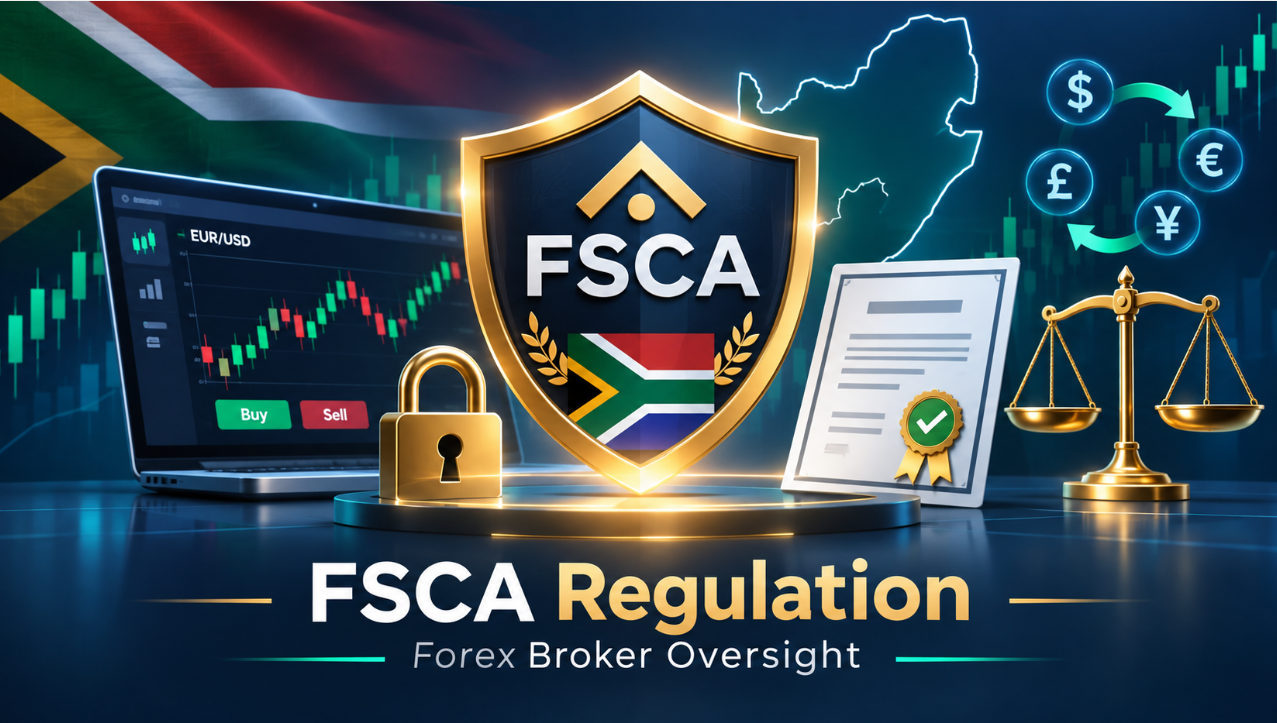
South African financial firms fall under the FSCA for oversight of their business conduct and treatment of customers.
It oversees compliance with financial sector laws while protecting customers and helping safeguard the integrity of South Africa's financial system. The regulator also provides search tools for authorised financial services providers.
FSCA authorisation tells you that the company holds a South African financial services licence. The important part is what the licence permits the FSP to do, as authorisation only applies to the financial services listed under that licence.
The FSP number is the starting point, not the entire FAIS check. What matters is the authorisation attached to it and whether it covers the financial service being offered. This gives you more useful information than confirming that a number exists.
An FSP Licence and ODP Authorisation Cover Different Roles
South African rules treat forex CFDs and spot forex differently. Forex CFDs are covered by the OTC derivatives rules when traded as unlisted derivatives. Spot forex contracts are excluded from the definition.
The OTC derivative provider licence is tied to what the company does in the transaction. Under the Financial Markets Act regulations, it applies to a provider that regularly deals as principal and creates, issues, sells or makes a market in OTC derivatives.
The distinction is important because an intermediary can have an FSP licence while another company acts as the CFD provider. You can therefore see an authentic FSP number on a broker website and still have more work to do.
There may be more than one company involved in your account. One can provide the advice or intermediary service, while another is the principal on your CFD trades. Check the legal names for both.
What Is the Difference Between an FSP and an ODP?
| Regulatory Role | FSP Authorisation | ODP Authorisation |
|---|---|---|
| Meaning | Financial Services Provider | OTC Derivative Provider |
| Regulatory framework | Financial Advisory and Intermediary Services Act | Financial Markets Act and applicable derivatives regulations |
| Main purpose | Authorises specified financial advice or intermediary services | Authorises qualifying OTC derivatives provider activities |
| Forex CFD relevance | May cover advice or intermediary services | Relevant to the company acting as the CFD provider |
| What traders should check | Legal entity, licence status and authorised services | Identity and regulatory status of the CFD counterparty |
FSCA-Regulated vs Unregulated Brokers: Key Safety Differences
It is crucial to check which authority regulates the broker and the country in which that regulator operates. South African authorisation gives you a local regulatory record to verify and formal routes for complaints. A foreign licence still represents regulation, although under another country's rules.
An FSP licence by itself covers the financial services authorised under FAIS. ODP activity has a separate authorisation route under the derivatives framework, which is why the company behind the CFD deserves its own regulatory check.
| Safety Factor | FSCA-Authorised Broker | Unregulated Broker |
|---|---|---|
| Company identity | The licensed legal entity can be matched to official records. | The legal entity can be difficult to verify independently. |
| Permitted services | Licence details can be checked against the financial service offered. | Local permission for the service is unverified. |
| CFD provider status | The OTC derivative provider can be checked under the correct framework. | The CFD counterparty can lack verifiable authorisation. |
| Conduct oversight | South African financial conduct rules apply to the services covered by the authorisation. | Your contract and governing law determine the conduct rules. |
| Complaint route | A domestic complaint route can apply where the dispute falls within jurisdiction. | A dispute can depend on private action or an overseas route. |
| Regulatory action | The FSCA can supervise firms and take action within its legal powers. | FSCA supervision is absent for an unauthorised provider. |
| Licence status | Current status can be checked through the regulator's search tools. | Claims about regulation can be difficult to confirm. |
FSCA-Regulated Brokers: Pros and Cons
| Pro | Why It Helps | Con | Why It Affects the Trader |
|---|---|---|---|
| Verifiable licence | You can match the company and FSP number to official records. | Licence scope varies | An FSP licence does not mean every financial service is covered. |
| South African oversight | Local oversight applies to the financial services the company is authorised to provide. | Group structures can differ | The offshore company in the contract can change the legal route available to you. |
| Formal complaint avenues | Qualifying disputes can be taken through South Africa's formal dispute process. | Complaint eligibility varies | A dispute must fall within the powers of the regulator or ombud concerned. |
| Traceable legal entity | Company details give you a defined counterparty for the financial service. | Market loss exposure | Leverage and larger trades can drain your account when prices turn against you. |
What Protection Does FSCA Regulation Provide?
FSCA regulation gives South African traders a regulated financial services environment. FSPs operate under FAIS, while OTC derivative providers are subject to separate derivatives rules.
Focus on four areas, including:
- The company details can be checked through official records.
- You can check the authorised activities against the service offered.
- Conduct requirements govern the authorised financial service.
- Certain disputes can be referred through an established complaints process.
An FSCA licence also gives you something to check beyond the broker's own website. If the regulator has issued a warning, opened an investigation or withdrawn a licence, there may be a public record of it. Forex businesses can appear in these notices as well.
Do not take the FSP number in a broker's website footer at face value. Authorisation can change, and a screenshot saved months ago tells you what the position was then, not what it is today. Check the broker's current licence details before opening an account.
An authorised broker does not remove trading risk, and any forex pair, including EUR/USD or GBP/ZAR, can turn against your position.
Leverage increases your market exposure, while spreads, commission, swaps, and conversion fees can take more from your account, regardless of the broker's regulatory status.
Does FSCA Regulation Guarantee That My Money Is Safe?
No. FSCA authorisation does not guarantee that your deposits are protected against every possible loss. Regulation establishes rules and oversight for authorised activities, but trading losses, company failures, and disputes can still occur. Check the broker's client money arrangements and contractual responsibilities.
Can an FSCA-Regulated Broker Still Be Risky?
Yes. Regulation reduces certain legal and conduct risks but does not remove market exposure. Leveraged forex positions can lose money quickly, particularly during volatility. Traders should examine account terms, execution policies, trading costs, and the regulatory status of the actual CFD provider.
What Risks Increase With an Unregulated Forex Broker?

If the provider and regulator cannot be verified, there may be no clear route for taking a withdrawal complaint further when the broker does not resolve it.
Do not rely on the FSP number by itself, as a legitimate number can be copied onto a fake website or linked to a company or service that was never authorised under the licence.
South African traders should confirm the broker's FSP number on the official database and make sure the company is authorised for the services it offers.
A request for money should never be accompanied by pressure to act immediately. This is a common thread in forex scams, particularly those involving social-media approaches, people posing as legitimate financial professionals and promises of easy profits.
Withdrawal problems are sometimes the first sign that something is wrong. Being asked for extra money before funds can be released, particularly for unexpected taxes or fees, is reason to check the agreement and confirm the identity of the company requesting payment.
Keep a record of your payments, trading statements, and correspondence with the broker, along with the account terms you agreed to.
Common Warning Signs of an Unregulated Forex Broker
| Warning Sign | Why It Matters | What Traders Should Do |
|---|---|---|
| Unverifiable licence | The broker may not hold the authorisation it claims. | Check the legal entity and licence directly with the regulator. |
| Guaranteed profits | Forex trading cannot guarantee profitable results. | Avoid offers promising risk-free trading income. |
| Pressure to deposit | Urgency can prevent proper checks. | Verify the company before transferring funds. |
| Unexpected withdrawal payments | Additional payment requests may indicate fraud. | Check the agreement and independently confirm the payment request. |
| Unclear company ownership | It may be difficult to identify the legal counterparty. | Request the registered company name and contractual details. |
How to Verify a Forex Broker With the FSCA
Check more than whether a licence number exists, because it could belong to another company or cover financial services unrelated to the offer in front of you.
- Confirm who you are contracting with: Check the client agreement for the company's registered name, company number, FSP number, website, and contact details. Check the company that receives your money as well. A brand name by itself is not enough.
- Search the FSP record: Put the broker's company name or FSP number into the FSCA search and see what comes back. Check that you have the correct company, then look at its licence status and the services listed under the licence.
- Identify the CFD provider: Check the ODP status of the company acting as principal if the broker offers forex CFDs. These contracts are regulated as OTC derivatives, whereas spot forex falls under a different part of the regulatory framework.
- Check current regulatory notices: Look for any past concerns around the company, including trouble with its licence, regulatory investigations or warnings about people posing as its representatives.
- Know who you are signing with and who you are paying: Compare it with the regulated provider and the name on the payment instructions. All three should belong within the same company structure.
A mismatch is a reason to stop the account process until the company explains the structure, and you can verify the explanation independently.
FSCA Broker Verification Checklist
| Verification Step | Information to Check | Why It Matters |
|---|---|---|
| Company identity | Registered legal name and company details | Confirms the business responsible for the account |
| FSP number | Licence number and current authorisation | Helps establish whether the company is licensed |
| Authorised services | Financial services covered by the licence | Confirms whether the offered service falls within the authorisation |
| ODP status | Identity and status of the CFD provider | Establishes the regulatory position of the derivative counterparty |
| Regulatory notices | Warnings, investigations or licence actions | Highlights relevant regulatory concerns |
| Payment beneficiary | Name of the company receiving deposits | Helps identify mismatches or suspicious payment requests |
Which Type of Broker Should South African Traders Choose?

An FSCA licence gives South African traders the benefit of local regulatory oversight, provided the authorisation applies to the company and service behind the account.
Once you are happy with the broker's credentials, compare what it costs to trade, how orders are handled, the leverage available, and what you can expect from the platform, withdrawals, and support.
Start with four checks:
- Company identity: Match the legal company in your account agreement with the regulator's record and the payment beneficiary.
- Authorised service: Confirm that the licence covers the service you will receive, with the correct provider role for forex CFDs.
- Trading costs: The spread is only one part of what you may pay, with commission, overnight finance, currency conversion, and withdrawal fees also affecting the cost of the account.
- Dispute route: Your contract should make it clear where to complain first and what your next avenue is when the broker cannot settle the issue.
Check regulation first, then price. A spread that is a fraction lower has little significance when company identity is uncertain, or the contract sends a dispute into an uncertain jurisdiction.
What If the Broker Brand and FSCA Licence Holder Are Different Companies?
A different company name can be legitimate within a broker group. Large broker groups can trade under one brand while separate legal companies serve clients in different countries. The important point is to identify which company signs your agreement and which company provides each financial service.
For example, the name on the website may be Brand X, with a South African company and FSP number in the footer, yet the account paperwork could place you with Brand X Markets Ltd in another country.
In that case, the South African licence applies to Brand X South Africa. The offshore company has its own regulatory status.
Check the exact company beside the signature section or legal terms. Then match that company to the FSP search. Before trading forex CFDs, establish which company is the principal to the contract and check the ODP position for that company.
Before paying, check that the beneficiary belongs with the company structure set out in your agreement.
A group can therefore have a genuine South African licence while an individual account is held with a foreign company. Make sure you know which company is responsible for your funds and trading account, as well as the regulator that oversees that business.
What If an FSCA-Licensed Intermediary Sends the Forex Trade to Another CFD Provider?

Some broker structures separate the intermediary from the company that issues the CFD. The intermediary can handle client contact, account support, or transaction facilitation, while another company acts as principal to the derivative. South African regulation treats those roles differently.
Look at the client agreement for phrases that identify the counterparty or product provider. The company that enters into the CFD as principal can have a different regulatory role from the intermediary whose FSP number appears on the website.
The Financial Markets Act regulations define the OTC derivative provider by the activity performed as principal.
Check both sides of the arrangement. Match the intermediary to its FSP record, then identify the CFD provider and confirm its regulatory status. The account terms should explain which company is responsible for execution, client obligations, and the derivative contract.
If the structure sends the CFD to an offshore provider, read the governing law and dispute clauses with care. The South African intermediary's licence still applies to the authorised service it provides, while rights against the foreign CFD provider can fall under a different legal system.
Conclusion
FSCA-authorised brokers generally give South African forex traders a safer regulatory route than brokers with no verifiable supervision. The advantage lies in an identifiable legal company, traceable permissions, conduct oversight, and established channels for eligible complaints.
The best check is specific. Match the company in the agreement to the FSP record, identify the provider behind a forex CFD, check current regulatory status, and understand which jurisdiction governs the account.
After that, compare spreads, fees, leverage, withdrawal terms, and platform quality.
Important: Regulatory authorisation does not guarantee trading profits, prevent market losses, or eliminate every financial risk. Always verify the legal entity and services involved before funding an account.
Frequently Asked Questions
Does a ZAR account prove that a broker is FSCA-regulated?
No. A ZAR account only shows that a broker supports rand deposits, balances, or settlement. Offshore companies can offer similar services. Check the legal entity, FSP number, licence status, and authorised activities through official FSCA records before opening an account.
Does MetaTrader 4 or MetaTrader 5 prove that a forex broker is regulated?
No. MetaTrader 4 and MetaTrader 5 are trading platforms, not regulatory licences. Both authorised and unauthorised companies may provide trading software. Verify the broker's legal identity, regulatory status, and authorised services independently before depositing money or opening an account.
Can an FSCA licence change after I open a forex account?
Yes. Financial services licences can be suspended, withdrawn, amended, or affected by regulatory action. Traders should review current FSCA records periodically, especially when a broker changes legal entities, updates client agreements, or becomes the subject of a regulatory warning.
Where can I complain about an FSCA-authorised forex broker?
Start with the broker's formal complaints procedure and retain all supporting records. Qualifying disputes involving advice or intermediary services may fall under the FAIS Ombud. Regulatory concerns can also be reported to the FSCA, depending on their nature and jurisdiction.
Is a low minimum deposit a sign of a safer forex broker?
No. A low minimum deposit does not demonstrate regulatory compliance or financial security. Traders should first verify the legal entity, authorisation, leverage conditions, withdrawal terms, and dispute procedures. Even small deposits can support leveraged positions with significant potential losses.
Is an FSCA-authorised broker safe from insolvency?
No. Regulatory authorisation does not eliminate the possibility of financial failure. Traders should examine client money arrangements, contractual obligations, and applicable insolvency procedures. Understanding which company holds account balances is essential because legal protections depend on the relevant entity and jurisdiction.
Are offshore forex brokers always unregulated?
No. Offshore forex brokers may hold legitimate licences from financial regulators outside South Africa. However, foreign authorisation does not automatically provide FSCA protection. Verify the contracting company, relevant regulator, permitted services, and complaint procedures before deciding whether its arrangements are suitable.
Can a broker use another company's FSCA licence number?
A broker displaying another company's licence number may be misrepresenting its regulatory status. Some legitimate groups operate through multiple entities, but authorisation belongs to the licensed company. Verify the name, licence permissions, contractual entity, and financial services offered before depositing funds.
Does FSCA regulation protect traders from forex market losses?
No. FSCA regulation provides oversight of authorised financial services, but it cannot prevent losses caused by market movements. Leverage, volatility, spreads, and execution risks still affect trading outcomes. Traders should understand these risks and avoid committing money they cannot afford.
How do I choose between FSCA-regulated and unregulated brokers?
Start by verifying the broker's legal identity, licence status, and authorised services. Check the CFD provider, regulatory jurisdiction, and available complaint channels. Once these details are clear, compare trading costs, leverage, withdrawal rules, platform features, and customer support before committing funds.
You Might Also Like




Recommended brokers