


LMAX Exchange Group is an institutional-grade broker with a trust rating of 9/10. It is regulated by the FCA (UK), CySEC (Cyprus), ASIC (Australia), MAS (Singapore), and DFSA (Dubai) — a multi-jurisdictional tier-1 regulatory portfolio that very few brokers can match. The minimum deposit is USD 10,000, leverage is capped at 1:30 for retail clients, and the platform operates on a central limit order book (CLOB) model with no last-look execution.
Is LMAX Exchange regulated and safe for South African traders?
Yes — LMAX Exchange is one of the most thoroughly regulated brokers in the market. The group holds licences from five tier-1 or near-tier-1 regulators: the Financial Conduct Authority (FCA) in the UK under licence number 509778, the Cyprus Securities and Exchange Commission (CySEC) under licence 310/16, the Australian Securities and Investments Commission (ASIC), the Monetary Authority of Singapore (MAS), and the Dubai Financial Services Authority (DFSA).
That is a genuinely exceptional regulatory portfolio. The FCA alone is considered one of the strictest financial regulators in the world, requiring capital adequacy, client fund segregation, participation in the Financial Services Compensation Scheme (FSCS), and regular compliance audits. CySEC and ASIC add further layers of oversight across the EU and Asia-Pacific.
LMAX is not FSCA-regulated, so South African traders do not have direct local regulatory coverage. But the FCA licence provides a level of protection that exceeds what the FSCA offers in many respects. Client funds are held in segregated accounts at top-tier UK banks, and the broker participates in the FSCS compensation scheme (up to £85,000 per eligible claim). For the crypto arm, LMAX Digital is separately regulated by the Gibraltar Financial Services Commission (GFSC).

🏆10 Best Forex Brokers in South Africa
| Rank | Broker | Broker Review | Regulators | Minimum Deposit | Visit Broker |
|---|---|---|---|---|---|
| 🥇 |  | Read Review | ASIC, FSA, CBI, BVI, FSCA, FRSA, CySEC, ISA, JFSA | $100 | Visit Now |
| 🥈 |  | Read Review | FSCA, FCA, DFSA, FSA, CMA | $0 | Visit Now |
| 🥉 |  | Read Review | FSCA, FSC, CYSEC, DFSA, CMA, FSC, FSA | $5 | Visit Now |
| 4 |  | Read Review | ASIC, CySEC, FSA, SCB | $0 | Visit Now |
| 5 |  | Read Review | BVI FSC | $0 | Visit Now |
| 6 |  | Read Review | FSA, FSC, FSCA, ASIC, CMA | $20 | Visit Now |
| 7 |  | Read Review | Exness is a globally regulated broker, holding multiple licenses from respected financial regulators around the world. | $10 | Visit Now |
| 8 |  | Read Review | ASIC, CySEC, FSCA, FSA, FSC, CMA | $100 | Visit Now |
| 9 |  | Read Review | FSC | $10 | Visit Now |
| 10 |  | Read Review | FSA, CySEC, FSCA, FSC | $10 | Visit Now |


LMAX Exchange Review: Key Findings
| Payment Area | Current OANDA Global Markets Detail |
|---|---|
| South Africa Local Funding | Online Bank Transfers - South Africa is still documented |
| New South Africa Account Eligibility | South Africa is not currently listed on the eligible-country page |
| Cards | Visa and Mastercard, subject to region and account |
| Bank/Wire Transfer | Supported; processing time varies |
| Wise | Supported subject to verification rules |
| Skrill / Neteller | Supported under Global Markets, subject to provider and account rules |
| Trading Account Currency | USD, EUR, HKD and SGD |
| ZAR Base Account | Not listed |
| Withdrawal Rule | Return-to-source hierarchy applies |
| Cross-Border Withdrawals | Not offered according to OANDA Global Markets |
| Bank-Wire Withdrawal Fee | USD 20 per transaction |
| Open an Account | Open Account |
What is the LMAX Exchange minimum deposit?
The minimum deposit at LMAX Exchange is USD 10,000. That immediately puts it out of reach for most retail traders — and that is by design. LMAX is not trying to compete with brokers offering USD 5 or USD 10 entry points. It is an institutional-grade execution venue built for professional traders, hedge funds, asset managers, and proprietary trading firms who need deep liquidity, transparent pricing, and fast execution.
On top of the deposit, there is a monthly platform fee of USD 300. So the real cost of entry is not just the capital — it is an ongoing operational expense. For traders generating enough volume, this is justified by the execution quality. For smaller traders, the economics do not work.
LMAX Exchange Trust Score
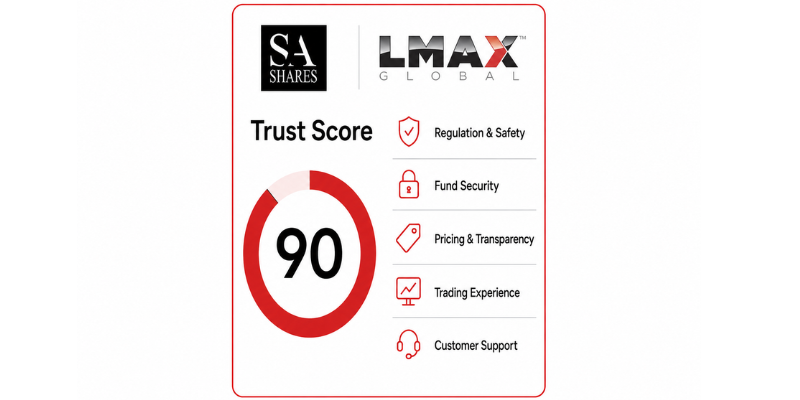
Our trust score is calculated across seven factors: regulatory status and licensing tier, fund segregation and investor protection, company history and track record, platform security and encryption, transparency of fees and terms, quality of customer support, and independent user reviews. Each factor is weighted, with regulation carrying the heaviest score.
LMAX Exchange scores 9 out of 10. The regulatory portfolio is among the strongest in the industry — FCA, CySEC, ASIC, MAS, and DFSA across five jurisdictions. Client funds are segregated at top-tier UK banks, and the broker participates in the FSCS compensation scheme. The company has been operational since 2010, has offices in London, New York, Tokyo, and Hong Kong, and operates a central limit order book with full pre- and post-trade transparency. The only reason it does not score 10/10 is the high barrier to entry (USD 10,000 deposit plus USD 300/month fee) and limited suitability for retail traders.
LMAX Exchange Pros and Cons
| ✅ Pros | ❌ Cons |
|---|---|
| FCA, CySEC, ASIC, MAS, DFSA regulated | USD 10,000 minimum deposit |
| Ultra-tight spreads from 0.0 pips | USD 300 monthly platform fee |
| Central limit order book — no last look | Not suitable for beginner or retail traders |
| FSCS compensation scheme (up to £85,000) | No copy trading or PAMM accounts |
| Operational since 2010 with global offices | No Islamic/swap-free accounts |
LMAX Exchange Overview
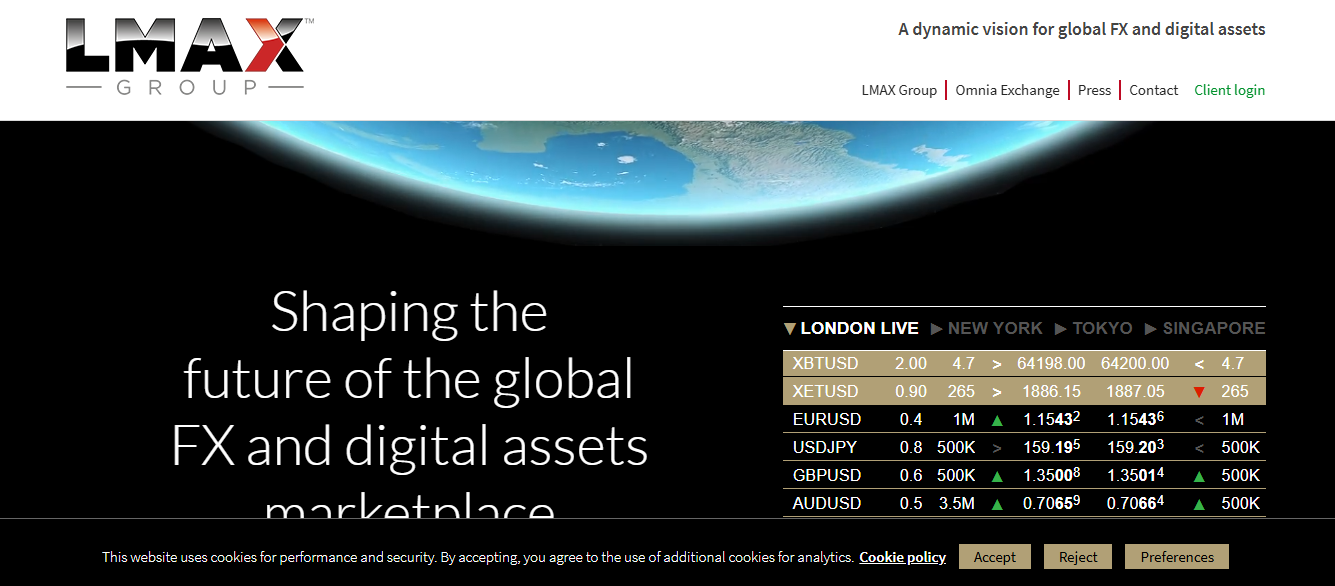
LMAX Exchange Group is a London-headquartered financial technology company founded in 2010. It operates institutional execution venues for FX, metals, indices, commodities, and cryptocurrencies. The company is one of the fastest-growing financial technology firms in the UK and has a strong presence across North America, Europe, and Asia-Pacific, with offices in London, New York, Tokyo, and Hong Kong.
What sets LMAX apart from virtually every other broker is its execution model. LMAX operates a central limit order book (CLOB) — the same model used by stock exchanges. All participants see the same prices, all orders are matched transparently, and there is no "last look" rejection. This eliminates the conflict of interest that exists at brokers who trade against their clients. It is the closest thing to true exchange-grade execution in the FX market.
The flip side is accessibility. LMAX is not designed for retail traders. The USD 10,000 minimum deposit, USD 300 monthly fee, and institutional account structure make it a venue for professionals, fund managers, and high-volume traders. If you qualify, the trading environment is among the best available. If you do not, there are excellent FSCA-regulated retail alternatives.
What can you trade on LMAX Exchange?
LMAX offers over 100 FX pairs, precious metals (gold, silver), equity indices, commodities (oil, natural gas), and leading cryptocurrencies (via LMAX Digital, separately regulated by the GFSC in Gibraltar). The instrument range is focused rather than broad — you will not find stocks, ETFs, or bonds here. LMAX covers the core institutional asset classes with deep liquidity rather than trying to list everything.
How is LMAX different from retail brokers?
The fundamental difference is the execution model. Retail brokers typically act as market makers or use STP models where the broker can be on the other side of your trade. LMAX operates a genuine exchange with a central limit order book — your orders are matched with other market participants, not with the broker. This removes the conflict of interest entirely. The trade-off is cost (higher deposit, monthly fees) and accessibility (institutional onboarding requirements).
Features Offered
- LMAX Exchange provides institutional-grade features focused on execution quality rather than retail bells and whistles. The core offering is the CLOB execution model with full transparency, deep liquidity from global banks and institutions, and ultra-low latency.
- The platform supports FIX API connectivity for algorithmic and high-frequency trading, along with MT4 access via bridge solutions and a proprietary WebTrader for manual trading.
- LMAX Digital, the group's crypto arm, offers regulated cryptocurrency trading under the GFSC in Gibraltar, with secure custody solutions and 24/7 trading access.
- There is no copy trading, no PAMM accounts, and no Islamic/swap-free option. LMAX is deliberately focused on execution quality over feature breadth.
| Feature | Availability |
|---|---|
| Demo Account | Yes |
| Islamic / Swap-Free Account | No |
| Copy Trading | No |
| PAMM Accounts | No |
| Central Limit Order Book | Yes — exchange-grade execution |
| FIX API | Yes — for algorithmic/HFT trading |
| Crypto Trading (LMAX Digital) | Yes — GFSC regulated (BTC, ETH, LTC) |
| Negative Balance Protection | Yes |
| FSCS Compensation | Yes (up to £85,000 per eligible claim) |
| 📝Sign up | 👉 Open Account |
LMAX Exchange Customer Reviews
LMAX Exchange does not feature customer testimonials on its website, which is typical for institutional-grade venues that rely on reputation and regulatory standing rather than review marketing. Independent feedback from institutional forums and professional trading communities is generally positive, with consistent praise for execution quality, pricing transparency, and the no last-look policy. Some feedback notes the high entry cost and limited platform options compared to retail brokers, but this is acknowledged as a trade-off of the institutional model rather than a shortcoming.
| Review Source | Rating | Notes |
|---|---|---|
| WikiFX | High | Strong regulation and safety score |
| BrokerJudge | 9.2/10 | Top marks for regulation and execution |
| Traders Union | 10/10 (safety) | Highest safety classification |
Customer Ratings
| Category | Rating |
|---|---|
| Execution Quality | ⭐⭐⭐⭐⭐ |
| Regulatory Trust | ⭐⭐⭐⭐⭐ |
| Spreads & Pricing | ⭐⭐⭐⭐⭐ |
| Platform & Technology | ⭐⭐⭐⭐ |
| Accessibility | ⭐⭐ |
| Customer Support | ⭐⭐⭐ |
LMAX Exchange Safety and Security
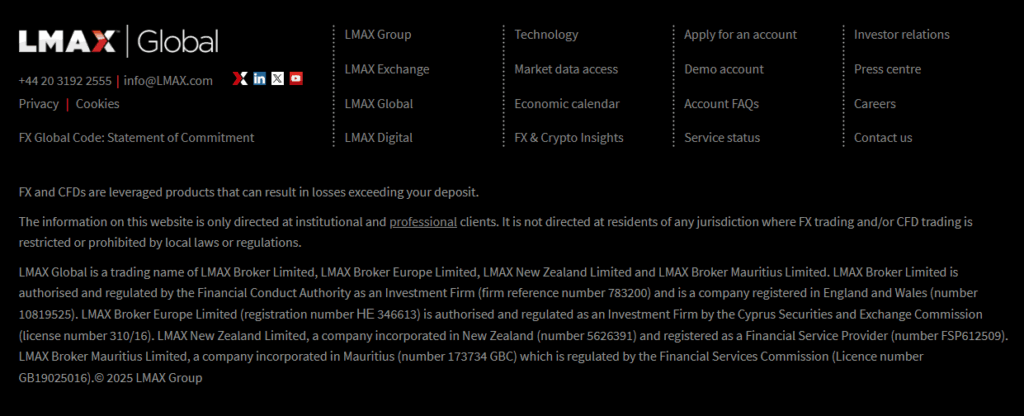
LMAX Exchange sets the standard for broker safety. The FCA licence (509778) requires strict capital adequacy, regular compliance audits, client fund segregation at top-tier banks, and participation in the FSCS compensation scheme. The CySEC licence adds EU-level investor protection, and the ASIC, MAS, and DFSA licences extend oversight across Australia, Singapore, and Dubai.
Client funds are held in segregated accounts at major UK banks — completely separate from LMAX's operational capital. The trading infrastructure is hosted in secure, low-latency data centres with advanced cybersecurity protocols including encryption, firewalls, DDoS protection, and continuous monitoring. The CLOB execution model adds another layer of security: all trades are matched transparently with full pre- and post-trade visibility, eliminating hidden markups and order manipulation.
Global Regulations
| Entity | Regulator | Licence Number | Tier |
|---|---|---|---|
| LMAX Exchange | FCA (UK) | 509778 | Tier-1 |
| LMAX Exchange (EU) | CySEC (Cyprus) | 310/16 | Tier-1 |
| LMAX Exchange (APAC) | ASIC (Australia) | — | Tier-1 |
| LMAX Exchange (Asia) | MAS (Singapore) | — | Tier-1 |
| LMAX Exchange (ME) | DFSA (Dubai) | — | Tier-1 |
| LMAX Digital | GFSC (Gibraltar) | — | Regional |
Is LMAX Exchange safe to use?
LMAX Exchange is one of the safest trading venues in the world. Five tier-1 regulatory licences, FSCS compensation coverage, segregated client funds at major UK banks, and a transparent execution model with no conflicts of interest. If safety is your primary concern, LMAX is as good as it gets. The only limitation is that South African traders do not have direct FSCA coverage — but the FCA licence offers protections that exceed what the FSCA provides in most practical respects.
What security measures does LMAX use?
LMAX uses institutional-grade cybersecurity including SSL encryption, firewalls, DDoS protection, and continuous infrastructure monitoring. Trading systems are hosted in secure, low-latency data centres with redundancy and failover capabilities. The CLOB model provides full transparency on all order flow, and client funds are protected by the FSCS compensation scheme.
LMAX at a Glance
| Detail | Information |
|---|---|
| Broker Name | LMAX Exchange Group |
| Founded | 2010 |
| Headquarters | London, UK |
| Global Offices | London, New York, Tokyo, Hong Kong |
| Regulation | FCA, CySEC, ASIC, MAS, DFSA |
| FSCA Regulated | No (FCA-regulated) |
| Minimum Deposit | USD 10,000 |
| Monthly Fee | USD 300 |
| Maximum Leverage | 1:30 (retail), up to 1:100 (professional) |
| Spreads From | 0.0 pips (average 0.4–0.5 on majors) |
| Execution Model | Central Limit Order Book (CLOB) |
| Platforms | MT4, LMAX WebTrader, FIX API |
| Instruments | 100+ FX pairs, Metals, Indices, Commodities, Crypto |
| Account Types | LMAX Prime, LMAX Institutional, LMAX InterBank |
| Demo Account | Yes |
| Islamic Account | No |
| Deposit Methods | Bank wire transfer |
| Investor Compensation | FSCS (up to £85,000) |
| 📝Sign up | 👉 Open Account |
LMAX Exchange Account Types

LMAX operates a tiered account structure designed for different levels of institutional participation. This is not a retail broker with Classic/Standard/VIP tiers — the accounts reflect fundamentally different types of market access.
| Account | Target Client | Access |
|---|---|---|
| LMAX Prime | Professional traders, brokers | LMAX Exchange + top-tier bank and ECN liquidity |
| LMAX Institutional | Hedge funds, asset managers | FCA-regulated MTF for forex |
| LMAX InterBank | Banks only | Spot FX execution venue |
| Demo Account | Prospective clients | Full platform access with virtual funds |
LMAX Prime
The LMAX Prime account provides access to the LMAX Exchange central limit order book plus aggregated liquidity from top-tier global banks and ECN venues. It is designed for professional traders and broker-dealers who need deep, multi-source liquidity with transparent execution. This is the most accessible account tier for qualified individual professional traders.
LMAX Institutional
The LMAX Institutional account is built for hedge funds, proprietary trading firms, and asset managers. It provides direct access to LMAX Exchange as an FCA-regulated Multilateral Trading Facility (MTF) — a regulated exchange venue, not a broker. The distinction matters: an MTF has stricter transparency and fairness requirements than a standard broker licence.
LMAX InterBank
LMAX InterBank is a spot FX execution venue exclusively for banks. It is not available to individual traders, funds, or brokers. This tier exists to provide bank-to-bank FX liquidity and is part of the broader LMAX Exchange ecosystem.
Demo Account
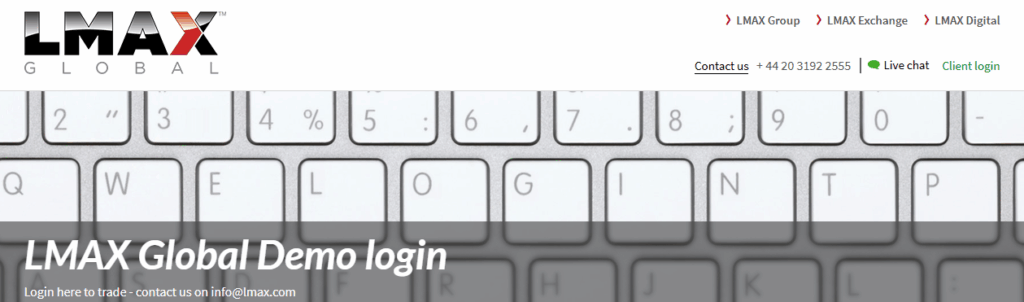
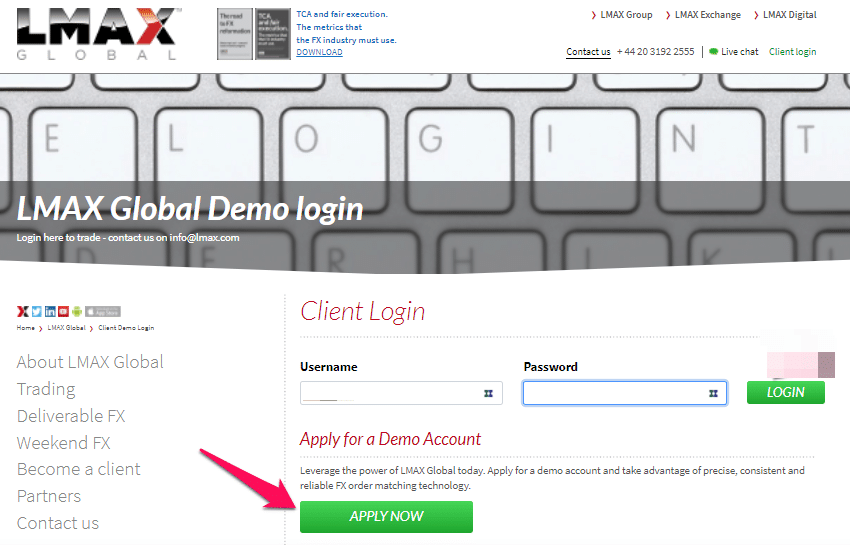
LMAX offers a demo account that replicates live trading conditions with virtual funds. It is a useful tool for prospective clients to evaluate the platform, execution quality, and pricing before committing capital. The demo can be opened through the client login portal on the LMAX website.
Can retail traders open an account with LMAX?
LMAX is primarily designed for institutional and professional clients. Retail traders may be able to access LMAX pricing indirectly through brokers that use LMAX as a liquidity provider, but direct account opening generally requires meeting professional trader criteria and the USD 10,000 minimum deposit. If you do not meet these thresholds, LMAX is not the right fit — consider FSCA-regulated retail brokers instead.
How to Open an LMAX Exchange Account
Step 1 – Visit the LMAX Website
Go to www.lmax.com and navigate to the Client Login portal. Select the option to apply for a demo or live account.
Step 2 – Complete the Registration Form
Fill in the three-tiered registration page with your personal information, account details, and confirmation. You will need to provide business or professional trading credentials as part of the institutional onboarding process.

Step 3 – Submit KYC and Compliance Documents
Upload proof of identity, proof of address, and any required professional or corporate documentation. LMAX has strict KYC and AML requirements in line with FCA regulations.
Step 4 – Account Approval
LMAX reviews your application against its onboarding criteria. Approval is not automatic — the broker evaluates your trading experience, capital, and professional status before granting access.
Step 5 – Fund Your Account
Deposit a minimum of USD 10,000 via bank wire transfer. LMAX only accepts deposits from verified bank accounts in the client's name. No third-party deposits are accepted.
Step 6 – Start Trading
Once funded, access the LMAX platform via WebTrader, MT4, or FIX API. Your monthly platform fee of USD 300 applies from the first month of active trading.
LMAX Exchange Fees, Spreads and Commissions
LMAX operates a transparent commission-based pricing model with no hidden markups. Spreads are derived directly from the central limit order book and are consistently among the tightest in the industry — historical averages show 0.4 to 0.5 pips on EUR/USD, with raw spreads starting from 0.0 pips.
- Spreads: From 0.0 pips, averaging 0.4–0.5 pips on major pairs.
- Commission: Variable based on trading volume — higher volumes receive lower rates.
- Monthly Platform Fee: USD 300.
- Swap Fees: Applied on overnight positions (no swap-free option).
- Deposit Fees: None from LMAX — bank wire charges may apply.
- Withdrawal Fees: None from LMAX.
- Inactivity Fee: Not confirmed.
What are typical LMAX spreads?
LMAX delivers institutional-grade spreads that retail brokers rarely match. EUR/USD averages 0.4 to 0.5 pips historically, and raw spreads can go as low as 0.0 pips during high-liquidity sessions. These spreads come from the CLOB model where multiple institutional liquidity providers compete on price — you are trading against the market, not against the broker.
Does LMAX charge deposit or withdrawal fees?
LMAX does not charge fees on deposits or withdrawals. However, deposits are limited to bank wire transfer, and your bank will likely charge its own processing fee for international wires. Withdrawals are processed to verified bank accounts only, typically within one business day. The USD 300 monthly platform fee is the main ongoing cost beyond trading commissions.
LMAX Exchange Trading Platforms
LMAX offers three ways to access its exchange: the proprietary LMAX WebTrader, MetaTrader 4 via bridge connectivity, and direct FIX API access for algorithmic trading. The platform's focus is on execution speed and transparency rather than feature breadth — there are no flashy dashboards or social trading feeds.
| Platform | Type | Best For |
|---|---|---|
| LMAX WebTrader | Web-based (proprietary) | Manual trading, order management, market monitoring |
| MetaTrader 4 | Desktop, Web, Mobile (via bridge) | Familiar interface, EAs, custom indicators |
| FIX API | Direct connectivity | Algorithmic trading, HFT, custom systems |
| Mobile App | iOS, Android | On-the-go monitoring and execution |
LMAX WebTrader
The proprietary LMAX WebTrader provides direct access to the central limit order book via a browser-based interface. It displays real-time depth of market, full order book visibility, and streaming prices from institutional liquidity providers. It is clean, functional, and built for execution rather than analysis.
MetaTrader 4 (MT4)
LMAX offers MT4 connectivity through bridge solutions, allowing traders to use the familiar MetaTrader interface while routing orders through the LMAX CLOB. This gives MT4 users access to institutional-grade liquidity and execution without changing platforms. EAs and custom indicators work as expected.
FIX API
For algorithmic and high-frequency traders, LMAX provides direct FIX API connectivity. This is the fastest way to access the exchange, offering ultra-low-latency order routing and execution. FIX API is the standard protocol for institutional trading and gives developers full control over order management, market data, and execution logic.
Does LMAX offer MT5?
LMAX does not natively offer MetaTrader 5. The primary platforms are the proprietary WebTrader, MT4 via bridge, and FIX API. If you specifically need MT5 functionality, you would need to access LMAX liquidity through a broker that bridges MT5 to LMAX — or consider whether the WebTrader and FIX API meet your needs directly.
LMAX Exchange Deposits and Withdrawals
LMAX accepts deposits exclusively via bank wire transfer. This is consistent with the institutional positioning — there are no card payments, e-wallets, or cryptocurrency deposit options for the FX exchange. Deposits must come from a verified bank account in the client's name. No third-party transfers are accepted.
Withdrawals follow the same process — bank wire to the client's verified account, typically processed within one business day. LMAX does not charge deposit or withdrawal fees, though your bank will likely charge for international wire transfers.
What deposit methods does LMAX accept?
Bank wire transfer only. This is deliberately limited — LMAX is not set up for the convenience of small retail deposits. The single-method approach reflects the institutional client base, where bank wire is the standard settlement mechanism. It also means no instant deposits — processing depends on your bank's wire transfer timeline.
How do LMAX withdrawals work?
Withdrawals are requested through the LMAX client portal and processed to the client's verified bank account. LMAX aims for same-day or next-business-day processing. The broker does not charge withdrawal fees, and there are no documented complaints about withdrawal reliability — which is a strong positive and consistent with the tier-1 regulatory profile.
Deposit and Withdrawal Methods
| Method | Fee | Processing Time | Notes |
|---|---|---|---|
| Bank Wire Transfer (Deposit) | Free from LMAX | 1–3 business days | Own-name accounts only |
| Bank Wire Transfer (Withdrawal) | Free from LMAX | Within 1 business day | Own-name accounts only |
LMAX Exchange Leverage
LMAX offers leverage up to 1:30 for retail-classified clients under FCA rules, and up to 1:100 for clients who qualify as professional traders. The conservative leverage limits reflect the FCA's regulatory framework — LMAX does not offer the 1:500 or 1:1000 leverage that offshore brokers advertise.
For professional traders, the 1:100 maximum provides meaningful market exposure while maintaining institutional risk management standards. Negative balance protection is in place, so clients cannot lose more than their deposited capital. The controlled leverage is a feature, not a limitation — it reflects the kind of risk discipline that institutional venues enforce.
LMAX Exchange vs eToro vs XM
| Feature | LMAX Exchange | eToro | XM |
|---|---|---|---|
| Regulation | FCA, CySEC, ASIC, MAS, DFSA | FSCA, FCA, CySEC, ASIC | FSCA, CySEC, ASIC, IFSC |
| Minimum Deposit | USD 10,000 | USD 50 | USD 5 |
| Target Client | Institutional / Professional | Retail | Retail |
| Spreads From | 0.0 pips | 1.0 pips | 0.6 pips |
| Execution Model | CLOB (exchange) | Market maker | STP / Market maker |
| Max Leverage | 1:30 (retail) / 1:100 (pro) | 1:400 | 1:888 |
| Copy Trading | No | Yes | Yes |
| Monthly Fee | USD 300 | None | None |
| 📝Sign up | 👉 Open Account | 👉 Open Account | 👉 Open Account |
This is not really an apples-to-apples comparison. LMAX is an institutional exchange; eToro and XM are retail brokers. LMAX wins decisively on execution quality, pricing transparency, and regulatory depth — but it is inaccessible to most retail traders. eToro and XM offer lower barriers, more features (copy trading, education), and FSCA regulation. If you are a retail trader in South Africa, eToro or XM is the practical choice. If you are a professional trader generating significant volume, LMAX offers conditions that retail brokers cannot replicate.
Research and Trading Tools
LMAX Exchange does not offer the kind of research and educational content that retail brokers provide. There are no trading academies, webinars, or beginner guides. What LMAX does offer is institutional-grade market data: real-time streaming prices from the CLOB, full depth of market visibility, and historical execution data. For algorithmic traders, the FIX API provides direct access to market data feeds. The research offering is minimal by retail standards but appropriate for the institutional audience — professional traders bring their own analysis tools and do not need broker-provided education.
LMAX Exchange Awards
LMAX Exchange has received recognition across the institutional trading space, though it does not prominently list awards on its website. The company has been consistently ranked among the fastest-growing financial technology firms in the UK and has been recognised for its exchange-grade execution model. Independent reviews from BrokerJudge (9.2/10) and Traders Union (10/10 safety score) confirm the broker's strong standing among professional reviewers. These are substantive evaluations, not pay-to-enter marketing awards.
LMAX Exchange Sign-Up Bonus
LMAX Exchange does not offer sign-up bonuses, deposit bonuses, or promotional incentives of any kind. This is consistent with its institutional positioning and FCA regulatory obligations — the FCA prohibits the use of bonuses as inducements to trade. LMAX competes on execution quality, pricing, and regulatory standing rather than promotional offers. If you are looking for deposit bonuses, you will need to look at retail brokers instead.
LMAX Exchange Customer Support
LMAX provides customer support via email, phone, and its client portal. Support is available during business hours and is staffed by professionals with institutional trading experience — not generic call centre agents. The support team handles account onboarding, technical platform issues, and trade-related queries. There is no live chat widget on the website, which is typical for institutional venues that prioritise direct communication channels over automated chat.
LMAX Exchange for South African Traders
| Factor | Details |
|---|---|
| FSCA Regulated | No (FCA-regulated — higher tier) |
| ZAR Account Available | No |
| Accepts SA Traders | Yes (subject to professional/institutional criteria) |
| Minimum Deposit | USD 10,000 |
| Investor Protection | FSCS (up to £85,000 for eligible claims) |
| Local SA Support | No local office — London-based support |
| Deposit Methods for SA | Bank wire transfer only |
Who Should Consider LMAX Exchange?
LMAX Exchange is for a very specific type of trader: someone with significant capital (USD 10,000+), professional trading experience, and a need for institutional-grade execution quality. If you are a fund manager, prop trader, or algorithmic trader generating meaningful volume, LMAX offers an environment that retail brokers cannot match — genuine exchange execution, no last-look rejection, and spreads that reflect real institutional liquidity.
If you are a retail trader, a beginner, or someone trading with less than USD 10,000, LMAX is not designed for you. The deposit minimum, monthly fee, limited platform options, and absence of retail features (copy trading, education, bonuses) make it impractical. South African retail traders are better served by FSCA-regulated brokers like eToro, XM, Exness, or Pepperstone, which offer lower entry points, broader feature sets, and local regulatory coverage.
Conclusion
LMAX Exchange Group is one of the most respected institutional execution venues in the global FX market. Five tier-1 regulatory licences, a central limit order book with no last-look execution, ultra-tight spreads, FSCS compensation coverage, and 15 years of operational history make it a genuinely premium trading environment.
But premium comes at a cost. The USD 10,000 minimum deposit, USD 300 monthly platform fee, and institutional onboarding requirements put it firmly out of reach for most retail traders. LMAX is not trying to be accessible — it is trying to be the best execution venue for those who qualify. If you meet the criteria, it delivers. If you do not, there are excellent regulated alternatives at every price point.
Review Methodology
This review was compiled by cross-referencing information from the official LMAX Exchange website (lmax.com), FCA and CySEC regulatory databases, independent review platforms including WikiFX, BrokerJudge, and Traders Union, and publicly available company information. All trading conditions were sourced from the broker's official documentation. Regulatory status was verified against current licence databases. This content is for informational purposes only and does not constitute financial advice.
Disclaimer
Trading forex and CFDs carries a high level of risk and may not be suitable for all investors. LMAX Exchange is regulated by the FCA (UK), CySEC (Cyprus), ASIC (Australia), MAS (Singapore), and DFSA (Dubai). It is not FSCA-regulated. The broker is designed for institutional and professional clients. The minimum deposit is USD 10,000 with an ongoing monthly platform fee of USD 300. Only trade with capital you can afford to commit to a professional trading environment. Past performance is not indicative of future results.
You might also like:
Frequently Asked Questions
What is LMAX Exchange Group?
LMAX Exchange Group is a London-based financial technology company founded in 2010 that operates institutional execution venues for FX, metals, indices, commodities, and cryptocurrencies. It uses a central limit order book (CLOB) model with no last-look execution, serving banks, hedge funds, asset managers, and professional traders globally.
Is LMAX Exchange regulated?
Yes, LMAX holds licences from five major regulators: FCA (UK, 509778), CySEC (Cyprus, 310/16), ASIC (Australia), MAS (Singapore), and DFSA (Dubai). This is one of the strongest regulatory portfolios in the industry. LMAX Digital is separately regulated by the GFSC in Gibraltar for crypto trading.
What is the minimum deposit at LMAX Exchange?
The minimum deposit is USD 10,000. There is also a monthly platform fee of USD 300. These thresholds reflect the institutional nature of the platform — LMAX is not designed for small retail deposits.
What trading platforms does LMAX offer?
LMAX provides its proprietary WebTrader, MetaTrader 4 via bridge connectivity, and direct FIX API access for algorithmic trading. MT5 is not natively supported. The platforms are optimised for execution speed and transparency rather than retail features.
Can retail traders use LMAX Exchange?
LMAX is primarily designed for institutional and professional clients. Retail traders may access LMAX pricing indirectly through retail brokers that use LMAX as a liquidity provider, but direct account opening typically requires professional trader classification and the USD 10,000 minimum deposit.
What instruments can I trade on LMAX?
LMAX offers over 100 FX pairs, precious metals (gold, silver), equity indices, commodities (oil, natural gas), and leading cryptocurrencies (via LMAX Digital). The focus is on core institutional asset classes with deep liquidity rather than breadth.
Does LMAX offer a demo account?
Yes, LMAX offers a demo account that replicates live trading conditions with virtual funds. It can be opened through the client login portal on the LMAX website and is a useful tool for evaluating the platform before committing capital.
What leverage does LMAX Exchange offer?
LMAX offers leverage up to 1:30 for retail-classified clients under FCA rules and up to 1:100 for professional clients. The conservative limits reflect FCA regulatory requirements and institutional risk management standards. Negative balance protection is included.
How does LMAX execution differ from retail brokers?
LMAX operates a central limit order book (CLOB) — the same model used by stock exchanges. All orders are matched transparently between market participants with no last-look rejection and no broker intervention. This eliminates conflicts of interest that exist at brokers who trade against clients.
Is LMAX suitable for South African traders?
LMAX is accessible to South African traders who meet the professional/institutional criteria and the USD 10,000 minimum deposit. It is not FSCA-regulated, but the FCA licence provides a level of protection that exceeds most local regulatory frameworks. For retail SA traders, FSCA-regulated alternatives like eToro, XM, or Pepperstone are more practical options.
Sources Checked
- https://www.lmax.com
- https://www.lmax.com/forex-trading
- FCA Register — LMAX Exchange (509778)
- WikiFX — LMAX Group
You Might Also Like



Recommended brokers