



Overall, Juno Markets is very competitive in terms of its trading fees and spreads. Their spread is super low compared to other regulated brokers, and there are no hidden trading fees. Juno Markets is an online CFD and ECN Forex broker that is headquartered in New Zealand.

| 🔍 Feature |  |
| 💰Minimum Deposit | $15 |
| 🎁Sign-Up Bonus | $50 welcome bonus with a $25 minimum deposit; additional 50% deposit bonus up to $2,000 during promotional periods |
| 💸Fees | No deposit or withdrawal fees; ECN accounts incur a $7 commission per lot; Standard accounts have wider spreads but no commission |
| 📉Spreads & Commissions | Spreads from 0.01 pips (ECN), 0.2 pips (EUR/USD), 0.13 pips (XAU/USD); Standard accounts have floating spreads with broker markup |
| 💳Deposit & Withdrawals | Supports bank transfers, credit/debit cards, e-wallets, cryptocurrencies, UnionPay, Alipay, and Fasapay |
| 🖥️Platforms | MetaTrader 4 (MT4), MetaTrader 5 (MT5), Juno Auto Trader |
| 🛡️Regulation | Regulated by the Vanuatu Financial Services Commission (VFSC) under license number 40099 |
| 🔐Trust Score | 3.5 out of 5 based on 324 reviews on Trustpilot |
| ⏱️Payout Schedule | Withdrawal processing begins at 09:00 on business days; standard handling time is within 1 hour |
| 📝Sign up | 👉Open Account |
Juno Markets Spider Chart

Pros and Cons
| ✅ Pros | ❌ Cons |
| Minimum lot size of 0.01 allowed | Lack of customer support |
| More than 100 assets available for trading | No trading in shares or cryptocurrencies |
| No-commission accounts available | Offshore brokers without proper regulation by respected financial authorities |
Overview

- According to research in South Africa, Juno Markets is a Forex and CFD Broker providing traders throughout Asia with access to currencies, stocks, indices, and CFDs in spot gold and silver.
- Juno Markets is an online broker that was founded in 2014 and specializes in forex, CFDs, and commodities.
- The broker is based and regulated in the Republic of Vanuatu, holding a license with the Vanuatu Financial Services Commission (VFSC), and offers several platforms, including MT4 to traders.
- Juno Markets provides competitive trading conditions under renewed efforts by the VFSC to tighten its regulatory requirements and ensure client protection.
Featured Offered
- Juno Markets offers a comprehensive suite of trading features designed to cater to both novice and experienced traders.
- Their platform provides access to a diverse range of financial instruments, including Forex, metals, indices, commodities, cryptocurrencies, and shares.
- Traders can choose between two account types, STP and EC,N each offering dynamic leverage that adjusts based on account equity, allowing for tailored trading strategies.
- The platform supports advanced trading tools and data visualization features to assist in effective money management and performance tracking.
| 🧩 Feature | Juno Markets |
| 🏦 Account Types | Standard, Raw, ECN |
| ⚖️ Leverage | Up to 1:500 |
| 📉 Spreads & Commissions | Variable spreads; low commissions |
| 🌐 Instruments Offered | Forex, Commodities, Indices, Crypto |
| 🖥️ Trading Platforms | MetaTrader 4, MetaTrader 5 |
| ☪️ Islamic (Swap-Free) Accounts | Available |
| 🖧 Free VPS Hosting | Available for eligible accounts |
| 👥 Copy Trading | Supported |
| 🛡️ Client Fund Security | Segregated accounts, negative balance protection |
| 📋 Regulatory Oversight | Regulated by VFSC |
Juno Markets Customer Reviews
- Juno Markets has received mixed feedback from its clients.
- Positive reviews often highlight responsive customer service, fast deposits, and efficient withdrawals, with users praising the platform for quick support and minimal delays.
- However, some traders have expressed concerns about the broker’s reliability, noting issues with withdrawals and questioning its regulatory oversight.
- Reports indicate that while some clients have smooth trading experiences, others have faced challenges when trying to access their funds.
| 🔍Aspect | 🔖Details |
| 🌟Overall Rating | Mixed reviews: Some users praise the platform for fast deposits, withdrawals, and responsive customer service, while others report issues with account access and transparency. |
| 👏Customer Satisfaction | Generally positive among users who have had smooth experiences, highlighting quick execution and helpful support. |
| 📞Customer Service | Varies: Many users commend the support team for being responsive and resolving issues promptly. |
| 🌐 Platform | 📝 Feedback Summary | ⭐ Rating |
 | Users highlight reliable performance tracking and trading transparency. | ⭐⭐⭐⭐☆ |
 | Mixed reviews: praised for fast execution, but some report withdrawal delays. | ⭐⭐⭐⭐☆ |
 | Generally positive feedback on customer support and ease of use. | ⭐⭐⭐⭐ |
 | Varied user reviews, noting both good service and occasional account issues. | ⭐⭐⭐☆ |
 | Positive mentions for responsive support, though some complaints about fees. | ⭐⭐⭐⭐☆ |
 | Mixed ratings: some users satisfied with deposits/withdrawals, others note delays or support issues. | ⭐⭐⭐⭐ |
Juno Markets Safety and Security

- Juno Markets prioritizes the safety and security of its clients through a combination of advanced technological measures and regulatory oversight.
- The platform employs AI-driven multi-layer encryption technology to safeguard user data and enhance privacy, ensuring a secure trading environment.
- Additionally, Juno Markets conducts monthly live testing to maintain transparency and uphold the integrity of its services.
- The company is regulated by the Vanuatu Financial Services Commission (VFSC), holding a principal's license for dealing in securities under license number 40099, and by the Australian Securities and Investments Commission (ASIC) through its subsidiary, Juno Markets Pty Ltd, which holds an Australian Financial Services License number 540205.
How does Juno Markets ensure the safety of client funds?
Juno Markets segregates client funds from company funds, ensuring that traders’ money is kept separate and secure. Additionally, the broker is a member of the Financial Commission, offering compensation of up to $20,000 in case of insolvency.
What measures does Juno Markets take to protect user data?
Juno Markets uses multi-layer encryption and AI-driven security protocols to protect personal and financial information. Regular security audits and monthly live testing further ensure a safe and transparent trading environment.
| 🛡️ Security Feature | |
| 💼 Regulation & Licensing | Regulated by the Vanuatu Financial Services Commission (VFSC) under license number 14595. |
| 🏦 Segregated Client Accounts | Client funds are stored in segregated accounts, ensuring separation from the company's operational funds |
| 📝 Lloyd’s of London Insurance | No publicly available information indicates that Juno Markets holds insurance coverage from Lloyd’s of London. |
| 🔐 Capital Strength & Credit Rating | No publicly available information regarding Juno Markets' capital strength or credit rating. |
| 🔒 Account-Level Security (Crypto) | Utilizes mandatory two-factor authentication (2FA) for enhanced account security. |
| 📈 Negative Balance Protection | Offers negative balance protection, ensuring clients cannot lose more than their deposited funds |
| 🧾 Transparent Compliance & Audits | No publicly available information regarding the transparency of compliance or audit processes. |
| 🔍 Brokers Name | |
| 📍 Headquartered | Republic of Vanuatu |
| 📅 Year Founded | 2014 |
| 🏛 Regulating Authorities | Vanuatu Financial Services Commission (VFSC) |
| 🌐 Countries not accepted for trade | United States, Hong Kong, Iran, Korea |
| ☪️️ Islamic Account (Swap Free) | Yes |
| 📒 Demo Account | Yes |
| 💻 Institutional Accounts | Yes |
| 💻 Managed Accounts | Yes |
| 📊 Maximum Leverage | 1:500 |
| 💰 Minimum Deposit | $15 |
| 💳 Deposit Options | Instant bank transfer, international bank wire, Cryptocurrencies, Skrill, Neteller, Union Pay, Alipay, Ngan Luong, Fasapay. |
| 💳 Withdrawal Options | Instant bank transfer, international bank wire, Cryptocurrencies, Skrill, Neteller, Union Pay, Alipay, Ngan Luong, Fasapay. |
| 📉 Platform Types | MT4 Juno Auto Trader |
| 📲 OS Compatibility | Mac, Windows, Linux, Web, Mobile Android, iPhone, iPad Tradable assets offered Forex – Trade over 75 major, minor, and exotic currency pairs including GBP/USD, EUR/USD, and EUR/GBP |
| 📊 Tradable Assets | Metals – Gold, silver, platinum, and palladium Stock indices – 11 of the world’s largest and most liquid indices, including the FTSE and Dow Jones Energies – Brent Crude Oil Equity CFDs – Some of the largest companies in technology and pharmaceuticals, like Tesla, Zoom, Facebook and Pfizer |
| 🌐 Languages supported | English, Japanese, Vietnamese, Indonesian. |
| ☎ Customer Service Hours | 24 hours a day /5 days a week |
| 📝Sign up | 👉Open Account |
Juno Markets Account Types

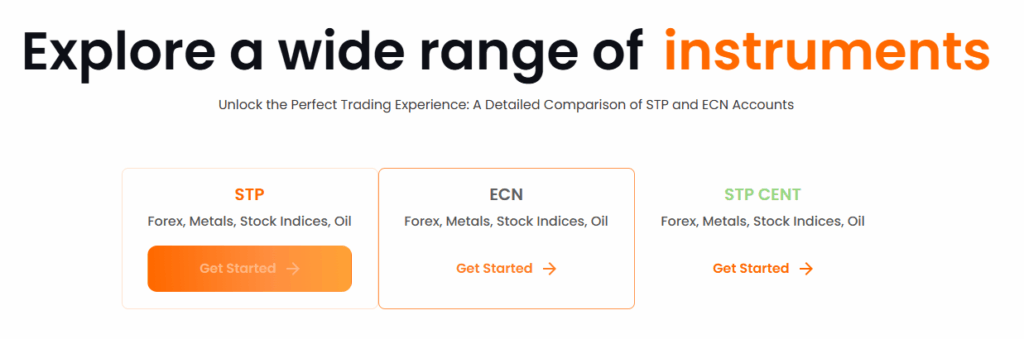
- Juno Markets offers two main types of trading accounts: STP (Straight-Through Processing) and ECN (Electronic Communication Network).
- The STP account is ideal for everyday traders, offering competitive spreads with no commission fees, while the ECN account caters to experienced traders seeking raw spreads from as low as 0 pips in exchange for a small commission.
- Both account types provide fast trade execution, dynamic leverage options, and access to a wide range of trading instruments, allowing traders to choose the setup that best matches their trading style and goals.
STP Account

- Traders must remember that the Juno Markets Auto Trader is only available with the STP account.
- The minimum required deposit to open an account starts at $100 for the STP account.
- The STP Account has the following features highlighted:
PRO Account
- Account for traders that looking for a lower spread with no commissions, with a minimum deposit of $500 ( 8000 ZAR), the PRO Account has the following features highlighted:
ECN Account

- The minimum trade size across all account options is 0.01 lots.
- Commission at $4 per side per lot, and $1.50 per side per lot, is charged on the ECN.
- The ECN Account has the following features highlighted:
What types of trading accounts does Juno Markets offer?
Juno Markets provides multiple account types designed to suit traders of all experience levels. These typically include Standard, Pro, and ECN accounts. Each account type offers different spreads, commissions, and minimum deposit requirements, allowing traders to choose based on their strategies and budget.
Which Juno Markets account is best for beginners?
The Standard Account is ideal for beginners, as it offers zero commissions, competitive spreads, and a low minimum deposit. This account provides easy access to the ma
How to Open a Juno Markets Trading Account - Step by Step
Step 1 – Navigate to the Juno Markets website and click on ‘Create Account”
- Navigate to the account registration area on the Juno Markets website.
- This can be accessed by clicking on the create account button at the bottom of the landing page.

Step 2 – Fill out the Juno Markets account registration form
- Fill out the short online registration form to request a live trading account. You will need to provide your platform type, account type, name, and date of birth.

Step 3 – Fill out the Juno Markets account registration form and click "submit."
- Fill out the short online registration form to request a live trading account.
- You will need to provide your Trading experience, Annual Gross Income, Income Source, and Government position status.
- Fill in the referral code and click "submit".

Juno Markets Fees and Spreads

- Juno Markets’ spreads on EUR/USD start from 0.2 pips.
- Juno Markets’ spreads are competitive at an average of around 0.2 pips for the EUR/USD with the ECN account and go up to 2.2 with the STP account.
- For major forex pairs, spreads average 0.3 pips for the GBP/USD with the ECN account and 2.3 with the STP.
- For major indices, spreads start at 2.4 pips for the S&P 500 and approximately 4 pips for the FTSE 100.
- For metals, spreads are as low as 0.01 for silver with the ECN account and go up to 0.33 with the STP account.
What spreads and commission fees does Juno Markets charge?
Juno Markets offers competitive pricing across its account types. The Standard or STP accounts feature floating spreads that adjust according to market conditions, with trading fees already included in the spread. For ECN or Raw accounts, spreads are much tightersometimes starting from 0.1 pips but a small commission is charged per traded lot.
Are there deposit, withdrawal, or inactivity fees with Juno Markets?
Juno Markets does not charge deposit or withdrawal fees for most payment methods, making transactions straightforward and cost-effective. The broker also does not apply inactivity fees, ensuring that traders are not penalized for taking breaks between trades. However, standard swap or overnight financing charges may apply to positions held open overnight, depending on the instrument traded and the type of account being used.
| 📌 Broker | |
| 📈 Trading Fees Class | STP / ECN / Institutional |
| 💰 Required Min Deposit | $15 |
| 🔁 Withdrawal Fee | None (third-party fees may apply) |
| 💳 Deposit Fees | None (USDT withdrawals may incur blockchain gas fee) |
| 📝 Average Spread | 0.1–1.5 pips (ECN: 0.1 pips + $3.5 commission per lot) |
| 📝Sign up | 👉Open Account |
Juno Markets Trading Platform
- Juno Markets offers multiple platforms for different types of traders.
- Between Metatrader4 and Juno Auto Trader, the selections include a solution for self-traded accounts, algorithmic traders, or copy traders.
MetaTrader 4 (MT4)

- MT4 is a widely recognized and user-friendly platform, making it ideal for both beginner and experienced traders.
- It offers a comprehensive suite of tools, including advanced charting capabilities, technical indicators, and automated trading options through Expert Advisors (EAs).
- The platform's intuitive interface ensures that traders can execute trades swiftly and manage their positions effectively.
- MT4 is available on various devices, including Windows, macOS, iOS, and Android, allowing traders to stay connected to the markets anytime, anywhere.
MetaTrader 5 (MT5)

- MT5 is an enhanced version of MT4, providing additional features and functionalities to meet the demands of more sophisticated traders.
- It supports a broader range of financial instruments, including stocks, commodities, and cryptocurrencies, alongside traditional forex pairs.
- MT5 offers improved charting tools, more timeframes, and additional order types, providing traders with greater flexibility and precision in their trading strategies.
- The platform also supports automated trading through EAs and is accessible on multiple devices, ensuring a consistent trading experience across all platforms.
Juno Mobile APP

- The Juno Mobile App, also known as Juno Auto Trader, enables users to access the full features of Juno Markets right from their smartphones.
- It supports both iOS and Android devices and offers copy-trading functionality, allowing traders to follow and replicate strategies from successful traders in real time.
What trading platforms does Juno Markets offer?
Juno Markets provides access to two leading trading platforms: MetaTrader 4 (MT4) and MetaTrader 5 (MT5). MT4 is an intuitive platform ideal for both beginners and experienced traders, offering essential tools for forex and CFD trading. MT5, on the other hand, is more advanced and supports a wider range of instruments, including forex, metals, indices, commodities, shares, and cryptocurrencies. It also offers enhanced charting features, additional timeframes, and more order types compared to MT4.
Is there a mobile trading app for Juno Markets?
Juno Markets offers mobile trading apps for iOS and Android devices, allowing traders to monitor markets, execute trades, and manage accounts on the go. The mobile apps replicate the functionality of the desktop platforms, ensuring a seamless trading experience with full access to MT4 and MT5 features. This enables traders to stay connected and trade efficiently, regardless of their location.
Juno Markets Deposit fees and deposit methods

- Compared to other brokers, the minimum deposit amount that Juno Markets requires when traders register a live account is fair.
- Juno Markets offers traders various payment or deposit methods that can be used when funding accounts.
- Withdrawals usually must be returned by the same method used to deposit and to the same bank account.
What are Juno Markets' deposit fees?
Juno Markets does not charge any fees for deposits or withdrawals. However, while the broker itself waives all fees, third-party payment providers may impose their own charges depending on the method you use. Traders are advised to check with their chosen payment provider to ensure they understand any additional costs before making a deposit.
What deposit methods does Juno Markets accept?
Juno Markets offers a wide range of deposit methods to suit different preferences. Clients can fund their accounts via bank wire transfers, including local currency options and payment channels like UnionPay and Alipay. Cryptocurrency deposits are also accepted, with options such as BTC and USDT. For convenience, Juno Markets supports credit and debit cards, including Visa and Mastercard, as well as various e-wallet options.
| 💠 Feature | 💰 Deposit | 💸 Withdrawal |
| 🏦 Payment Methods | Bank Transfer, Credit/Debit Cards, Crypto (USDT), Skrill, Neteller, Perfect Money | Bank Transfer, Credit/Debit Cards, Crypto (USDT), Skrill, Neteller, Perfect Money |
| ⏱️ Processing Time | Instant (Credit/Debit Cards, Skrill, Neteller, Perfect Money), 1–2 business days (Bank Transfer) | Standard handling within 1 hour; additional bank processing time may apply |
| 💵 Minimum Amount | $25 (varies by method) | $25 (varies by method) |
Leverage
- Juno Markets offers dynamic leverage to its clients, allowing them to adjust leverage ratios based on account equity, market volatility, and trading instruments.
- This flexibility aims to help traders manage risk more effectively. For instance, the leverage applied to the BTCUSD trading pair varies according to account equity, providing an additional layer of risk management.
- Traders can customize their leverage settings to align with their risk tolerance and trading strategies.
|  |  | |
| 💳 Minimum Deposit | $15 | $2000 | AUD $5000 |
| 🎉 Bonus | ☑️ | ❌ | ❌ |
| 💻 MT4 | ☑️ | ☑️ | ☑️ |
| ☪️️ Islamic Account | ☑️ | ☑️ | ❌ |
Research
- Juno Markets offers a comprehensive suite of research and educational resources designed to empower traders at all levels.
- Their "Insight" section provides a variety of articles, guides, and analyses on topics such as forex trading, investment strategies, and market trends.
- For instance, their "Top 10 Investment Trends for the Next Decade" article offers strategic picks to help traders build a future-ready portfolio.
- Additionally, Juno Markets offers a free demo account, allowing traders to test strategies in a real-market setting before committing funds

🏆10 Best Forex Brokers in South Africa
| Rank | Broker | Broker Review | Regulators | Minimum Deposit | Visit Broker |
|---|---|---|---|---|---|
| 🥇 |  | Read Review | ASIC, FSA, CBI, BVI, FSCA, FRSA, CySEC, ISA, JFSA | $100 | 
|
| 🥈 |  | Read Review | FSCA, FCA, DFSA, FSA, CMA | $0 |
|
| 🥉 |  | Read Review | CySEC, MWALI, FSCA | $25 |
|
| 4 |  | Read Review | ASIC, CySEC, FSA, SCB | $200 |
|
| 5 |  | Read Review | FSA, FSCA | $250 |
|
| 6 |  | Read Review | FSA, FSC, FSCA, ASIC, CMA | $20 |
|
| 7 |  | Read Review | FSC, FSCA | $50 |
|
| 8 |  | Read Review | ASIC, CySEC, FSCA, FSA, FSC, CMA | $100 |
|
| 9 |  | Read Review | ASIC, CySEC, IFSC, DFSA, FCA | $5 |
|
| 10 |  | Read Review | FSA, CySEC, FSCA, FSC | $10 |
|

Juno Markets Awards
- Juno Markets has garnered several industry accolades, reflecting its commitment to excellence in the trading sector.
- In 2022, the company was honored with the "Best Multi-Asset Trading Platform" award at the Exchanges and Brokers Awards, recognizing its diverse range of trading products and services.
- Additionally, Juno Markets received the "Best Precious Metals Broker" award at the 2026 Hong Kong Wiki Expo, highlighting its expertise and innovation in the precious metals market.
- These awards underscore Juno Markets' dedication to providing high-quality trading experiences to its clients.
Customer Reviews
⭐ Aristos Panteli, Senior Account Manager Aristos Panteli is a highly experienced Senior Account Manager known for his in-depth knowledge of financial markets and client-focused approach. He consistently delivers personalized support, helping traders navigate complex strategies and account management with professionalism and efficiency. ⭐ Great assistance from Aristos Panteli! Clients frequently praise Aristos Panteli for his exceptional assistance. His responsiveness, clarity, and patience make complex trading processes easy to understand, ensuring a smooth and confident trading experience. Many traders feel well-supported and valued under his guidance. ⭐ I have worked with many different Having worked with numerous account managers, clients note that Aristos Panteli stands out for his consistent professionalism, deep market insight, and dedication to client success. His proactive communication and tailored solutions make him a trusted partner in achieving trading goals.
Conclusion
Overall, Juno Markets is a broker that provides an excellent and professional offering to a range of traders. While the broker is located offshore, it is well-regulated by an unbiased and transparent agency, and provision is made for a client compensation scheme. The company provides a fantastic offering in terms of the MetaTrader4 platform as well as its own proprietary platform, with a wide range of tradeable assets. Traders can trade the entire forex index, with the possibility of short-selling to profit from a falling market. While the company’s educational offering is fairly limited, the research tools are excellent and will assist a range of traders in executing fast and profitable strategies.
Disclaimer
Juno Markets; services include products that are traded on margin and carry a high degree of risk to your capital. It is possible that you could sustain a loss that exceeds your initial investment. You should ensure you fully understand the risks involved and seek independent advice if necessary. Please read the full risk disclosure statement.Juno Markets aims to deliver the best FOREX, CFD, AND METALS TRADING environment for traders WORLDWIDE. Juno Markets offers many PARTNERSHIP OPPORTUNITIES for INTRODUCING BROKERS, MONEY MANAGERS, and WHITE LABELS, and its unique PARTNERSHIP PROGRAM helps IB’s grow their business through insightful data analysis and marketing support.
You might also like:
You might also like: Juno Markets Account TypesYou might also like: Juno Markets Demo Account – Step by StepYou might also like: Juno Markets Fees and SpreadsYou might also like: Juno Markets Islamic Account OverviewYou might also like: Juno Markets Minimum Deposit
Frequently Asked Questions
What is Juno Markets and what services does it offer?
Juno Markets is an online brokerage providing forex and CFD trading services. It offers various account types, multiple trading platforms, leverage options, and a wide range of financial instruments, catering to both beginner and experienced traders globally.
Is Juno Markets a regulated broker?
Yes, Juno Markets is regulated by the Vanuatu Financial Services Commission (VFSC) under license number 40099. Its Australian subsidiary, Juno Markets Pty Ltd, holds an Australian Financial Services License (AFSL) number 540205, providing an additional layer of regulatory oversight.
What types of accounts can I open with Juno Markets?
Juno Markets offers multiple account types tailored for different trading needs. These include Standard, Raw Spread, and Pro accounts, each with varying spreads, leverage, and minimum deposits, allowing traders to choose an account suitable for their strategy and risk tolerance.
Which trading platforms are supported by Juno Markets?
Juno Markets supports popular trading platforms such as MetaTrader 4 (MT4) and MetaTrader 5 (MT5). These platforms provide advanced charting tools, automated trading capabilities, and customizable indicators, allowing traders to execute strategies efficiently and monitor markets in real-time.
What financial instruments can I trade on Juno Markets?
Juno Markets offers a variety of instruments, including forex currency pairs, commodities, indices, cryptocurrencies, and shares CFDs. This diverse range allows traders to diversify portfolios, hedge risks, and access global markets from a single trading account.
What security measures does Juno Markets use to protect traders?
Juno Markets employs multi-layer encryption, AI-driven security protocols, and regular system audits to protect client data and funds. Additionally, segregated accounts and membership in the Financial Commission provide financial safety and partial compensation in case of insolvency.
What is the minimum deposit required to start trading?
The minimum deposit for Juno Markets varies depending on the account type. Standard accounts typically require a lower deposit to start trading, while Raw Spread and Pro accounts may require higher deposits to access tighter spreads and advanced features.
Does Juno Markets offer leverage, and how does it work?
Yes, Juno Markets provides leverage up to 1:500, depending on account type and regulatory restrictions. Leverage allows traders to control larger positions with smaller capital, amplifying potential profits but also increasing the risk of losses.
How can I deposit and withdraw funds with Juno Markets?
Juno Markets supports multiple payment methods, including bank transfers, credit/debit cards, and e-wallets. Deposits are generally processed instantly or within a few hours, while withdrawals are subject to verification and may take 1–3 business days to complete.
Does Juno Markets provide educational resources for traders?
Yes, Juno Markets offers a range of educational materials, including webinars, tutorials, market analysis, and trading guides. These resources are designed to help traders improve skills, understand market trends, and make informed decisions while trading responsibly.


Recommended brokers