

Wheat is one of the world's most heavily traded agricultural commodities, with prices driven by weather, harvest cycles, energy costs, and the US dollar. The six brokers below offer wheat through two routes — Interactive Brokers provides direct CBOT futures access, while the other five offer wheat as futures-tracked CFDs. Wheat is volatile, so position sizing matters more than execution speed.
What is the best wheat commodity forex broker?
The best wheat commodity forex broker is Interactive Brokers, which offers direct access to CBOT wheat futures contracts under SEC, FINRA, FCA, and ASIC regulation with tight commissions and deep exchange liquidity. For CFD-only traders, IC Markets and Pepperstone lead on raw spreads, fast execution, and multi-regulator cover for South African clients.

🏆10 Best Forex Brokers in South Africa
| Rank | Broker | Broker Review | Regulators | Minimum Deposit | Visit Broker |
|---|---|---|---|---|---|
| 🥇 |  | Read Review | ASIC, FSA, CBI, BVI, FSCA, FRSA, CySEC, ISA, JFSA | $100 | Visit Now |
| 🥈 |  | Read Review | FSCA, FCA, DFSA, FSA, CMA | $0 | Visit Now |
| 🥉 |  | Read Review | CySEC, IFSC, DFSA, FCA | $5 | Visit Now |
| 4 |  | Read Review | ASIC, CySEC, FSA, SCB | $0 | Visit Now |
| 5 |  | Read Review | BVI FSC | $0 | Visit Now |
| 6 |  | Read Review | FSA, FSC, FSCA, ASIC, CMA | $20 | Visit Now |
| 7 |  | Read Review | Exness is a globally regulated broker, holding multiple licenses from respected financial regulators around the world. | $10 | Visit Now |
| 8 |  | Read Review | ASIC, CySEC, FSCA, FSA, FSC, CMA | $100 | Visit Now |
| 9 |  | Read Review | FSC | $10 | Visit Now |
| 10 |  | Read Review | FSA, CySEC, FSCA, FSC | $10 | Visit Now |


Are wheat commodity forex brokers safe?
Wheat commodity forex brokers are safe when the broker holds tier-one regulation and the wheat product structure is clearly disclosed. The underlying commodity is volatile, which is where the real risk sits – not the broker's licence. CBOT wheat futures carry higher leverage effect than most retail forex positions because the contract size is large (5,000 bushels per contract), and CFD wheat carries overnight financing costs alongside the usual spread. Verify the broker's regulated entity, confirm whether you are trading real futures or futures-style CFDs, and test a small position before scaling. Strict stop-loss discipline matters more here than the broker's execution speed.
6 wheat commodity forex brokers compared
Each broker offers wheat through a different structure – real futures, CFDs on futures, or spread-only exposure. The comparison matters for capital efficiency, regulatory tier, and the total cost of trading.
| Broker | Wheat Access | Min Deposit | Platforms | Regulation | Account Currency | 📝 Sign up |
|---|---|---|---|---|---|---|
| Interactive Brokers | Real CBOT wheat futures | $0 | TWS, IBKR Mobile, WebTrader, API | SEC, FINRA, FCA, ASIC, MAS | 23 currencies inc. USD, EUR, GBP | 👉 Open Account |
| IC Markets | Wheat CFDs (futures-tracked) | $200 | MT4, MT5, cTrader, TradingView | ASIC, CySEC, Seychelles FSA | USD, EUR, GBP, AUD, SGD, HKD | 👉 Open Account |
| Pepperstone | Wheat CFDs (futures-tracked) | $0 | MT4, MT5, cTrader, TradingView | FCA, ASIC, CySEC, DFSA, FSCA | USD, EUR, GBP, AUD, SGD, HKD | 👉 Open Account |
| AvaTrade | Wheat CFDs (futures-tracked) | $100 | MT4, MT5, AvaTradeGO, WebTrader | CBI, ASIC, FSCA, FSA Japan | USD, EUR, GBP, AUD | 👉 Open Account |
| FOREX.com | Wheat CFDs and futures-linked | $100 | MT4, MT5, WebTrader, TradingView | CFTC, NFA, FCA, ASIC | USD, EUR, GBP, JPY, AUD | 👉 Open Account |
| Capital.com | Wheat CFDs (futures-tracked) | $20 | Proprietary, MT4, TradingView | FCA, CySEC, ASIC, SCB | USD, EUR, GBP, AUD, PLN | 👉 Open Account |
Interactive Brokers ranks first on structure (real exchange-cleared futures), IC Markets and Pepperstone on CFD pricing and execution. AvaTrade and FOREX.com sit mid-list with established retail offerings. Capital.com ranks last on this list despite its strong platform because the broader product set is narrower than the top five and institutional coverage is thinner.
What is a wheat commodity forex broker?
A wheat commodity forex broker is a broker that provides retail traders with exposure to wheat price movements, either through real exchange-cleared futures contracts on the CBOT, or through CFDs that track those futures prices without actual exchange delivery. The term "forex broker" here reflects that most retail clients trading wheat do so alongside currency pairs on the same multi-asset trading account.
The two structures behave very differently. Real futures carry fixed exchange specifications (5,000 bushels per contract, expiry months of March, May, July, September, and December on the 15th of the month), while CFDs replicate the futures price with broker-set leverage, spread, and overnight financing. Choose based on account size, holding period, and regulatory preference.
6 Best Wheat Commodity Forex Brokers (2026):
- Interactive Brokers – Best Overall for Direct CBOT Wheat Futures Access.
- IC Markets – Best for Raw-Spread Wheat CFDs and Deep Liquidity.
- Pepperstone – Best for Fast Execution and Multi-Regulator Coverage.
- AvaTrade – Best for Beginner-Friendly Wheat CFD Trading.
- FOREX.com – Best for Research-Backed Wheat and Commodity Analysis.
- Capital.com – Best for Platform Simplicity and Low Minimum Deposit.
How we assessed the brokers
The order reflects the combination of wheat product structure, regulatory tier, trading cost, execution quality, and platform depth. Each broker had to offer tradeable wheat exposure, hold tier-one regulation, provide segregated client funds, and support a funding route a South African trader can realistically use.
Four factors drove the order:
- Wheat product structure weighted first – direct CBOT futures access ranked ahead of CFD-only exposure for capital efficiency.
- Regulatory tier and multi-jurisdiction coverage affected the next position – SEC, FINRA, FCA, ASIC, and FSCA licensing ranked ahead of offshore-only tiers.
- Execution speed, spread tightness, and overnight financing shaped mid-table positions.
- Platform variety and research tools completed the ranking.
Interactive Brokers ranks first because real futures remove counterparty risk and CFD overnight financing. The CFD brokers rank next on execution and spread, which is where the strategy edge sits for retail wheat traders.
Broker reviews and wheat trading details
1. Interactive Brokers

- Interactive Brokers ranks first because it is the only broker on this list that offers direct access to CBOT wheat futures contracts through Interactive Brokers Hong Kong Limited (SFC CE AKF743) and its US SEC and FINRA-regulated entities. Wheat futures trade on the CME Globex platform with transparent exchange pricing.
- The broker supports full CBOT wheat futures (ZW contract, 5,000 bushels per contract) and the Mini-sized CBOT wheat futures (XW contract, 1,000 bushels per contract) which allows retail traders to take smaller positions without the full contract commitment. Commissions start from $0.85 per contract on the Tiered pricing structure.
- Interactive Brokers is institutional-grade by design, listed on NASDAQ (IBKR) with over $15 billion in group equity capital. The TWS platform has a steeper learning curve than retail CFD platforms, which is the trade-off for genuine exchange access and deep multi-asset coverage.
Features
| Feature | Interactive Brokers |
|---|---|
| Wheat access | Real CBOT wheat futures (ZW, XW) |
| Contract size | 5,000 bushels (ZW), 1,000 bushels (XW) |
| Minimum deposit | $0 |
| Commission (wheat futures) | From $0.85 per contract (Tiered) |
| Platforms | TWS, IBKR Mobile, WebTrader, API |
| Account currency | 23 currencies including USD, EUR, GBP |
| Regulators | SEC, FINRA, FCA, ASIC, MAS, CIRO, SFC |
| 📝 Sign up | 👉 Open Account |
Pros and Cons
| ✅ Pros | ❌ Cons |
|---|---|
| Direct CBOT wheat futures access (ZW and XW) | TWS platform has a steep learning curve |
| Seven tier-one regulators including SEC and FINRA | Commission-based pricing requires volume to justify |
| Transparent exchange pricing and deep liquidity | Inactivity fee on low-balance accounts |
| Zero minimum deposit and 23 account currencies | Account onboarding paperwork heavier than CFD brokers |
| $15 billion+ group equity capital as a NASDAQ-listed firm | Customer support slower than retail-focused peers |
Does Interactive Brokers offer real wheat futures?
Yes. Interactive Brokers provides direct access to CBOT wheat futures contracts, including the standard ZW contract (5,000 bushels) and the Mini-sized XW contract (1,000 bushels). Trading happens on the CME Globex platform with transparent exchange pricing and professional-grade market depth, rather than through broker-set CFD pricing.
Who should trade wheat with Interactive Brokers?
Interactive Brokers is best suited to professional, institutional, or experienced retail traders who want direct futures market access, advanced order types, and the capital efficiency of exchange-cleared contracts. Beginners looking for a simpler CFD-based introduction to wheat trading are usually better served by Pepperstone, AvaTrade, or Capital.com.
2. IC

- IC Markets ranks second for wheat CFD trading because of its raw ECN spreads, deep liquidity through Equinix NY4 and LD5 servers, and ASIC, CySEC, and Seychelles FSA regulation. Wheat is offered as a CFD against the CBOT futures price with institutional-grade execution.
- The Raw Trader Plus and cTrader accounts provide spreads from 0.0 pips on major instruments plus a $7 round-turn commission, which keeps total trading cost low on wheat CFD trades. Execution averages around 40 milliseconds on major commodity pairs, suitable for scalping and short-term momentum strategies.
- IC Markets supports MT4, MT5, cTrader, and TradingView from a single account, which gives wheat traders flexibility on charting and strategy backtesting. The minimum deposit of $200 is higher than Capital.com but lower than most institutional-grade competitors.
Features
| Feature | IC Markets |
|---|---|
| Wheat access | Wheat CFDs (CBOT futures-tracked) |
| Minimum deposit | $200 |
| Spread (wheat CFD, Raw) | From 0.5 ticks + $7 round-turn |
| Max leverage | Up to 1:200 (offshore entity) |
| Platforms | MT4, MT5, cTrader, TradingView |
| Account currency | USD, EUR, GBP, AUD, SGD, HKD, CAD, CHF, JPY, NZD |
| Regulators | ASIC, CySEC, Seychelles FSA |
| 📝 Sign up | 👉 Open Account |
Pros and Cons
| ✅ Pros | ❌ Cons |
|---|---|
| Raw ECN spreads with $7 round-turn commission | Wheat available only as CFDs, not real futures |
| Execution averaging 40ms through Equinix servers | $200 minimum deposit higher than Capital.com |
| MT4, MT5, cTrader, and TradingView all supported | Overnight financing applies to leveraged CFDs |
| ASIC, CySEC, and Seychelles FSA regulation | Commission-based pricing on top of raw spreads |
| Deep liquidity on commodity CFDs | No proprietary research on agricultural markets |
How does IC Markets support wheat trading?
IC Markets offers wheat trading through CFDs that track the CBOT futures price, with raw ECN spreads from 0.5 ticks plus a $7 round-turn commission on the Raw Trader Plus and cTrader accounts. Execution speed averages around 40 milliseconds, which suits active traders and scalpers trading wheat alongside forex and other commodities.
Is IC Markets good for commodity-focused traders?
Yes. IC Markets is a strong choice for commodity-focused traders who value low trading costs and execution quality, particularly when trading wheat alongside other agricultural CFDs, forex, and indices within a single multi-asset trading account. The platform variety also suits traders who use different charting workflows.
3. Pepperstone

- Pepperstone ranks third for wheat CFD trading on the strength of its eight regulatory licences, including FCA, ASIC, CySEC, DFSA, and FSCA, plus execution speeds averaging under 30 milliseconds through tier-one liquidity providers.
- Wheat CFDs trade against the CBOT futures price with spreads competitive to IC Markets' Raw account. The Razor account carries raw spreads from 0.0 pips plus a $7 round-turn commission on forex pairs and tight commission-free spreads on commodity CFDs.
- The broker supports MT4, MT5, cTrader, and TradingView from a single account, zero minimum deposit, and ZAR funding through its FSCA-regulated South African entity. Pepperstone is particularly well-suited to SA traders who want a tier-one regulatory setup alongside wheat CFD access.
Features
| Feature | Pepperstone |
|---|---|
| Wheat access | Wheat CFDs (CBOT futures-tracked) |
| Minimum deposit | $0 |
| Spread (wheat CFD, Razor) | Competitive tight spreads |
| Max leverage | Up to 1:200 (offshore entity) |
| Platforms | MT4, MT5, cTrader, TradingView |
| Account currency | USD, EUR, GBP, AUD, CHF, NZD, SGD, HKD, JPY, CAD |
| Regulators | FCA, ASIC, CySEC, DFSA, FSCA, BaFin, CMA, SCB |
| 📝 Sign up | 👉 Open Account |
Pros and Cons
| ✅ Pros | ❌ Cons |
|---|---|
| Eight regulatory licences including FCA and FSCA | Wheat available only as CFDs, not real futures |
| Execution averaging under 30 milliseconds | Overnight financing applies to leveraged CFDs |
| MT4, MT5, cTrader, and TradingView from one account | Narrower commodity CFD range than IC Markets |
| Zero minimum deposit on retail accounts | No proprietary research on agricultural markets |
| ZAR funding available through FSCA entity | Razor commission applies on forex, not all commodities |
How does Pepperstone offer wheat trading?
Pepperstone offers wheat exposure through CFDs that track the CBOT futures price, available on MT4, MT5, cTrader, and TradingView. The trade benefits from fast execution (under 30 milliseconds average), tight spreads, and strong multi-regulator cover, though the wheat product is not a real exchange-cleared futures contract.
Is Pepperstone suitable for wheat traders in South Africa?
Yes. Pepperstone holds an FSCA licence through its South African entity, which gives local traders access to the FAIS complaint framework alongside FCA, ASIC, and CySEC cover at group level. The combination of regulatory depth, platform variety, and fast execution makes it one of the stronger choices for SA-based wheat CFD traders.
4. AvaTrade
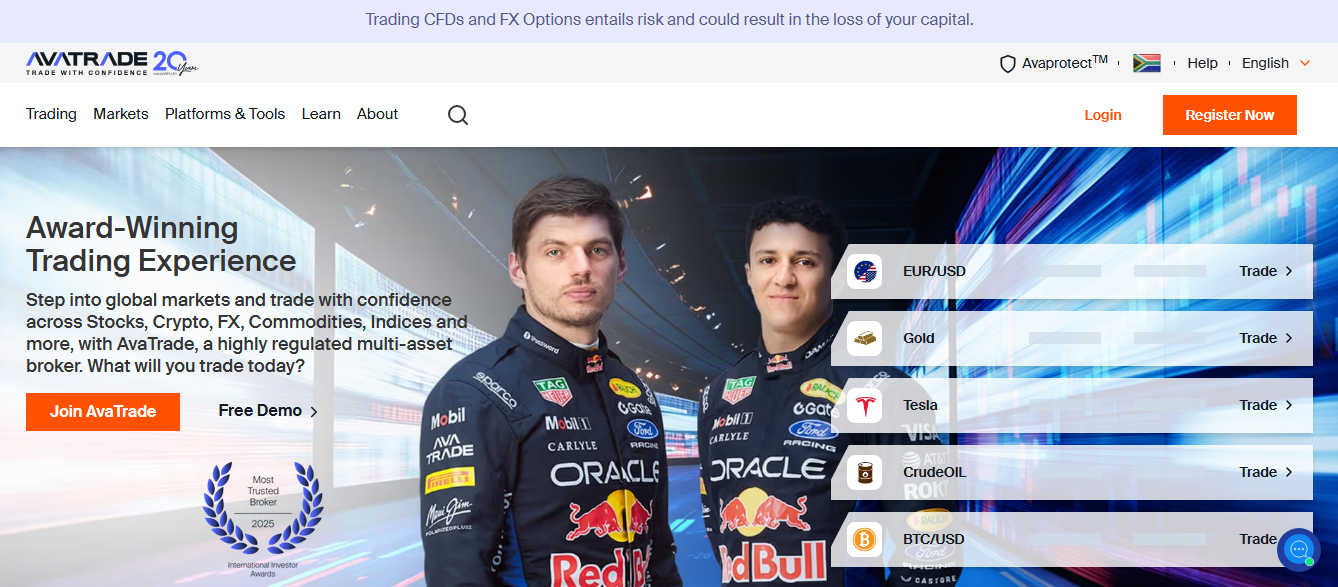
- AvaTrade ranks fourth for wheat CFD trading because of its beginner-friendly platform suite, Central Bank of Ireland, ASIC, and FSCA regulation, and fixed-spread pricing on most CFD products. Wheat CFDs are part of the broader agricultural commodities lineup alongside soybeans, corn, and sugar.
- The AvaProtect risk-management feature lets traders insure open positions against losses for a defined period and premium, which is particularly useful on volatile commodities like wheat where USDA crop reports and weather events can produce sharp intraday moves.
- Platforms include MT4, MT5, AvaTradeGO, WebTrader, and AvaOptions. Fixed spreads give predictable trade costs for beginners learning wheat CFD mechanics, though the spreads are wider than raw-spread ECN competitors like IC Markets and Pepperstone's Razor.
Features
| Feature | AvaTrade |
|---|---|
| Wheat access | Wheat CFDs (CBOT futures-tracked) |
| Minimum deposit | $100 |
| Spread (wheat CFD) | Fixed spreads (predictable) |
| Max leverage | Up to 1:200 (retail, varies by region) |
| Platforms | MT4, MT5, AvaTradeGO, WebTrader, AvaOptions |
| Account currency | USD, EUR, GBP, AUD |
| Regulators | Central Bank of Ireland, ASIC, FSCA, FSA Japan |
| 📝 Sign up | 👉 Open Account |
Pros and Cons
| ✅ Pros | ❌ Cons |
|---|---|
| Central Bank of Ireland and FSCA regulation | Fixed spreads wider than raw-spread competitors |
| AvaProtect risk-management feature on open positions | $50 quarterly inactivity fee after 3 months |
| Platform variety including AvaTradeGO and AvaOptions | Wheat available only as CFDs, not real futures |
| Beginner-friendly fixed-spread pricing | No ZAR account currency |
| Islamic swap-free accounts available on request | Smaller commodity CFD range than IC Markets |
What wheat products are available on AvaTrade?
AvaTrade offers wheat trading primarily through CFDs that track the CBOT futures price, available on MT4, MT5, AvaTradeGO, and WebTrader. The fixed-spread pricing structure gives beginners predictable trade costs, and AvaProtect provides optional downside insurance on open positions – useful on volatile commodities like wheat.
Is AvaTrade safe for commodity trading?
AvaTrade is considered safe for commodity trading due to its multi-jurisdictional regulation (Central Bank of Ireland, ASIC, FSCA, FSA Japan), segregated client funds, and negative balance protection. The regulatory stack provides South African traders with FSCA cover alongside tier-one European and Australian oversight.
5. FOREX.com

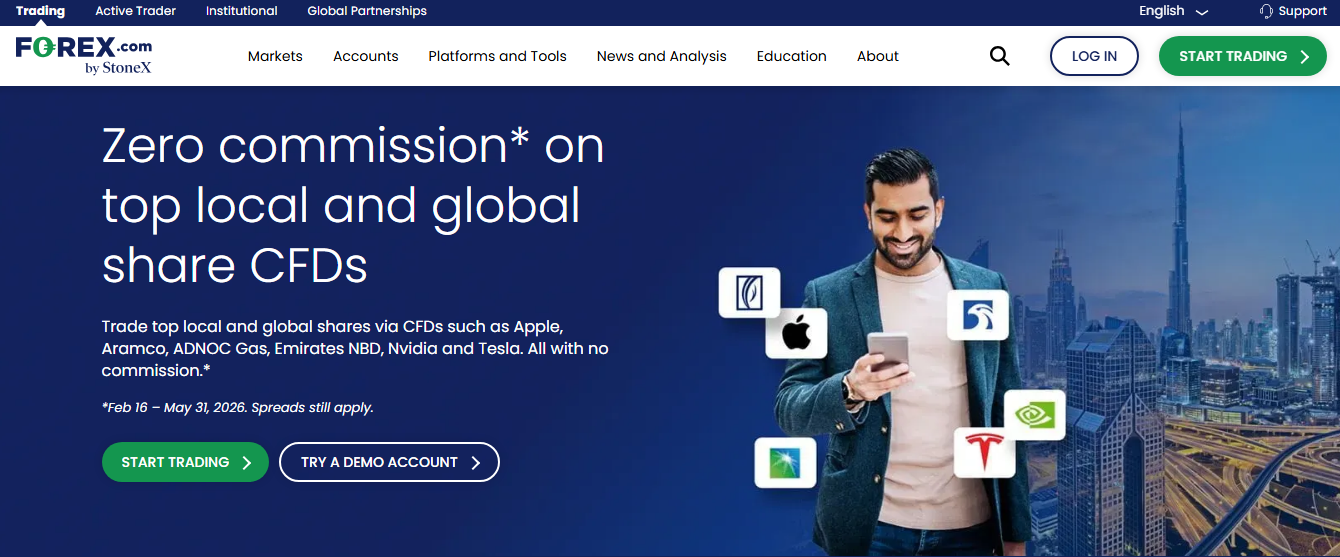
- FOREX.com ranks fifth for wheat trading on the strength of its CFTC, NFA, FCA, ASIC, and CIRO regulation, parent-company backing by StoneX Group (NASDAQ-listed), and comprehensive research tools covering agricultural markets, USDA reports, and weather-driven commodity analysis.
- The broker offers wheat exposure through CFDs and futures-linked derivatives, with robust platforms including MT4, MT5, WebTrader, and TradingView integration. Spreads are competitive on majors though slightly wider than IC Markets' Raw on commodity CFDs.
- FOREX.com's main differentiator is the depth of its research and market analysis library, which includes agricultural supply-demand reports, weather forecasts affecting crop yields, and macroeconomic commentary from the StoneX research team. Suitable for research-driven traders rather than pure scalpers.
Features
| Feature | FOREX.com |
|---|---|
| Wheat access | Wheat CFDs and futures-linked derivatives |
| Minimum deposit | $100 |
| Spread (wheat CFD) | Competitive tight spreads |
| Max leverage | Up to 1:200 (retail, varies by region) |
| Platforms | MT4, MT5, WebTrader, TradingView |
| Account currency | USD, EUR, GBP, JPY, AUD |
| Regulators | CFTC, NFA, FCA, ASIC, CIRO |
| 📝 Sign up | 👉 Open Account |
Pros and Cons
| ✅ Pros | ❌ Cons |
|---|---|
| CFTC, NFA, FCA, and ASIC regulation | No FSCA cover for South African clients |
| StoneX Group parent company (NASDAQ-listed) | Overnight financing applies to leveraged CFDs |
| Deep agricultural research and market analysis | Spreads wider than IC Markets' Raw on commodities |
| MT4, MT5, WebTrader, and TradingView support | No ZAR account currency |
| Established broker with multi-decade operating history | Inactivity fees apply after 12 months dormant |
What wheat trading options does FOREX.com provide?
FOREX.com offers wheat exposure through CFDs and futures-linked derivatives, with access to MT4, MT5, WebTrader, and TradingView. The research library includes agricultural supply-demand reports, USDA crop data analysis, and weather-driven commentary from the StoneX team, which supports longer-term fundamental trading decisions.
Is FOREX.com suitable for long-term wheat traders?
Yes. FOREX.com is suitable for research-focused and longer-term wheat traders due to its agricultural market analysis, strong regulatory framework (CFTC, NFA, FCA, ASIC), and parent-company backing by StoneX Group. The platform is less suited to pure scalpers than IC Markets or Pepperstone on execution speed grounds.
6. Capital.com

- Capital.com ranks sixth for wheat CFD trading as the most beginner-friendly option on this list, with FCA, CySEC, ASIC, and SCB regulation, a $20 minimum deposit (the lowest on the list), and an intuitive proprietary platform plus MT4 and TradingView support.
- Wheat CFDs track the CBOT futures price with competitive spreads and no commission on standard accounts. The platform's built-in risk-management tools (negative balance protection, margin alerts, stop-loss suggestions) suit traders new to commodity volatility.
- The main differentiator is the educational content library covering wheat fundamentals, CBOT contract specifications, and agricultural market analysis. Capital.com suits beginners learning commodity CFDs more than active day traders where IC Markets and Pepperstone's execution edge matters more.
Features
| Feature | Capital.com |
|---|---|
| Wheat access | Wheat CFDs (CBOT futures-tracked) |
| Minimum deposit | $20 |
| Spread (wheat CFD) | Competitive, commission-free on standard |
| Max leverage | Up to 1:200 (retail, varies by region) |
| Platforms | Proprietary web/mobile, MT4, TradingView |
| Account currency | USD, EUR, GBP, AUD, PLN |
| Regulators | FCA, CySEC, ASIC, SCB Bahamas |
| 📝 Sign up | 👉 Open Account |
Pros and Cons
| ✅ Pros | ❌ Cons |
|---|---|
| Lowest $20 minimum deposit on this list | Wheat available only as CFDs, not real futures |
| Intuitive proprietary platform and TradingView support | No ZAR account currency |
| Strong educational content for beginners | No FSCA cover for South African clients |
| FCA, CySEC, ASIC, and SCB regulation | Narrower product range than IC Markets |
| Built-in risk-management tools | Execution speed slower than ECN peers |
Can beginners trade wheat on Capital.com?
Yes. Capital.com is well-suited to beginners trading wheat CFDs because of the intuitive proprietary platform, $20 minimum deposit, extensive educational content, and built-in risk-management tools including negative balance protection and margin alerts. The platform helps new traders learn commodity fundamentals while gaining live exposure.
Does Capital.com offer leverage on wheat CFDs?
Yes. Capital.com offers leveraged wheat CFD trading subject to regulatory caps that vary by region – up to 1:200 under its offshore entity for professional-classified clients, and more conservatively capped for retail clients under FCA, CySEC, and ASIC rules. Leverage increases both potential profit and potential loss, so risk management is essential.
What to check before trading wheat with a forex broker
Wheat is one of the more volatile tradeable commodities, which is why the broker's structure and your own position sizing both matter more than they would on a major currency pair. The checks below apply regardless of whether you trade real futures or CFDs.
- Confirm whether you are trading real CBOT-cleared futures or CFDs that track the futures price – the regulatory protection and capital efficiency differ materially.
- Verify the broker's regulated entity that holds your account – FSCA for South African clients where available, or tier-one international regulators.
- Check the full cost structure: spread, commission, overnight financing (for CFDs), and exchange fees (for real futures).
- Review the contract specification – CBOT wheat futures are 5,000 bushels per contract (ZW) or 1,000 bushels (XW); CFD position sizes are typically smaller.
- Test a small position before scaling capital, and verify the deposit and withdrawal cycle works as described.
For example, a single CBOT ZW wheat futures contract at $6 per bushel represents a $30,000 notional position, which is substantial for most retail accounts. Mini contracts (XW) at 1,000 bushels represent one-fifth of that exposure, and CFD position sizing can be smaller again – choose the instrument that matches your account size.
How to trade wheat safely
- Verify the broker's regulatory status and confirm segregated client funds before transferring any capital.
- Start with the smallest tradeable position size – a single CFD contract or a Mini-sized XW futures contract – to learn the instrument's behaviour before scaling.
- Set hard stop-losses on every trade and size positions so one losing trade costs no more than 1–2% of the account balance.
- Follow the USDA World Agricultural Supply and Demand Estimates (WASDE) reports released monthly, as these are the single biggest known catalyst for wheat price moves.
- Track weather conditions in major producing regions (United States Midwest, Russia, Ukraine, Canada, Australia, Argentina) through the growing season – drought or flood news can move wheat sharply.
You should also understand that wheat prices can gap over weekends and major news events. Using guaranteed stop-losses where available (AvaTrade and FOREX.com both offer them) adds a cost but protects against gap risk that regular stop-losses do not cover.
Regulation, wheat trading, and risk in South Africa
The Financial Sector Conduct Authority (FSCA) regulates South African forex and CFD brokers under the FAIS Act. Pepperstone and AvaTrade on this list hold FSCA licences at group level; Interactive Brokers, IC Markets, FOREX.com, and Capital.com operate in South Africa through offshore or group entities without active FSCA cover on the specific account a SA resident would typically open.
Wheat trading carries specific risks beyond those of standard forex. Prices can gap on USDA reports, weather events, and geopolitical developments affecting producers like Russia and Ukraine. Leveraged CFD positions carry overnight financing, which compounds daily and can materially affect longer-term holds. Real futures positions carry expiry risk – contracts must be rolled or closed before the last trading day to avoid physical delivery obligations.
South African tax treatment of wheat trading profits falls under SARS trading income rules, with capital gains or revenue treatment depending on the facts of the case. A registered SA tax practitioner can clarify the specific treatment for your trading activity and the SARB foreign-exchange reporting implications for USD-denominated accounts.
Final verdict
Interactive Brokers leads this list for wheat trading on the strength of its direct CBOT futures access, seven tier-one regulators, and institutional-grade execution. IC Markets and Pepperstone are the strongest CFD alternatives, with Pepperstone particularly suited to South African traders through its FSCA cover.
AvaTrade and FOREX.com round out the mid-table with established retail offerings, while Capital.com offers the lowest entry point for beginners learning wheat CFD mechanics. For South African traders specifically, Pepperstone and AvaTrade combine FSCA cover with the CFD structure most retail accounts use, while Interactive Brokers suits experienced traders ready for real futures. Always verify the regulatory entity, understand the product structure, and remember that wheat is a volatile commodity where position sizing matters more than execution speed.
You might also like:
- Best Forex Brokers in South Africa
- Best Commodity Trading Brokers
- Best Gold Trading Brokers
- Best Oil Trading Brokers
- Best Micro Accounts Forex Brokers
Frequently asked questions
Which countries produce the most wheat in the world?
The largest wheat producers are China, India, Russia, the United States, France, Canada, Pakistan, Ukraine, Germany, and Australia. Russia and Ukraine together account for a significant share of global wheat exports, which is why geopolitical events affecting either country frequently drive sharp moves in wheat futures prices.
What are the trading hours for CBOT wheat?
CBOT wheat futures trade on the CME Globex platform from 20:00 Sunday to 13:20 Friday Central Time (CT), with a daily trading halt from 07:45 to 08:30 CT and a close at 13:20 CT each day. Weekend gaps can produce substantial price moves, so overnight and weekend risk management matters.
How much money do I need to start trading wheat?
Minimum capital depends on instrument and broker. CBOT Mini wheat futures (XW) require margin around $300–$500 per contract through Interactive Brokers. Wheat CFDs can be traded with much smaller account sizes – Capital.com's $20 minimum deposit allows starter CFD positions, and most CFD brokers accept positions from a fraction of a lot.
Why should I trade wheat CFDs instead of real futures?
CFDs offer smaller position sizes, simpler account structures, no expiry rollover, and access through multi-asset brokers with FSCA cover. The trade-off is overnight financing, broker-set pricing, and counterparty exposure to the broker rather than the exchange. Real futures offer transparent exchange pricing but require larger capital and manual contract rollover.
What should I know before trading wheat?
Wheat prices are driven by USDA WASDE reports (released monthly), weather in major producing regions, energy costs (fertiliser and transport), geopolitical events affecting Russia and Ukraine, and the strength of the US dollar. Wheat can move several per cent in a single session on any of these factors.
What is the best way to trade wheat?
The simplest way to trade wheat is through CFDs on a regulated broker like Pepperstone, IC Markets, or AvaTrade. The most capital-efficient way is through real CBOT futures at Interactive Brokers. The choice depends on account size, regulatory preference, and whether you prefer fixed-spec exchange contracts or flexible CFD position sizing.
Is trading wheat unique compared to other commodities?
Yes. Wheat is primarily a food commodity rather than a feed or industrial commodity, which gives it different demand dynamics than corn or soybeans. Wheat demand is more inelastic (people buy bread regardless of price), but supply is highly weather-dependent, which creates distinct seasonal patterns and price volatility.
Can South African traders access CBOT wheat futures?
Yes. South African traders can access CBOT wheat futures through Interactive Brokers' UK or international entity, subject to USD-denominated account funding and compliance with South African Reserve Bank (SARB) foreign exchange rules. Direct access via a South African broker is rare – most SA brokers offer wheat only as CFDs.
What leverage can I use on wheat CFDs?
Retail leverage on wheat CFDs is typically capped at 1:10 to 1:20 under FCA, FSCA, CySEC, and ASIC rules, which translates to initial margin of 5% to 10% of the notional position value. Offshore entities offer higher leverage up to 1:200, which also amplifies loss risk on volatile commodities.
Should I trade wheat alongside forex on the same account?
Yes, most multi-asset brokers on this list allow wheat CFDs and forex pairs to be traded from the same account, which simplifies margin management and account overview. Interactive Brokers, IC Markets, and Pepperstone all support cross-asset trading with unified margin calculations across forex, commodities, and other CFDs.
You Might Also Like




Recommended brokers