

Polygon is known as the second-layer solution for Ethereum that uses an adapted version of the Plasma framework.
| Aspect | Details |
| 🪙 Name | Polygon (native token POL, formerly MATIC) |
| 📅 Launch Year | 2017 (as Matic Network), rebranded in 2021 |
| 🔗 Blockchain Origin | Ethereum‑compatible Layer‑2 scaling solution |
| ⚙️ Consensus Mechanism | Proof of Stake (PoS) |
| 🧮 Mining Algorithm | Not mined (PoS validators secure) |
| 🖥️ Mining Type | Validator staking (no proof‑of‑work mining) |
| 💎 Maximum Supply | Approx. 10,000,000,000 tokens |
| ⏱️ Block Time | ~2.1–2.3 seconds per block |
| 💸 Transaction Fees | Very low (typically a few cents or less) |
| 🚀 Transaction Speed | Faster than Ethereum mainnet; can achieve high throughput (thousands TPS in optimized environments) |
| 🔐 Privacy Features | No built‑in privacy features (public transaction data) |
| 🌍 Use Case | Scales Ethereum dApps, DeFi, NFTs & microtransactions |
| 👥 Target Users | Developers, DeFi users, dApp participants & Ethereum ecosystem projects |
| 📉 Market Position | Among larger crypto assets by market cap (top ~50–80 range) |
| 🔄 Exchange Availability | Widely traded globally on major exchanges |
| 🧠 Key Advantage | Low fees + faster scaling for Ethereum ecosystem |
| ⚠️ Risk Level | High volatility & dependency on Ethereum; competitive crypto space |
Overview
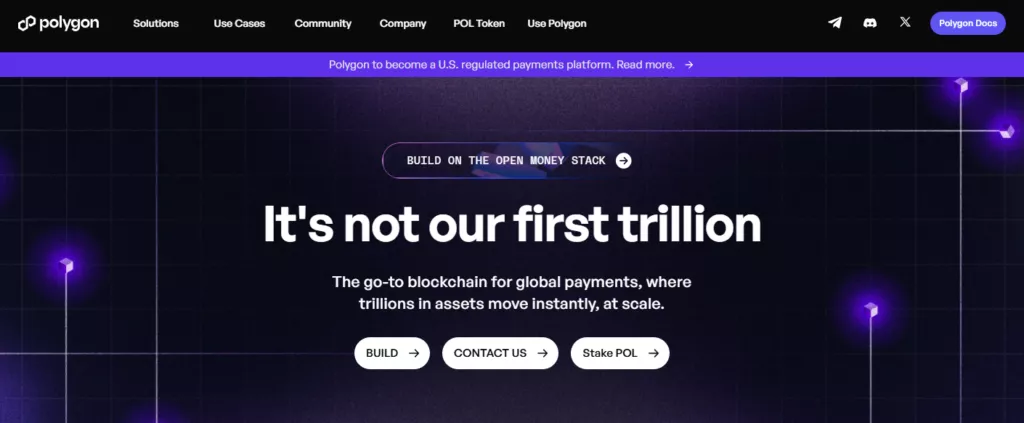
- Polygon is a scalable, Ethereum-compatible blockchain ecosystem designed to make Web3 faster, cheaper, and more accessible by processing transactions quickly with low fees and high throughput.
- It supports diverse applications, payments, assets, and infrastructure while retaining security and broad adoption across developers, enterprises, and users.

🏆10 Best Forex Brokers in South Africa
| Rank | Broker | Broker Review | Regulators | Minimum Deposit | Visit Broker |
|---|---|---|---|---|---|
| 🥇 |  | Read Review | ASIC, FSA, CBI, BVI, FSCA, FRSA, CySEC, ISA, JFSA | $100 | Visit Now |
| 🥈 |  | Read Review | FSCA, FCA, DFSA, FSA, CMA | $0 | Visit Now |
| 🥉 |  | Read Review | CySEC, IFSC, DFSA, FCA | $5 | Visit Now |
| 4 |  | Read Review | ASIC, CySEC, FSA, SCB | $0 | Visit Now |
| 5 |  | Read Review | BVI FSC | $0 | Visit Now |
| 6 |  | Read Review | FSA, FSC, FSCA, ASIC, CMA | $20 | Visit Now |
| 7 |  | Read Review | CBCS, FSA, FSCA, CMA | $10 | Visit Now |
| 8 |  | Read Review | ASIC, CySEC, FSCA, FSA, FSC, CMA | $100 | Visit Now |
| 9 |  | Read Review | FSC | $10 | Visit Now |
| 10 |  | Read Review | FSA, CySEC, FSCA, FSC | $10 | Visit Now |


Polygon Licence and Regulation
- Polygon’s approach to license and regulation on its official site shows that users receive a limited, personal, revocable license to interact with its interfaces and features under binding Terms of Use, with all intellectual property and rights retained by Polygon Labs and its licensors.
- The Terms of Use establish that interacting with Polygon’s technology does not transfer ownership of the software or rights beyond those expressly granted, and users must comply with legal obligations and applicable laws.
- Polygon also actively defines policy principles guiding its stance on laws and regulations: it supports innovation, believes regulation should focus on activities rather than technology, and advocates for security and transparency in decentralized systems while engaging constructively with stakeholders and policymakers worldwide.
| Regulatory Aspect | Details |
| 🇪🇪 Estonia License (FIU) | Estonia requires crypto service providers to obtain a license from the Financial Intelligence Unit (FIU). Compliance demands physical presence, AML controls, and stricter oversight. |
| 🇫🇷 France PSAN (AMF) | France requires crypto firms to register as PSANs with the AMF. Under EU MiCA, full authorisation is needed with robust AML/CFT compliance and risk governance. |
| 🇬🇧 UK Regulation | Crypto firms are regulated by the FCA under anti-money laundering rules. Draft legislation will integrate crypto into broader financial regulation under the Financial Services and Markets Act. |
| 🧾 KYC/AML Compliance | Firms must implement “Know Your Customer” and Anti-Money-Laundering systems, including customer verification, monitoring, suspicious activity reporting, and compliance officers. |
| 🔍 Travel Rule / EU Reporting | Estonia and France apply the FATF Travel Rule, requiring collection and transmission of originator/beneficiary data for qualifying crypto transfers under EU MiCA. |
| 🪪 Assets Segregation | Regulations require segregation of client assets from firm assets to protect customers, with clear custody arrangements and safeguards. |
| 🛡️ Regulatory Scope Limits | Licensing focuses on crypto service providers like exchanges, wallets, trading platforms, and custody services. Decentralized protocols may fall outside direct licensing. |
| 📜 Ongoing Legal Monitoring | Jurisdictions continue updating rules, transitional deadlines, and compliance expectations. Legal monitoring is essential due to evolving standards and enforcement. |
Polygon User Reviews & Reputation
- Based on general sentiment and third-party assessments around polygon. technology, users, and external reviewers show mixed reputation and varied user experiences.
- Some technical reviewers highlight strong website legitimacy, secure connections, and long domain history, suggesting trustworthiness, though independent user reviews are scarce.
- Others caution that cryptocurrency services inherently carry risk and recommend individual vetting, as not all user feedback or trust scores are consistent across platforms, making personal research important before engaging deeply with the site.
Pros and Cons
| ✅ Pros | ❌Cons |
| High transaction throughput; can handle thousands of TPS | Relies on Ethereum; bottlenecks can occur if Ethereum is congested |
| Very low fees compared to Ethereum mainnet | Fees can increase during network congestion |
| Fast block confirmations (~2.1–2.3 seconds) | Layer‑2 dependent; slower than some newer Layer‑1 blockchains in isolation |
| Fully compatible with Ethereum smart contracts and dApps | Some complexity for developers migrating from other chains |
| Secured by PoS validators and Ethereum bridge | Vulnerable to smart contract exploits and bridge attacks |
Polygon fees and costs
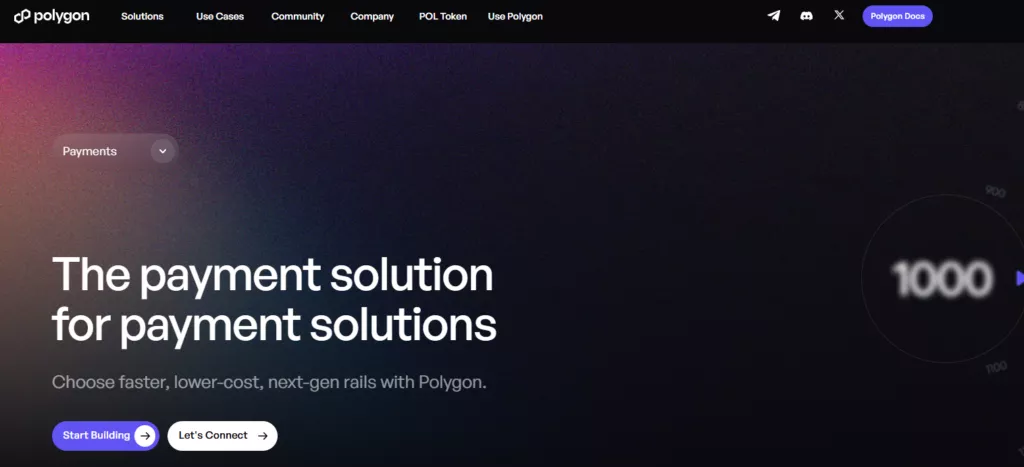
- Polygon charges very low network fees denominated in its native MATIC token to process transactions and smart contract operations, typically around fractions of a cent on Polygon PoS, making it far cheaper than Ethereum.
- The fee compensates validators and varies with network demand and transaction complexity. Most costs are predictable and minimal.
Polygon's ease of use and platform experience
- Polygon’s platform is designed for smooth onboarding and everyday use, focusing on fast finality, low costs, and simplified transactions that feel familiar even to new crypto users.
- Its tools abstract technical complexity, offering user-friendly interfaces, streamlined wallet creation, and efficient asset management to enhance the overall experience.
| Aspect | ⭐ Rating | 🧠 What Users Say (Summary) |
| 📱 Ease of Use | ⭐⭐⭐⭐ | Intuitive for Ethereum users, but newcomers may need guidance on Layer‑2 concepts. |
| 🧭 Navigation & UX | ⭐⭐⭐⭐ | Clean interface, easy to access wallets and dApps; occasional confusion with network selection. |
| ⚡ Onboarding / Setup | ⭐⭐⭐⭐ | Quick wallet connection and token bridging; some complexity for first-time users. |
| 💱 Trading & Transactions | ⭐⭐⭐⭐⭐ | Fast and low-fee transactions; smooth DeFi and NFT interactions. |
| 🛠 Feature Depth | ⭐⭐⭐⭐ | Supports many dApps, smart contracts, and scaling solutions; advanced features require learning. |
| 🆘 Support Experience | ⭐⭐⭐ | Community-driven support is helpful; official support response can be slow. |
| 🏁 Overall Experience | ⭐⭐⭐⭐ | Users enjoy fast, low-cost transactions and Ethereum compatibility, with minor learning curve for newcomers. |
Polygon features and assets offered
- Polygon offers an advanced blockchain ecosystem with ultra-fast, low-cost payments, deep liquidity for stablecoins, real-world assets, and DeFi rails built for seamless value transfer.
- It supports modular scaling, cross-chain interoperability, wallets and on/off ramps, staking, and developer tools to build Ethereum-compatible layer two solutions securely and efficiently.
Polygon reviews on support quality
- Polygon reviews on support quality describe a mixed experience among users.
- Some praise the team for helpful documentation, active community channels, and timely issue resolution.
- Others report slower response times and limited direct assistance, relying more on forums and self-help resources for technical guidance.
Polygon risk warnings and transparency
- Polygon openly discloses risks and limitations related to its technology and usage, emphasizing that beta products like zkEVM are provided “as-is” and may carry bugs, security vulnerabilities, or unexpected issues that could risk assets.
- The documentation highlights ongoing audits, potential bridge exploits, centralized sequencer risks, and advises users to understand these risk factors before interacting.
Should you buy Polygon?
- Buying Polygon (POL) depends on your belief in its role as a scalable, low-cost blockchain layer built to support payments, stablecoins, DeFi, and real-world assets while leveraging Ethereum’s security and broad ecosystem.
- Its utility token is essential for transactions, staking, and network governance in a fast-evolving Web3 financial stack.
How to buy/sign up and use Polygon - step by step
Step 1: Choose a wallet
- Download a compatible crypto wallet like MetaMask, Trust Wallet, or Coinbase Wallet.
- Create your wallet, securely save your recovery phrase, and make sure the wallet supports the Polygon network.
Step 2: Buy MATIC or POL
- Purchase MATIC or POL on a cryptocurrency exchange using fiat or crypto.
- Once bought, withdraw the tokens to your personal wallet address for full control.
Step 3: Connect to the Polygon network
- Add or enable the Polygon network in your wallet settings.
- This allows you to send, receive, and interact with Polygon-based tokens and decentralized applications.
Step 4: Use Polygon applications
- Connect your wallet to Polygon dApps such as DeFi platforms, NFT marketplaces, or games.
- Use your tokens to pay low fees, trade assets, stake, or explore Web3 services.
Polygon Account
- Polygon accounts on Polygon Technology simplify blockchain interactions using account abstraction, which lets users interact with dApps without needing deep blockchain knowledge.
- With this system, users can log in more easily, use email‑style authentication or social recovery, enjoy sponsored gas payments, and pay for transactions without handling complex keys manually.
Polygon mobile app
- Polygon’s official ecosystem supports mobile interaction through wallet and onboarding tools that let users create wallets, manage assets, and connect with decentralized apps (dApps) on the Polygon chain, offering fast, low‑cost transactions and a scalable experience designed for Web3 use on mobile devices.
| 📱 App Feature | 🔍 What It Does |
| 💸 Buy & Sell Crypto | Allows users to quickly trade Polygon (POL) and other supported cryptocurrencies. |
| 🤖 Auto‑Invest / DCA | Enables recurring purchases or dollar-cost averaging for long-term investment strategies. |
| 📊 Portfolio Overview | Displays user balances, asset allocation, and performance across their holdings. |
| 💰 Earn Yield | Offers staking or yield-earning options on supported assets. |
| 📈 Crypto Bundles | Lets users invest in pre-set baskets of crypto assets for diversification. |
| 🔔 Price Alerts & Analytics | Sends notifications on price movements and provides market insights. |
| 🔐 Security & Safety | Includes features like wallet encryption, two-factor authentication, and secure transaction protocols. |
Polygon wallets
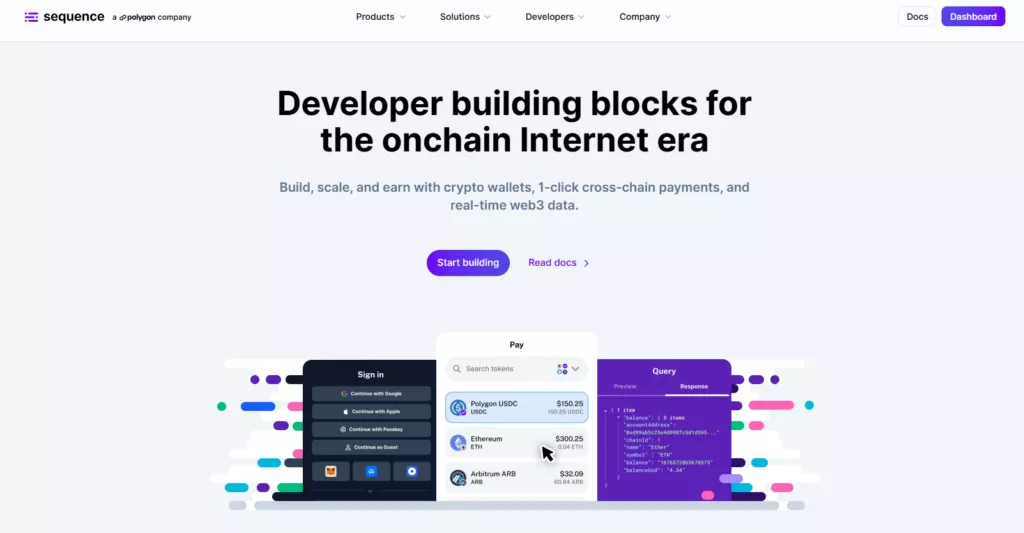
- Polygon wallets let you securely manage and interact with assets on the Polygon network by connecting with popular wallet tools and interfaces.
- You can send, receive, bridge, swap tokens, and access dApps using a Polygon‑compatible wallet.
- The Polygon Portal dashboard makes it easy to view balances, bridge assets, and handle token operations safely and efficiently.
| 📥 Action | 🚀 How It Works | 💸 Fees & Notes |
| 📥 Fiat Deposit (Bank) | Deposit local currency via bank transfer or card to buy POL or other crypto. | Fees vary by provider; usually small percentage or fixed fee. |
| 📥 Crypto Deposit | Transfer crypto from an external wallet or exchange into the app wallet. | Network fees apply depending on the blockchain; no platform fee for most deposits. |
| 📤 Fiat Withdrawal | Convert crypto to local currency and withdraw to a bank account. | Fees vary; can include conversion charges and withdrawal fees. |
| 📤 Crypto Withdrawal | Send crypto from the app wallet to an external wallet or exchange. | Network/transaction fees apply; no additional platform fee in most cases. |
Who is Polygon best for?
- Polygon is best for developers, businesses, and users who need fast, low‑cost, scalable blockchain infrastructure built on Ethereum.
- It suits decentralized finance, payments, real‑world assets, gaming, and interoperable Web3 apps seeking high throughput, deep liquidity, and seamless integration with Ethereum tools and global asset ecosystems.
Is Polygon Available for South Africans?
- Polygon’s official website shows that the network is designed for global use, supporting wallets, payments, stablecoins, DeFi, and developer tools that work anywhere in the world.
- Its blockchain infrastructure and payment rails facilitate fast, low‑cost transactions and access to thousands of apps, meaning users in South Africa can participate with compatible wallets and on-ramps to interact with the Polygon ecosystem just like users in other countries.
Comparison table
| 🔹 Feature | 🏦Polygon | 📉Typical Crypto App |
| 📱 User Interface | Modern, intuitive, and visually appealing; easy navigation for beginners and advanced users | Often basic; can be cluttered or less user-friendly |
| ⚡ Trading Engine | Fast, efficient order execution with real-time pricing | Varies widely; sometimes slower or limited to spot trading |
| 🤖 Automation | Supports automated investing, DCA, and smart strategies | Usually limited automation; may not support advanced recurring investments |
| 💰 Earn/Yield | Offers staking, yield programs, and token rewards | Limited or basic staking/interest features |
| 🪙 Token Benefits | Native token provides fee discounts, rewards, and governance options | Typically no native token benefits or minimal rewards |
| 🔐 Security | Strong security measures: 2FA, wallet encryption, cold storage options | Security varies; often fewer advanced protections, depends on the platform |
Powered by POL
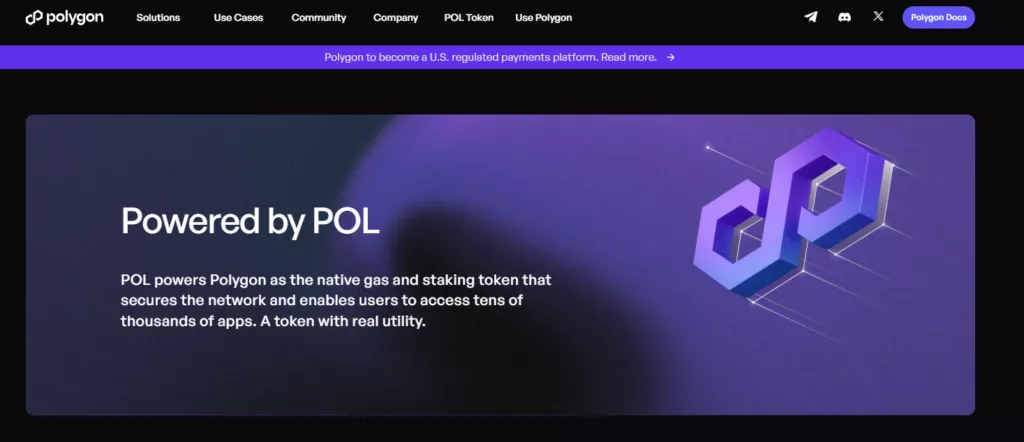
- Polygon is powered by POL as its native gas and staking token, securing the network and enabling users to access tens of thousands of decentralized applications.
- POL fuels all transactions, supports security through staking, and has real utility within the ecosystem, helping drive usability, adoption, and network growth across the Polygon platform.
Polygon Architecture Explained
- One of the most important aspects of Polygon is its multi-layered architecture, which allows it to scale efficiently while maintaining compatibility with Ethereum.
- Unlike traditional blockchains that rely on a single structure, Polygon uses a modular framework designed to support multiple types of networks simultaneously.
- At its core, Polygon operates as a Layer-2 scaling solution, meaning it works alongside Ethereum rather than replacing it. Transactions are processed on Polygon’s network and then periodically validated on Ethereum, ensuring both speed and security.
- This design allows Polygon to significantly reduce congestion and costs while still benefiting from Ethereum’s strong decentralization.
- The architecture typically includes four key layers: the Ethereum layer, the security layer, the Polygon networks layer, and the execution layer. Each layer plays a specific role, from final settlement to transaction execution.
- This layered approach gives developers flexibility to build customized blockchain solutions depending on their needs.
Polygon PoS Chain
- The Polygon Proof-of-Stake (PoS) chain is the most widely used component of the ecosystem. It is responsible for handling a large portion of transactions on the network and is known for its speed and affordability.
- This chain uses a hybrid consensus model that combines Proof-of-Stake with additional validation mechanisms to ensure security.
- Validators stake tokens to help secure the network, and transactions are confirmed quickly with minimal fees.
- Polygon’s PoS chain is capable of handling thousands of transactions per second, far exceeding Ethereum’s base layer.
- This makes it ideal for applications that require high throughput, such as gaming platforms, NFT marketplaces, and decentralized finance (DeFi) protocols.
- Another key advantage is reliability. Polygon has demonstrated 99.99% uptime and processed billions of transactions, making it a stable choice for developers and businesses building Web3 applications.
Polygon zkEVM and Zero-Knowledge Technology
- A major innovation within Polygon is its investment in zero-knowledge (ZK) technology, particularly through its zkEVM solution. This technology allows transactions to be verified without revealing sensitive data, improving both privacy and efficiency.
- Polygon zkEVM is designed to be fully compatible with Ethereum, meaning developers can deploy existing smart contracts without modification. At the same time, it significantly reduces transaction costs and increases throughput.
- Zero-knowledge rollups bundle multiple transactions into a single proof, which is then verified on Ethereum. This approach reduces the amount of data processed on-chain, leading to faster and cheaper transactions.
- Polygon’s focus on ZK technology positions it as a leader in next-generation blockchain scaling, as many experts believe ZK solutions will play a central role in the future of Web3 infrastructure.
Polygon CDK (Chain Development Kit)
- Polygon provides developers with powerful tools through its Chain Development Kit (CDK). This toolkit enables the creation of custom blockchain networks that are fully interoperable with the broader Polygon ecosystem.
- With CDK, developers can launch their own Layer-2 chains using zero-knowledge technology while maintaining shared liquidity and connectivity. This means projects can operate independently while still benefiting from the overall network effects of Polygon.
- The CDK supports modular customization, allowing developers to choose features such as governance models, tokenomics, and scalability solutions. This flexibility is one of the reasons Polygon has attracted thousands of developers worldwide.
Interoperability and Cross-Chain Communication
- A defining feature of Polygon is its focus on interoperability. Unlike isolated blockchains, Polygon enables seamless communication between different networks.
- Through bridges and cross-chain protocols, users can transfer assets between Ethereum and Polygon quickly and efficiently. This ensures that liquidity is not fragmented across different ecosystems.
- Polygon’s vision extends beyond simple bridging. It aims to create a fully interconnected network of blockchains where assets, data, and applications can move freely. This concept is often described as the “Internet of blockchains.”
- Recent developments such as aggregation layers further enhance interoperability by allowing multiple chains to share liquidity and state, creating a unified ecosystem for decentralized applications.
Polygon’s Role in Web3 and DeFi
- Polygon plays a crucial role in the growth of Web3, particularly in decentralized finance (DeFi). By offering fast and low-cost transactions, it makes DeFi accessible to a broader audience.
- Users can borrow, lend, trade, and earn yield on Polygon without the high fees typically associated with Ethereum. This has led to the migration of major DeFi protocols onto the network.
- Polygon also supports stablecoins, which are essential for DeFi activities. Billions of dollars in stablecoin liquidity exist on the network, enabling efficient trading and payments.
- The platform’s scalability allows DeFi applications to operate smoothly even during periods of high demand, making it a reliable infrastructure layer for financial innovation.
Enterprise Adoption and Real-World Use Cases
- Polygon is increasingly being adopted by enterprises and institutions due to its scalability and cost efficiency. Businesses can use Polygon to build blockchain-based solutions without the limitations of traditional networks.
- One major use case is payments. Polygon enables near-instant settlement of transactions at extremely low costs, making it suitable for cross-border payments and remittances.
- Another growing area is tokenized assets (RWA). Polygon provides the infrastructure needed to tokenize real-world assets such as real estate, stocks, and commodities, allowing them to be traded on-chain.
- Additionally, Polygon is being used in industries like gaming, supply chain management, and environmental monitoring. Its ability to handle large volumes of transactions makes it ideal for applications that require scalability and reliability.
Polygon Token ($POL)
- The Polygon ecosystem is powered by its native token, $POL (formerly MATIC). This token plays a central role in securing and operating the network.
- $POL is used for transaction fees, staking, and governance. Validators stake the token to participate in network consensus, while users pay fees in $POL to execute transactions.
- The token also enables access to thousands of decentralized applications within the Polygon ecosystem, making it an essential component of the network’s functionality.
- As Polygon continues to evolve, the role of $POL is expected to expand, particularly in supporting multi-chain operations and advanced scaling solutions.
Advantages of Polygon
- Polygon offers several key advantages that make it one of the most popular blockchain platforms today.
- One of the biggest benefits is low transaction costs. Transactions on Polygon can cost a fraction of a cent, making it significantly more affordable than Ethereum.
- Speed is another major advantage. Polygon can process transactions almost instantly, providing a seamless user experience.
- Scalability is also a defining feature. The network can handle a high volume of transactions without congestion, making it suitable for large-scale applications.
- Finally, Polygon’s compatibility with Ethereum allows developers to easily migrate existing projects, reducing barriers to adoption.
Challenges and Limitations
- Despite its many advantages, Polygon is not without challenges. One of the main concerns is decentralization. Some critics argue that certain aspects of the network rely on a limited number of validators.
- Security is another area of focus. While Polygon benefits from Ethereum’s security, its own infrastructure must also remain robust against potential vulnerabilities.
- Additionally, the blockchain space is highly competitive, with other Layer-2 solutions and alternative networks constantly emerging.
- However, Polygon continues to address these challenges through ongoing upgrades and research, particularly in zero-knowledge technology and network decentralization.
Polygon’s Vision for the Future
- Polygon aims to become the foundation of the decentralized internet, enabling seamless interaction between users, applications, and blockchains.
- Its long-term vision includes creating a fully interconnected ecosystem where value can move freely across different networks. This involves continued investment in scalability, interoperability, and developer tools.
- Polygon is also focusing on making blockchain technology more accessible to mainstream users. By simplifying user experiences and reducing costs, it hopes to drive widespread adoption of Web3 technologies.
- With ongoing innovation and strong ecosystem growth, Polygon is well-positioned to remain a key player in the blockchain industry for years to come.
Conclusion (Extended)
- Polygon has evolved from a simple scaling solution into a comprehensive blockchain ecosystem that supports a wide range of applications. By addressing Ethereum’s limitations, it has made blockchain technology more accessible, efficient, and scalable.
- Its combination of low fees, high speed, and interoperability has attracted developers, businesses, and users from around the world. With advanced technologies like zkEVM and the Chain Development Kit, Polygon continues to push the boundaries of what blockchain can achieve.
- As the demand for decentralized applications grows, Polygon’s role in the Web3 ecosystem is likely to expand even further. Whether in finance, gaming, or enterprise solutions, Polygon provides the infrastructure needed to build the future of the internet.
Polygon Ecosystem Growth
- Polygon has experienced rapid ecosystem growth over the past few years, becoming one of the most active blockchain networks in the world. This growth is driven by its ability to offer a scalable and cost-effective environment for decentralized applications.
- Thousands of projects have launched on Polygon, ranging from decentralized finance (DeFi) platforms to NFT marketplaces and gaming applications.
- The network supports millions of users and processes billions of transactions, demonstrating its capacity to handle large-scale adoption.
- One of the key reasons for this growth is Polygon’s developer-friendly approach. By maintaining compatibility with Ethereum, developers can easily migrate existing projects or build new ones using familiar tools such as Solidity and MetaMask. This reduces the learning curve and accelerates innovation across the ecosystem.
Finale says about Polygon
Polygon positions itself as a purpose-built blockchain scaling and payments platform that extends Ethereum’s capabilities, enabling real-time settlement, low transaction costs, and global liquidity. It supports diverse use cases like payments, stablecoins, DeFi, and tokenized assets, offering fast throughput, reliability, and developer tools for broad Web3 adoption.
You might also like:
Best Cryptocurrencies for ScalpingBest Cryptocurrencies to buy nowWhat is crypto trading?
Frequently Asked Questions
What is Polygon (MATIC)?
Polygon is a layer two scaling solution for Ethereum that improves transaction speed and reduces fees. It uses sidechains and other technologies to support decentralized applications while remaining compatible with Ethereum’s security, tools, and ecosystem for developers and everyday users.
What is MATIC used for?
MATIC is Polygon’s native utility token used for paying transaction fees, staking, and network governance. Validators stake MATIC to secure the network, while users use it to interact with dApps and participate in ecosystem incentives such as rewards, grants, and programs.
Is Polygon part of Ethereum?
Polygon is not a separate blockchain replacing Ethereum, but an ecosystem built to scale it. It operates alongside Ethereum, offering layer two solutions that rely on Ethereum for security, settlement, and overall decentralization while supporting faster, cheaper, decentralized applications globally.
How low are Polygon gas fees?
Polygon gas fees are significantly lower than Ethereum’s, often costing fractions of a cent per transaction. This makes Polygon attractive for gaming, NFTs, and DeFi applications that require frequent, low-cost on-chain interactions without sacrificing speed, usability, or security.
Is Polygon safe to use?
Polygon is considered secure and benefits from Ethereum’s security model, especially for its layer two solutions. However, like all blockchain networks, it carries risks related to smart contracts, bridges, validators, and user errors that require careful management, audits, education, and caution.
What makes Polygon different from other layer two solutions?
Polygon stands out due to its multi-scaling approach, supporting sidechains, rollups, and zero-knowledge technologies. This flexibility allows developers to choose solutions that best fit their performance, cost, and security requirements across diverse use cases, industries, applications, and networks.
Can Polygon be used for NFTs?
Yes, Polygon is widely used for NFTs because of its low fees and fast transactions. Many NFT marketplaces and games use Polygon to mint, trade, and transfer NFTs efficiently without high Ethereum gas costs, which improves accessibility, adoption, scalability,and sustainability.
Is Polygon available on major exchanges?
Polygon’s MATIC token is available on most major cryptocurrency exchanges worldwide. Users can buy, sell, and trade MATIC easily, making it accessible for investors, developers, and users participating in the Polygon ecosystem across centralized, decentralized, regional, and global trading platforms.
What is Polygon mainly used for?
Polygon is used to build and run decentralized applications that need speed and affordability. Common use cases include DeFi platforms, blockchain games, NFTs, DAOs, and Web3 applications serving millions of users globally, securely, efficiently, reliably, sustainably, at scale, daily, worldwide.
What is the future of Polygon?
Polygon’s future focuses on expanding zero-knowledge technology, improving scalability, and supporting Ethereum’s long-term growth. The project aims to onboard more users and developers while enabling faster, cheaper, and more sustainable blockchain adoption across multiple industries, applications, regions, and ecosystems.
You Might Also Like




Recommended brokers